
15 open source boards using the HDC1080
Real designs built with the HDC1080, from public GitHub projects: a quick way to see how others power, decouple and connect it. Each board comes with its KiCad files, full parts list and a render — and you can simulate its firmware on HardLabs.
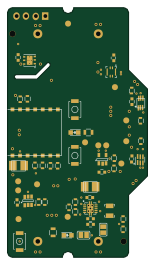 ESP8266
ULP-Weather-Logger
hamityanik
37 × 66 mm49 parts2LMIT92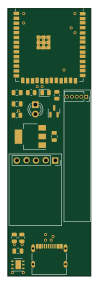 ESP32
Tiny sensor
larry-wong
22 × 71 mm18 parts2LNo license34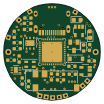 RP2040/RP2350
ESPesh
Charlio99
25.4 × 25.4 mm36 parts2LCC-BY-NC-4.021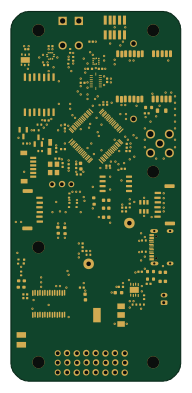 STM32
Ollyfc
rland93
45 × 98 mm101 parts4LMPL-2.02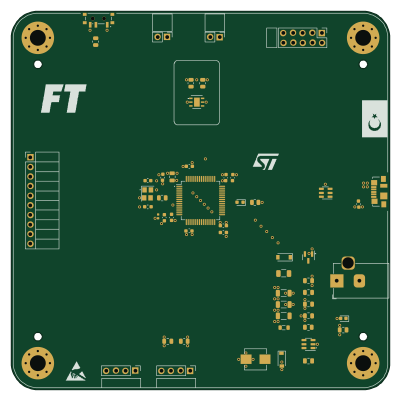 STM32
STM32F405RGT6-and-HDC1080-Development-Board
FatihTuncc
100 × 100 mm53 parts4LNo license2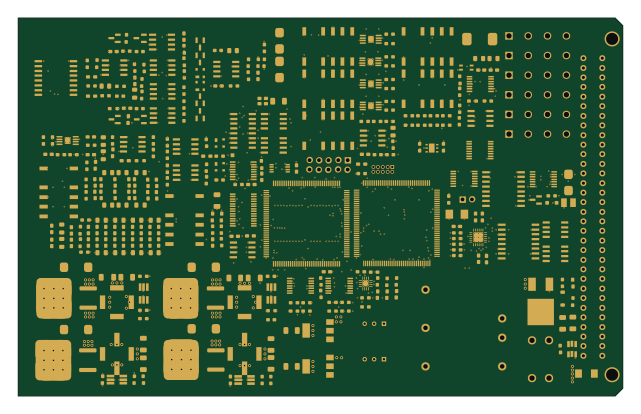 STM32
ETH1CFGEN1
BehrensG
160 × 100 mm708 parts6LNo license0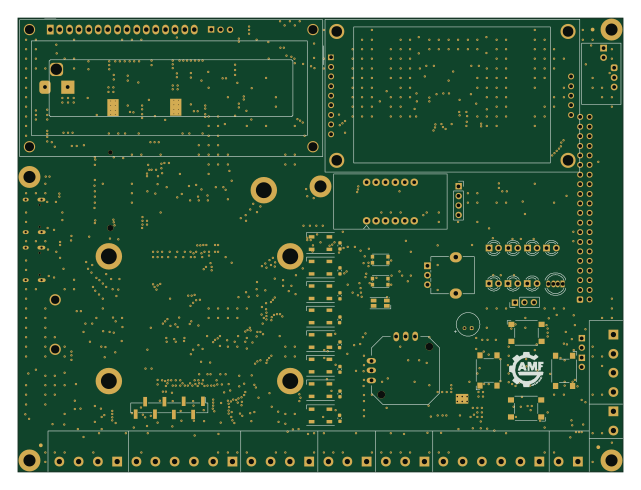
PRODIGY-MOTHERBOARD
mark69163
160 × 120 mm333 parts4LNo license0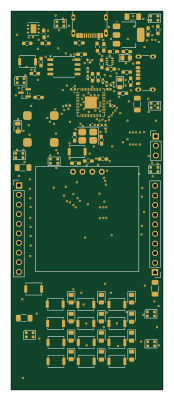 RP2040/RP2350
Rp2040plus devboard
joshujo
40 × 100 mm98 parts4LNo license0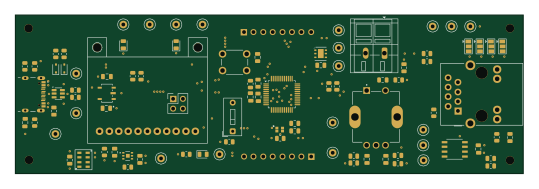 STM32
STM32-DevBoard
Basile-hltd
134.6 × 42 mm90 parts4LNo license0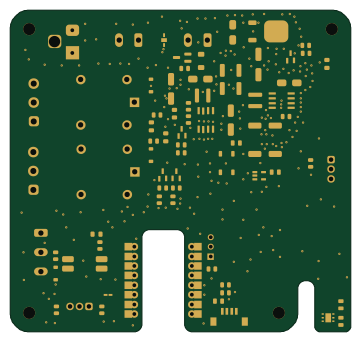 ESP32
Aranakin
machadoleonardo94
90 × 85 mm73 parts2LNo license0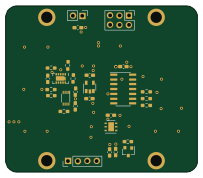 AVR/Arduino
Rf room sensor hw
dselcan
50.8 × 44 mm32 parts2LBSD-3-Clause0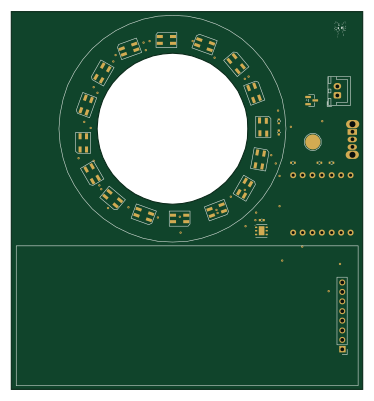 ESP32
Wingglobe
newtontriumphant
93 × 100 mm28 parts2LNo license0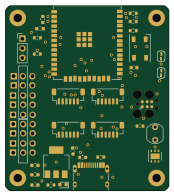 ESP32
Esp32-iot base
mightea
43.2 × 48.9 mm22 parts2LCERN-OHL-1.20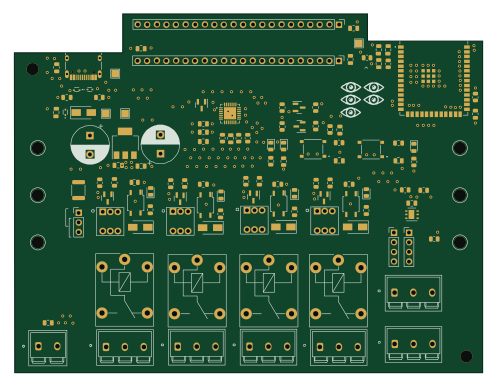 ESP32
Esp32 4 relay
houseofbigseals
124 × 95.1 mm105 parts4LNo license2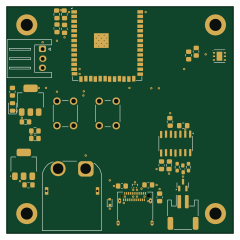 ESP32
Env sens
hpvdt
60 × 60 mm36 parts2LNo license0
How designs wire the HDC1080
Read from the KiCad layouts of 15 open source designs, one per repository: what each pin of the HDC1080 connects to, and the resistors, capacitors and other passives placed on it.
- The SDA pin has a pull-up to 3.3V on 14 of 15 designs, most often 4.7 kΩ (then 10 kΩ).
- The SCL pin has a pull-up to 3.3V on 14 of 15 designs, most often 4.7 kΩ (then 10 kΩ).
- The VCC pin has a decoupling capacitor on 11 of 15 designs, most often 100 nF (then 10 µF).
- The DAP pin is left unconnected on 13 of 14 designs.
| Pin | Connected to | Parts on the pin |
|---|---|---|
| SDApin 1 | Connected to: The microcontroller 80%, a connector 27% |
|
| GNDpin 2 | Connected to: GND 93% | — |
| NCpin 3, 4 | Connected to: Not connected 100% | — |
| VCCpin 5 | Connected to: 3.3V 93% |
|
| SCLpin 6 | Connected to: The microcontroller 80%, a connector 27% |
|
| DAPpin 7 | Connected to: Not connected 93% | — |
Connections count pins, parts count designs; values in brackets are how many parts had that value. Designs read include ULP-Weather-Logger by hamityanik, Tiny sensor by larry-wong, ESPesh by Charlio99 and STM32F405RGT6-and-HDC1080-Development-Board by FatihTuncc.
The HDC1080 in open source designs
The gallery holds 15 open source boards using the HDC1080 from 15 GitHub repositories; a typical one measures about 60 × 85 mm and carries around 53 components.
53% are two-layer designs, the rest use four layers or more, and 27% carry an open source license.
The most starred is ULP-Weather-Logger by hamityanik.
Parts used alongside the HDC1080
Microcontrollers on boards using the HDC1080
What boards using the HDC1080 are built for
HDC1080: common questions
Where can I find a HDC1080 reference design?
Each of the 15 boards on this page is a real design using the HDC1080. Open one to see how it is wired up, with the full BOM, a render of the layout and links to its KiCad files.
What pull-up resistor is used on the HDC1080 SDA pin?
The SDA pin has a pull-up to 3.3V on 14 of 15 designs, most often 4.7 kΩ (then 10 kΩ). Counted from the KiCad layouts of 15 open source designs using the HDC1080.
What pull-up resistor is used on the HDC1080 SCL pin?
The SCL pin has a pull-up to 3.3V on 14 of 15 designs, most often 4.7 kΩ (then 10 kΩ). Counted from the KiCad layouts of 15 open source designs using the HDC1080.
What decoupling capacitors do designs use on the HDC1080 VCC pin?
The VCC pin has a decoupling capacitor on 11 of 15 designs, most often 100 nF (then 10 µF). Counted from the KiCad layouts of 15 open source designs using the HDC1080.
What parts are used alongside the HDC1080?
The AMS1117-3.3, ESP32-S3-WROOM-1, PCA9306DC, USBLC6-2SC6 and W25Q128JVS appear in the most repositories here.
Which microcontrollers do boards using the HDC1080 use?
Most are built on ESP32 (6), STM32 (4), RP2040/RP2350 (2) and AVR/Arduino (1).
How big is a typical board using the HDC1080?
The median is 60 × 85 mm, and 53% are two-layer designs.
What is the most popular open source board using the HDC1080?
By GitHub stars, ULP-Weather-Logger by hamityanik, with 92 stars.
Can I simulate one of these boards using the HDC1080 before building it?
Yes. HardLabs turns a board's netlist and BOM into a working simulation, so you can boot and test firmware against it with no hardware on your desk.