
18 open source boards using the PAM8403D
Real designs built with the PAM8403D, from public GitHub projects: a quick way to see how others power, decouple and connect it. Each board comes with its KiCad files, full parts list and a render — and you can simulate its firmware on HardLabs.
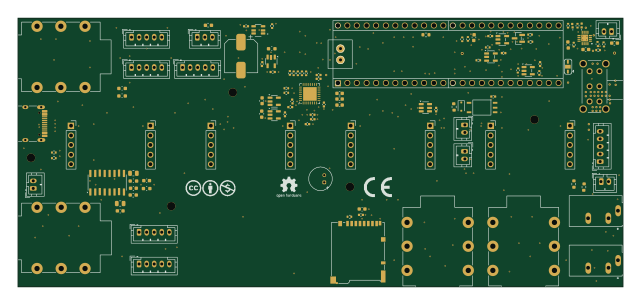
Toern
Soundpauli
160 × 71 mm118 parts4LCC-BY-NC-4.021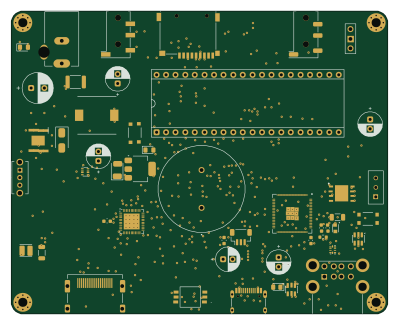 RP2040/RP2350
Dino z80
rh1tech
99.5 × 80 mm258 parts4LGPL-3.03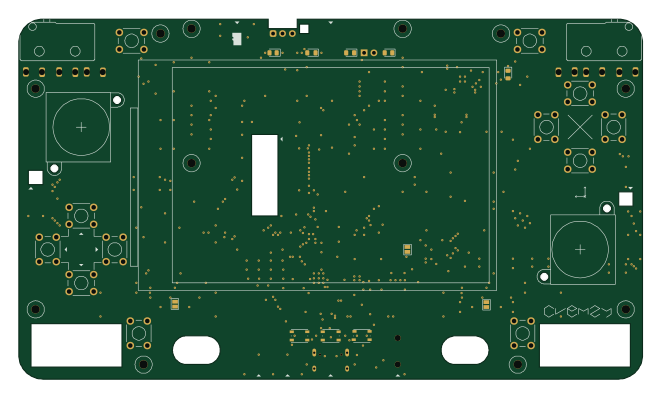 RP2040/RP2350
Pico console v2
Crem2y
165.1 × 95.3 mm152 parts2LNo license1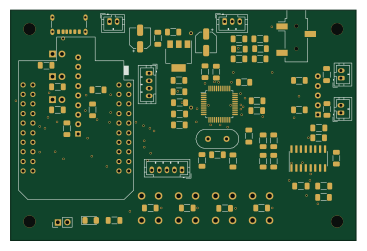 ESP32
WebRadio-ESP32-VS1053
pschneider67
91.5 × 61 mm73 parts2LNo license1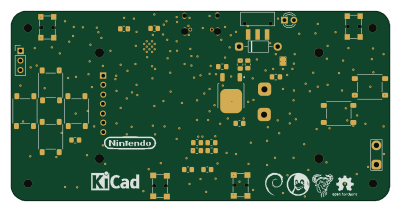 ESP32
ESP-micro-GAMEBOY
EnesOzdmir
100 × 50 mm60 parts2LNo license1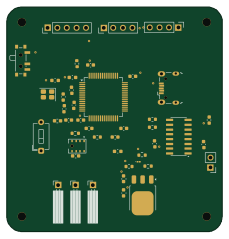 STM32
Walky Talky
zmuhammad07
57.1 × 59.6 mm45 parts2LMIT1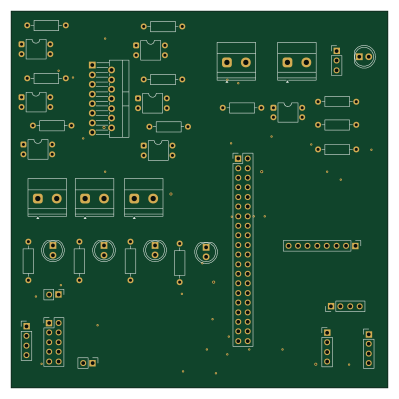 Raspberry Pi
Robot vacuum
dduarteCE
99.5 × 99.5 mm42 parts2LMIT1
AudioAmplifier-5600x
Rohan317685
40 × 30 mm13 parts2LMIT1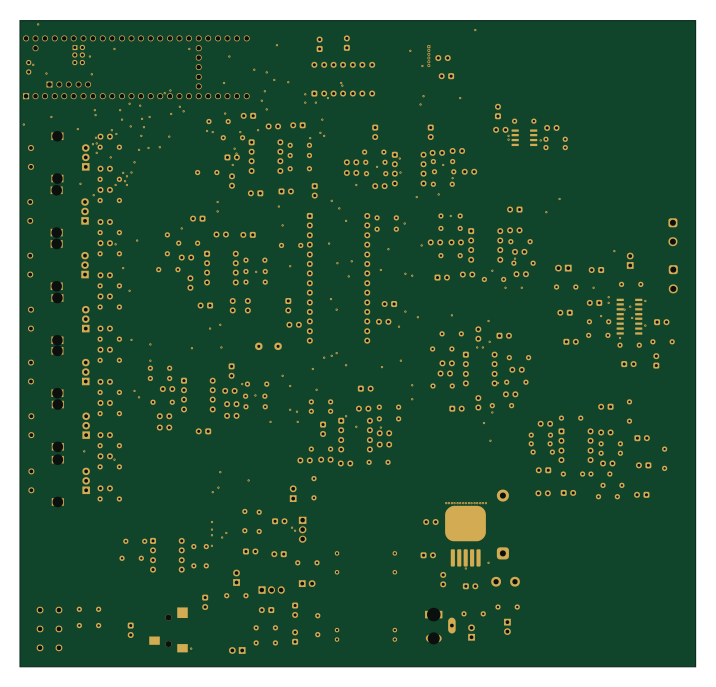 NXP
Spectrum-Audio-Amp
anasarif23
178.8 × 171 mm242 parts4LNo license0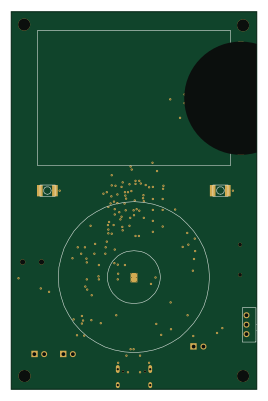 Raspberry Pi
Tesseract
hridcode
65 × 100 mm82 parts4LNo license0 STM32
Polihack Hush
Polyche
21.3 × 28.7 mm16 parts2LNo license0- schematic only · 11 partsESP32
LIM-Vario
loyermael
11 partsGPL-3.00 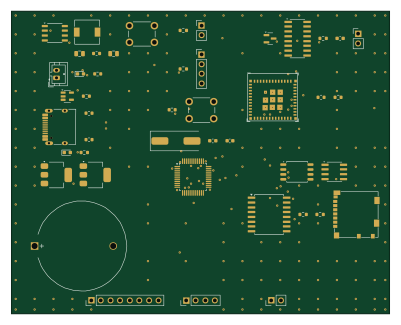 ESP32
Main board
denorath-sys
100 × 80 mm46 parts2LCERN-OHL-W-2.05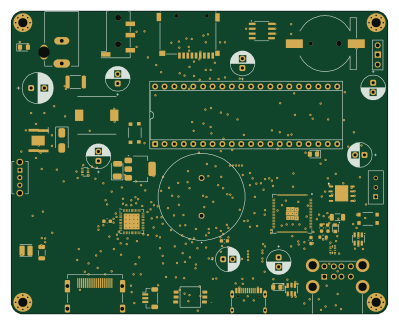 RP2040/RP2350
Xt8086 beta
99.5 × 80 mm239 parts4LGPL-3.03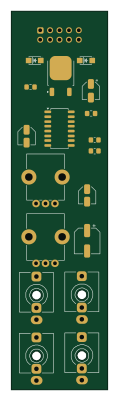
Parla v0-rev c
piruetasxyz
25.4 × 100 mm19 parts2LMIT1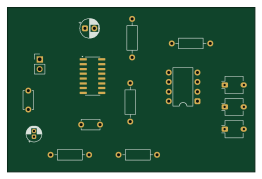
Circuit
jeff4444
65.5 × 43.5 mm15 parts2LNo license0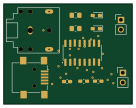
Audio day30
baleshwarece-jpg
34 × 26.5 mm12 parts2LNo license0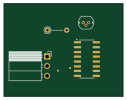
Proejtc
31.5 × 24.5 mm4 parts2LNo license0
How designs wire the PAM8403D
Read from the KiCad layouts of 15 open source designs, one per repository: what each pin of the PAM8403D connects to, and the resistors, capacitors and other passives placed on it.
- The VREF pin has a capacitor to GND on 14 of 15 designs, most often 100 nF (then 1 µF).
- The PVDD pins have a decoupling capacitor on 9 of 15 designs, most often 100 nF (then 1 µF).
- The VDD pin has a decoupling capacitor on 8 of 15 designs, most often 1 µF (then 100 nF).
- The INL pin has a series resistor on 7 of 15 designs, most often 10 kΩ (then 20 kΩ).
| Pin | Connected to | Parts on the pin |
|---|---|---|
| PGNDpin 2, 15 | Connected to: GND 93% | — |
| PVDDpin 4, 13 | Connected to: 5V 90% |
|
| VDDpin 6 | Connected to: 5V 87% |
|
| INLpin 7 | Connected to: Signal 93% |
|
| VREFpin 8 | Connected to: Signal 100% |
|
| NCpin 9 | Connected to: Not connected 93% | — |
| INRpin 10 | Connected to: Signal 87% |
|
| GNDpin 11 | Connected to: GND 100% | — |
6 more pins vary from design to design. Connections count pins, parts count designs; values in brackets are how many parts had that value. Designs read include Toern by Soundpauli, Main board by denorath-sys, Dino z80 by rh1tech and Pico console v2-pcb by Crem2y.
The PAM8403D in open source designs
The gallery holds 18 open source boards using the PAM8403D from 16 GitHub repositories; a typical one measures about 91.5 × 71 mm and carries around 46 components.
71% are two-layer designs, the rest use four layers or more, and 44% carry an open source license.
The most starred is Toern by Soundpauli.
Parts used alongside the PAM8403D
Microcontrollers on boards using the PAM8403D
What boards using the PAM8403D are built for
PAM8403D: common questions
Where can I find a PAM8403D reference design?
Each of the 18 boards on this page is a real design using the PAM8403D. Open one to see how it is wired up, with the full BOM, a render of the layout and links to its KiCad files.
How is the PAM8403D VREF pin connected?
The VREF pin has a capacitor to GND on 14 of 15 designs, most often 100 nF (then 1 µF). Counted from the KiCad layouts of 15 open source designs using the PAM8403D.
What decoupling capacitors do designs use on the PAM8403D PVDD pin?
The PVDD pins have a decoupling capacitor on 9 of 15 designs, most often 100 nF (then 1 µF). Counted from the KiCad layouts of 15 open source designs using the PAM8403D.
What decoupling capacitors do designs use on the PAM8403D VDD pin?
The VDD pin has a decoupling capacitor on 8 of 15 designs, most often 1 µF (then 100 nF). Counted from the KiCad layouts of 15 open source designs using the PAM8403D.
What parts are used alongside the PAM8403D?
The USBLC6-2SC6, AMS1117-1.8, LM2596S-5, LM358 and MPU-6050 appear in the most repositories here.
Which microcontrollers do boards using the PAM8403D use?
Most are built on ESP32 (4), RP2040/RP2350 (3), Raspberry Pi (2) and STM32 (2).
How big is a typical board using the PAM8403D?
The median is 91.5 × 71 mm, and 71% are two-layer designs.
What is the most popular open source board using the PAM8403D?
By GitHub stars, Toern by Soundpauli, with 21 stars.
Can I simulate one of these boards using the PAM8403D before building it?
Yes. HardLabs turns a board's netlist and BOM into a working simulation, so you can boot and test firmware against it with no hardware on your desk.