
13 open source boards using the TPS63900DSKR
Real designs built with the TPS63900DSKR, from public GitHub projects: a quick way to see how others power, decouple and connect it. Each board comes with its KiCad files, full parts list and a render — and you can simulate its firmware on HardLabs.
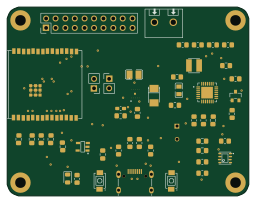 ESP32
EverAliveSensor
jfm92
64 × 50 mm50 parts2LCC-BY-NC-4.027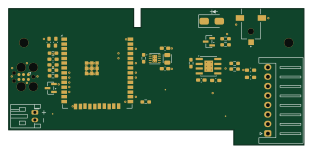 ESP32
Bluetooth nes advantage
cajunpanda
78 × 36 mm36 parts2LMIT7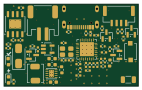 ESP32
Esp32-c3-iot sensor board
Ans1S
35.4 × 21.6 mm57 parts4LMIT6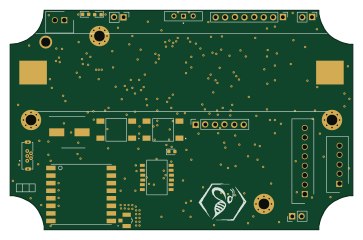 STM32
EcoApi BeeHiveMonitoring
EcoApi
90.6 × 58 mm166 parts2LGPL-3.04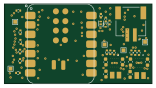 ESP32
Wulpus pro max
Sergio5714
39 × 21 mm44 parts4LNo license4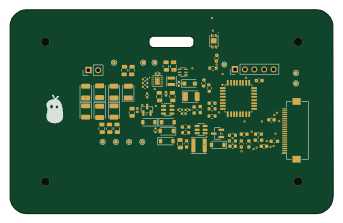 STM32
Namecard
soumame
85.6 × 54 mm73 parts2LMIT3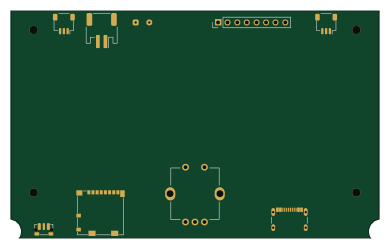 STM32
Stm32-epaper
Mlynn217
97.4 × 60 mm142 parts4LNo license1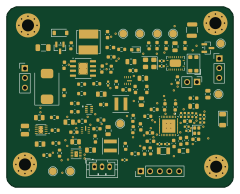
Automotive-BLE-CAN-Gateway
colonelblacc
59.9 × 47.8 mm113 parts4LMIT0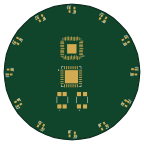 STM32
Aurora-Watch
CooperW824
36 × 36 mm79 parts4LMIT0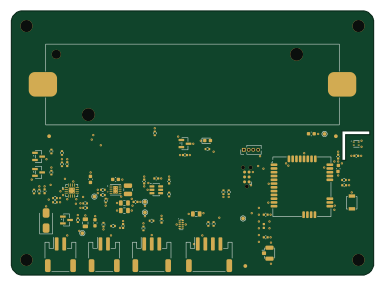
Tradewind
binaryBeachLLC
96 × 70 mm70 parts4LMIT0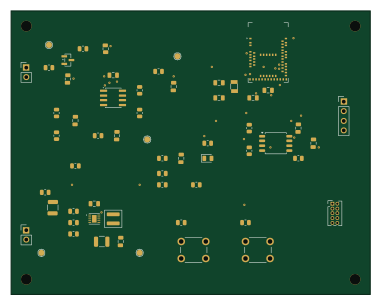 Nordic nRF
Nami
jemdiggity
95 × 75 mm54 parts2LNo license0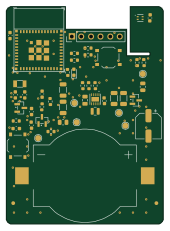 ESP32
Matter temperature sensor
haxeko
41.5 × 57.5 mm44 parts2LNo license0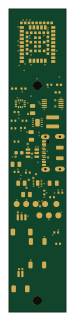
Wand
JMET04
15 × 80 mm21 parts4LMIT1
How designs wire the TPS63900DSKR
Read from the KiCad layouts of 13 open source designs, one per repository: what each pin of the TPS63900DSKR connects to, and the resistors, capacitors and other passives placed on it.
- The LX2_7 pin has a inductor on 13 of 13 designs, most often 2.2 µH.
- The LX1_9 pin has a inductor on 13 of 13 designs, most often 2.2 µH.
- The VIN_10 pin has a decoupling capacitor on 11 of 13 designs, most often 10 µF (then 100 µF).
- The CFG1_3 pin has a resistor to GND on 10 of 13 designs, most often 36.5 kΩ (then 0 Ω).
| Pin | Connected to | Parts on the pin |
|---|---|---|
| EN_1pin 1 | Connected to: Signal 54% · VSYS 46% |
|
| SEL_2pin 2 | Connected to: GND 69% · a signal 23% |
|
| CFG1_3pin 3 | Connected to: Signal 85% · GND 15% |
|
| CFG2_4pin 4 | Connected to: Signal 54% · GND 46% |
|
| CFG3_5pin 5 | Connected to: Signal 77% · GND 23% |
|
| VOUT_6pin 6 | Connected to: 3.3V 77% · a signal 23% |
|
| LX2_7pin 7 | Connected to: Signal 100% |
|
| GND_8pin 8 | Connected to: GND 100% | — |
| LX1_9pin 9 | Connected to: Signal 100% |
|
| VIN_10pin 10 | Connected to: VSYS 62% · a signal 38% |
|
| GND_11pin 11 | Connected to: GND 100% | — |
Connections count pins, parts count designs; values in brackets are how many parts had that value. Designs read include EverAliveSensor by jfm92, Bluetooth nes advantage by cajunpanda, Esp32-c3-iot sensor board by Ans1S and EcoApi BeeHiveMonitoring by EcoApi.
The TPS63900DSKR in open source designs
The gallery holds 13 open source boards using the TPS63900DSKR from 13 GitHub repositories; a typical one measures about 64 × 54 mm and carries around 57 components.
54% use four copper layers or more, and 62% carry an open source license.
The most starred is EverAliveSensor by jfm92.
Parts used alongside the TPS63900DSKR
Microcontrollers on boards using the TPS63900DSKR
What boards using the TPS63900DSKR are built for
TPS63900DSKR: common questions
Where can I find a TPS63900DSKR reference design?
Each of the 13 boards on this page is a real design using the TPS63900DSKR. Open one to see how it is wired up, with the full BOM, a render of the layout and links to its KiCad files.
How is the TPS63900DSKR LX2_7 pin connected?
The LX2_7 pin has a inductor on 13 of 13 designs, most often 2.2 µH. Counted from the KiCad layouts of 13 open source designs using the TPS63900DSKR.
How is the TPS63900DSKR LX1_9 pin connected?
The LX1_9 pin has a inductor on 13 of 13 designs, most often 2.2 µH. Counted from the KiCad layouts of 13 open source designs using the TPS63900DSKR.
What decoupling capacitors do designs use on the TPS63900DSKR VIN_10 pin?
The VIN_10 pin has a decoupling capacitor on 11 of 13 designs, most often 10 µF (then 100 µF). Counted from the KiCad layouts of 13 open source designs using the TPS63900DSKR.
What parts are used alongside the TPS63900DSKR?
The BQ25185DLHR, TP4056-42-ESOP8, TPS22917DBVR, TPS3839K33DBZR and USBLC6-2SC6 appear in the most repositories here.
Which microcontrollers do boards using the TPS63900DSKR use?
Most are built on ESP32 (5), STM32 (4) and Nordic nRF (1).
How big is a typical board using the TPS63900DSKR?
The median is 64 × 54 mm, and 46% are two-layer designs.
What is the most popular open source board using the TPS63900DSKR?
By GitHub stars, EverAliveSensor by jfm92, with 27 stars.
Can I simulate one of these boards using the TPS63900DSKR before building it?
Yes. HardLabs turns a board's netlist and BOM into a working simulation, so you can boot and test firmware against it with no hardware on your desk.