
50 open source boards using the BQ25185DLHR
Real designs built with the BQ25185DLHR, from public GitHub projects: a quick way to see how others power, decouple and connect it. Each board comes with its KiCad files, full parts list and a render — and you can simulate its firmware on HardLabs.
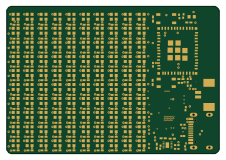 ESP32
Badge
atopile
56.3 × 39 mm239 parts4LMIT4.0k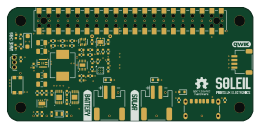 Raspberry Pi
Soleil hardware
protolux-electronics
65 × 30 mm66 parts4LCERN-OHL-P-2.022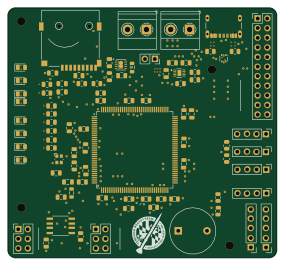 STM32
Main Board
Terrapin-Rocket-Team
71 × 66 mm87 parts4LNo license17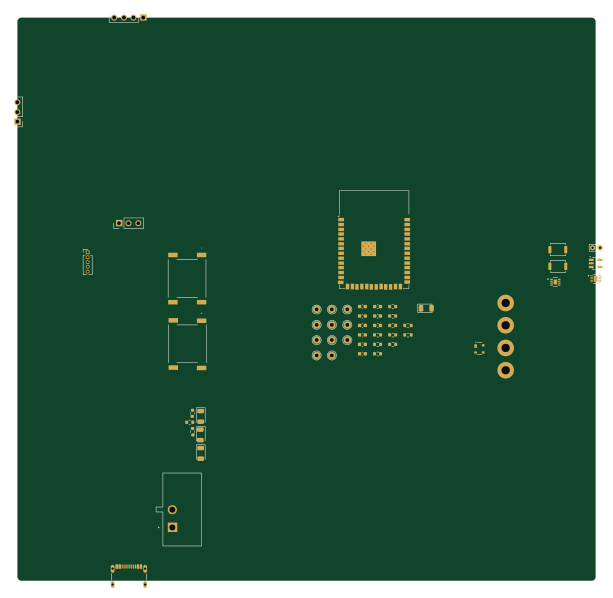 ESP32
Insta360link controller
jfwoods
153 × 149 mm42 parts2LNo license8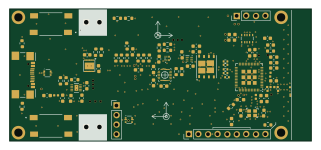 ESP32
Synchronisation-Wand
YuxuanHan0326
80 × 35 mm90 parts4LApache-2.06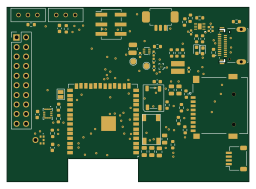 ESP32
FreeEEG
eric5512
64 × 46.1 mm94 parts4LMIT5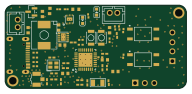 ESP32
Openrz67-trigger
openrz67
48 × 22 mm59 parts2LMIT3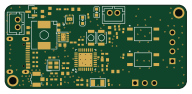 ESP32
OpenRZ67 camera trigger
48 × 22 mm59 parts2LMIT2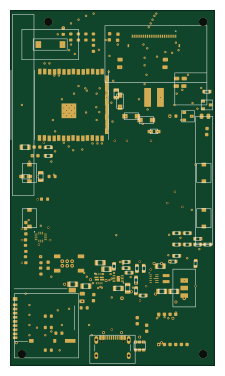 ESP32
ENKU-Base reader
aliaksei-lameyka
54 × 94 mm103 parts4LNo license1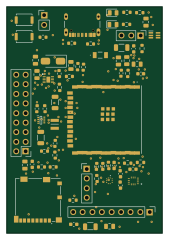 ESP32
SOLIS1
Zoomwag
41.2 × 60 mm69 parts4LNo license1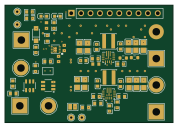
3v3-charger psu
jvanderberg
44.3 × 31 mm63 parts4LNo license1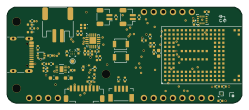
EnchantiW106
aburt2
62.2 × 25.4 mm61 parts2LMIT1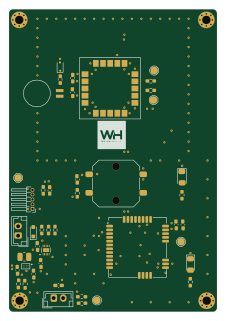 STM32
MAXWELLS0S
whoelse091
55 × 80 mm39 parts4LCERN-OHL-S-2.01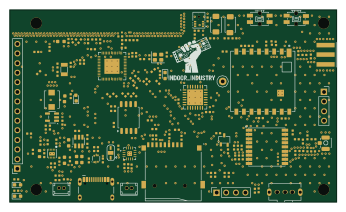 ESP32
Mercurio-RevB
indoor-industry
86.4 × 50.8 mm162 parts4LGPL-3.00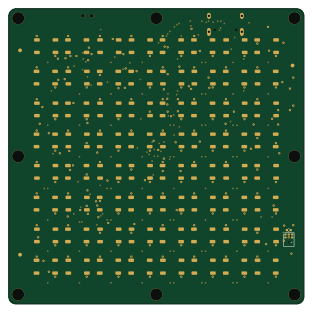 ESP32
TiltBox
Tom-Michiels
78 × 78 mm136 parts4LNo license0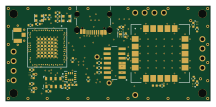 STM32
Steam pigeon locator hardware
fschroer
54 × 25 mm98 parts4LNo license0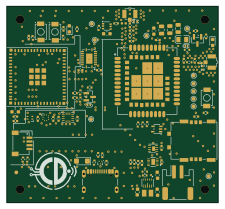 ESP32
EdgeLink S3 Cellular
CDonohoe-Designs
56 × 52 mm93 parts4LNo license0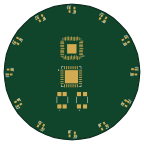 STM32
Aurora-Watch
CooperW824
36 × 36 mm79 parts4LMIT0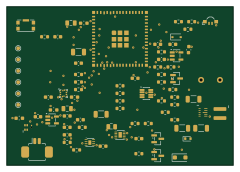 ESP32
Smart Safety Tag V1
balu-16
60 × 42 mm76 parts2LNo license0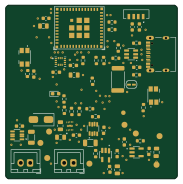 ESP32
Chipsat v1
noellayang
45.5 × 46 mm59 parts2LMIT0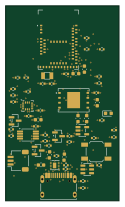 Nordic nRF
Ankle Sensor V1
TomKuc
30 × 51.6 mm59 parts4LNo license0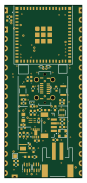 ESP32
ESP32-S3-MINI-1 UU
uutzinger
20.3 × 45.7 mm53 parts2LNo license0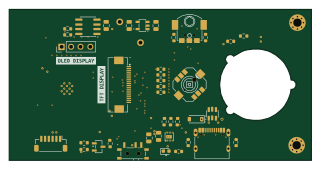 ESP32
Cryptick token
alphaseneca
80 × 40 mm50 parts2LMIT0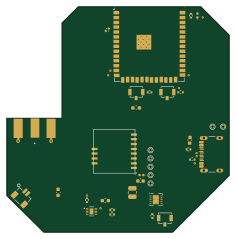 ESP32
Kiku
SoanGlengan
58.8 × 59.6 mm35 parts2LNo license0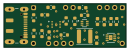
Battery-Management
SingularTeabag
32.3 × 11.5 mm34 parts2LGPL-3.00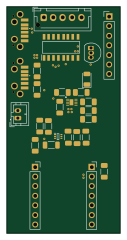
Buoy
wbarne12
30 × 60 mm30 parts2LNo license0
D4V2Charger
FabioTavernini
20.9 × 20.3 mm15 parts2LCERN-OHL-S-2.00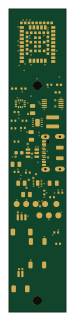
Wand
JMET04
15 × 80 mm21 parts4LMIT1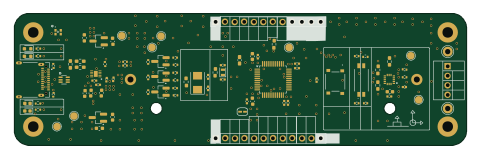 STM32
Flashlight stm32-dev
ahmadtak-3212
120 × 35 mm77 parts6LNo license0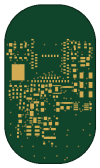 Nordic nRF
Aura a03
Avinash1286
24 × 42 mm61 parts4LMIT0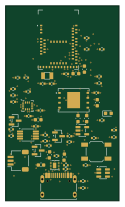 Nordic nRF
Ankle Sensor V1 before c3 via fix
30 × 51.6 mm59 parts4LNo license0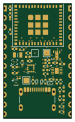 ESP32
ESP32-C6
17.8 × 30.3 mm43 parts2LNo license0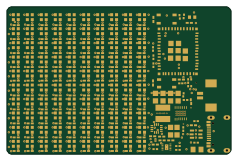 ESP32
Badge
glovepost
59.3 × 39 mm245 parts4LMIT1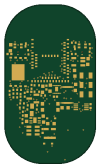 Nordic nRF
Aura a03-before ground refinement
24 × 42 mm61 parts4LMIT0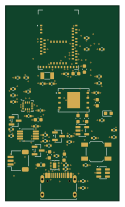 Nordic nRF
Ankle Sensor V1 before final merge
30 × 51.6 mm59 parts4LNo license0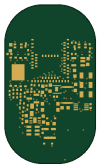 Nordic nRF
Aura a03-before placement refinement
24 × 42 mm61 parts4LMIT0
How designs wire the BQ25185DLHR
Read from the KiCad layouts of 32 open source designs, one per repository: what each pin of the BQ25185DLHR connects to, and the resistors, capacitors and other passives placed on it.
- The ILIM/VSET_7 pin has a resistor to GND on 30 of 32 designs, most often 18 kΩ (then 13 kΩ).
- The ISET_8 pin has a resistor to GND on 30 of 32 designs, most often 1 kΩ (then 2 kΩ).
- The SYS_1 pin has a capacitor to GND on 29 of 32 designs, most often 10 µF (then 22 µF).
- The BAT_2 pin has a decoupling capacitor on 25 of 32 designs, most often 1 µF (then 100 nF).
| Pin | Connected to | Parts on the pin |
|---|---|---|
| SYS_1pin 1 | Connected to: Signal 56% · VSYS 44% |
|
| BAT_2pin 2 | Connected to: VBAT 66% · a signal 34% |
|
| STAT2_3pin 3 | Connected to: The microcontroller 34% · not connected 19% |
|
| GND_5pin 5 | Connected to: GND 97% | — |
| TS/MR_6pin 6 | Connected to: Signal 94% |
|
| ILIM/VSET_7pin 7 | Connected to: Signal 100% |
|
| ISET_8pin 8 | Connected to: Signal 100% |
|
| STAT1_9pin 9 | Connected to: The microcontroller 38% · not connected 28% |
|
| IN_10pin 10 | Connected to: VBUS 63% · a signal 38% | — |
| EP_11pin 11 | Connected to: GND 94% | — |
1 more pin varies from design to design. Connections count pins, parts count designs; values in brackets are how many parts had that value. Designs read include Badge by atopile, Soleil hardware by protolux-electronics, Main Board by Terrapin-Rocket-Team and Insta360link controller by jfwoods.
The BQ25185DLHR in open source designs
The gallery holds 50 open source boards using the BQ25185DLHR from 32 GitHub repositories; a typical one measures about 36 × 42 mm and carries around 60 components.
72% use four copper layers or more, and 52% carry an open source license.
The most starred is Badge by atopile.
Parts used alongside the BQ25185DLHR
Microcontrollers on boards using the BQ25185DLHR
What boards using the BQ25185DLHR are built for
BQ25185DLHR: common questions
Where can I find a BQ25185DLHR reference design?
Each of the 50 boards on this page is a real design using the BQ25185DLHR. Open one to see how it is wired up, with the full BOM, a render of the layout and links to its KiCad files.
What resistor goes on the BQ25185DLHR ILIM/VSET_7 pin?
The ILIM/VSET_7 pin has a resistor to GND on 30 of 32 designs, most often 18 kΩ (then 13 kΩ). Counted from the KiCad layouts of 32 open source designs using the BQ25185DLHR.
What resistor goes on the BQ25185DLHR ISET_8 pin?
The ISET_8 pin has a resistor to GND on 30 of 32 designs, most often 1 kΩ (then 2 kΩ). Counted from the KiCad layouts of 32 open source designs using the BQ25185DLHR.
How is the BQ25185DLHR SYS_1 pin connected?
The SYS_1 pin has a capacitor to GND on 29 of 32 designs, most often 10 µF (then 22 µF). Counted from the KiCad layouts of 32 open source designs using the BQ25185DLHR.
What parts are used alongside the BQ25185DLHR?
The MAX17048G+T10, USBLC6-2SC6, ESP32-S3-WROOM-1, ESP32-C3-MINI-1-N4 and ICS-43434 appear in the most repositories here.
Which microcontrollers do boards using the BQ25185DLHR use?
Most are built on ESP32 (19), Nordic nRF (18), STM32 (6) and Raspberry Pi (1).
How big is a typical board using the BQ25185DLHR?
The median is 36 × 42 mm, and 28% are two-layer designs.
What is the most popular open source board using the BQ25185DLHR?
By GitHub stars, Badge by atopile, with 4,032 stars.
Can I simulate one of these boards using the BQ25185DLHR before building it?
Yes. HardLabs turns a board's netlist and BOM into a working simulation, so you can boot and test firmware against it with no hardware on your desk.