
2,206 open source PCB designs, indexed by the chip they’re built around
Real boards from 881 public GitHub repositories, read straight from their KiCad files: size, layers, the full parts list and a render of the PCB. Find one close to what you’re building, then simulate its firmware on HardLabs before you order anything.
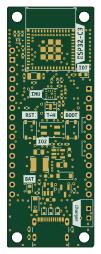 ESP32
ESP32Esp rust board
esp-rs
22.9 × 63.5 mm48 parts2LNo license647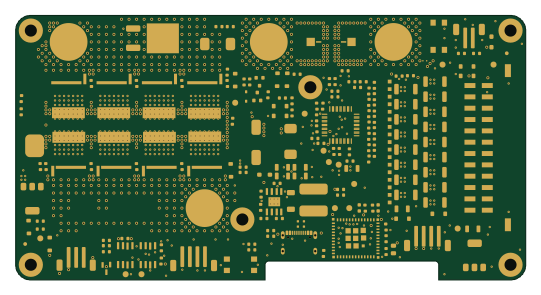 ESP32
ESP32Bms c1
LibreSolar
135 × 70 mm167 parts4LCERN-OHL-W-2.0260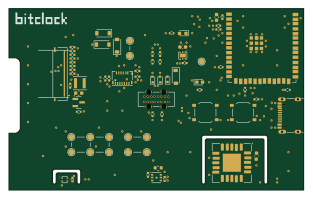 ESP32
ESP32Bitclock
goat-hill
78 × 48 mm58 parts4LMIT112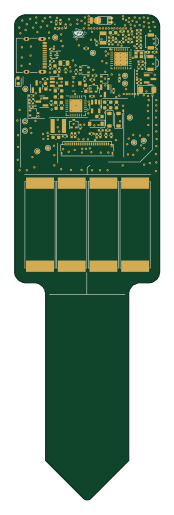 ESP32
ESP32Plantpal
teapotlaboratories
38.4 × 128.5 mm109 parts4LMIT97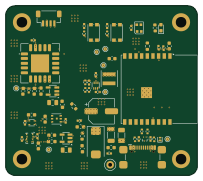 ESP32
ESP32Air quality sensor
roepkefeller
50.8 × 45 mm75 parts4LNo license58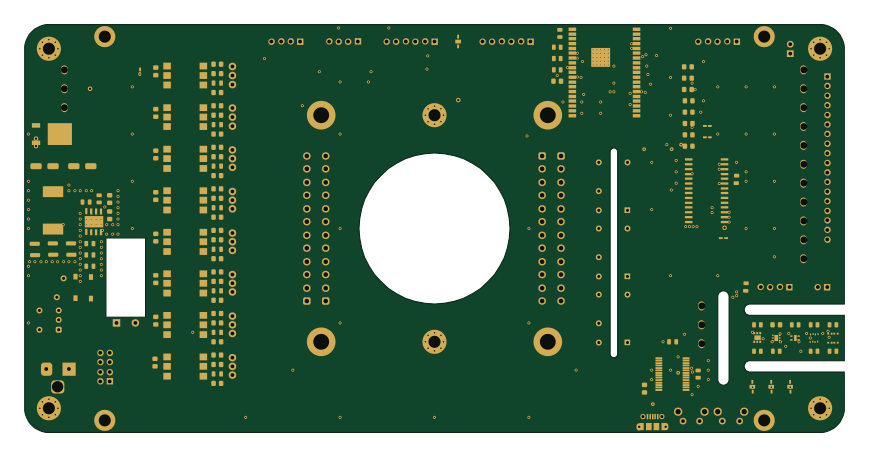 ESP32
ESP32ClimateSprinklerController
kbx81
217 × 108 mm189 parts2LNo license54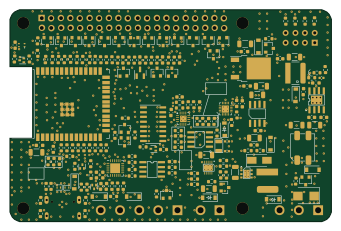 ESP32
ESP32AnthC
Anthilla
85 × 56 mm203 parts4LNo license39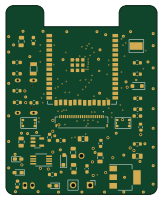 ESP32
ESP32Timeleapcam
hnz1102
40 × 50 mm90 parts4LNo license39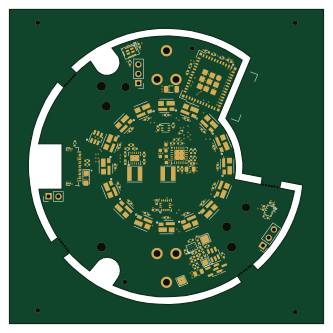 ESP32
ESP32Blinkekatze
TobleMiner
83 × 83 mm106 parts4LNo license33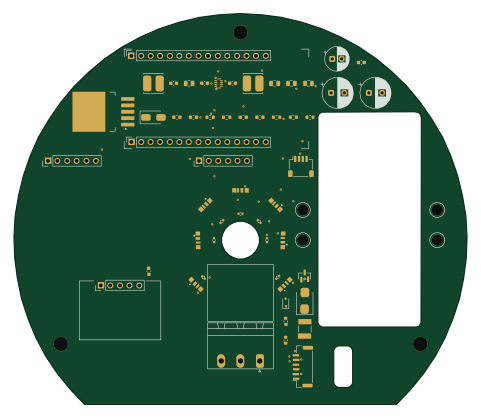 ESP32
ESP32Open ambient sensor
hubertciebiada
120 × 103.5 mm52 parts2LGPL-3.031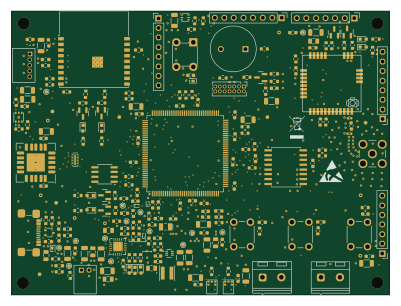 ESP32
ESP32OpenAirScope
emertcakir
100 × 75 mm247 parts4LMIT26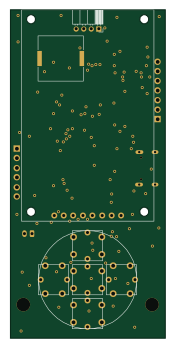 ESP32
ESP32Dif pressure meter
ardiloot
41 × 87 mm66 parts2LMIT23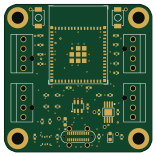 ESP32
ESP32ESPHome-DeskPI-Fan-Controller
mikaelholber
39 × 39 mm39 parts4LNo license23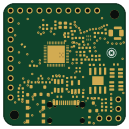 ESP32
ESP32Tuxmini v03
tux-friend
32 × 32 mm78 parts2LGPL-3.018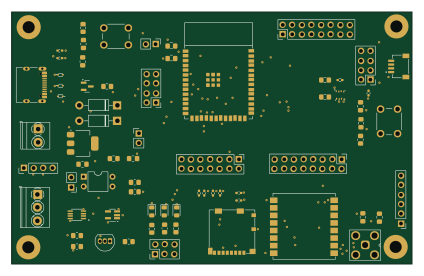 ESP32
ESP32MoleNet V7.1
ComNets-Bremen
106 × 66.8 mm70 parts4LGPL-3.013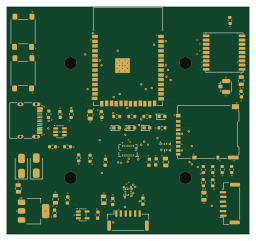 ESP32
ESP32Dronemagnav
ajisrawi
64 × 60 mm56 parts4LCustom license11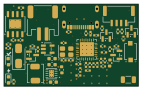 ESP32
ESP32Esp32-c3-iot sensor board
Ans1S
35.4 × 21.6 mm57 parts4LMIT6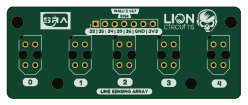 ESP32
ESP32Lsa
SRA-VJTI
61.9 × 24.2 mm16 parts2LMIT80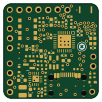 ESP32
ESP32Tux v02
25 × 25 mm60 parts2LGPL-3.018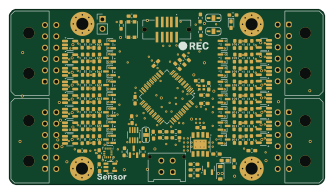 ESP32
ESP3216 Channel Sensor Hub
sufst
83.4 × 46.3 mm147 parts4LGPL-3.019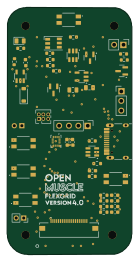 ESP32
ESP32OM-FlexGrid-Rigid
Open-Muscle
33 × 65.5 mm58 parts4LCERN-OHL-S-2.018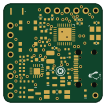 ESP32
ESP32Esp32tux mini
26 × 26 mm55 parts2LGPL-3.018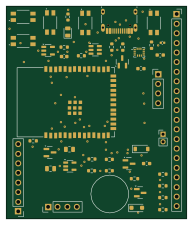 ESP32
ESP32OM-60-Rigid
47.6 × 56.1 mm47 parts4LCERN-OHL-S-2.018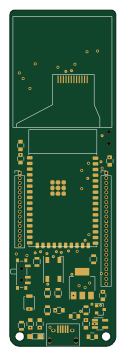 ESP32
ESP32ESP32-S2 DEV
hwreverse
27.9 × 88.9 mm32 parts2LMIT13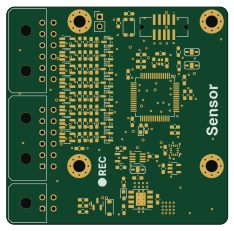 ESP32
ESP328 Channel Sensor Hub
58.5 × 57.5 mm96 parts4LGPL-3.019
About these open source PCB designs
Every board here is a published hardware project: a public GitHub repository with KiCad design files and a bill of materials. HardLabs reads those files directly — the board outline for its size, the copper layers, every footprint for the parts list — and draws the render from the layout itself, so what you see is the design as committed rather than a product photo.
Boards are indexed by the microcontroller they are built around, by what they are for, and by every IC and module on them. That makes the gallery a quick way to find a reference design: look up a part number to see how other engineers power, decouple and connect it.
Using an open source board as a reference design
- Find boards built on your chip or with the part you are designing around.
- Compare their size, layer count and bill of materials, and open the KiCad files on GitHub.
- Check the license before reusing any of the design.
- Simulate the firmware on HardLabs to test your changes before you order a PCB.
Open source PCB designs: common questions
What is an open source PCB?
A printed circuit board whose design files — schematic, layout and bill of materials — are published for anyone to study and, depending on the license, to modify and manufacture.
Are these PCB designs free to use?
It depends on each project's license. Open hardware licenses such as CERN-OHL and CC BY-SA, and software licenses such as MIT, allow reuse on their terms; a repository with no license keeps all rights with its author. Every board page shows its license.
What design files do the boards come with?
They are KiCad projects: the .kicad_pcb layout and the schematic (or a netlist from older KiCad versions), plus a bill of materials, usually a CSV. Each board page links to those files in the original GitHub repository.
How do I find boards that use a specific part?
Search for the part number, or open the part's page from the list of parts. It shows every board built with that part and the parts most often used alongside it.
How many boards are there, and how often is the list updated?
2,206 boards from 881 repositories today. New projects are found and added every night.
Can I test a board's firmware before ordering the PCB?
Yes. HardLabs builds a simulation of a board from its netlist and BOM, so you can boot and debug firmware against it with no hardware on your desk.