
14 open source boards using the HMC5883L
Real designs built with the HMC5883L, from public GitHub projects: a quick way to see how others power, decouple and connect it. Each board comes with its KiCad files, full parts list and a render — and you can simulate its firmware on HardLabs.
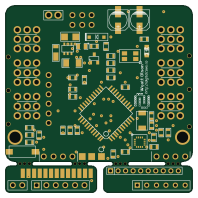 AVR/Arduino
Stubby
thebiguno
49.5 × 49.5 mm62 parts2LNo license36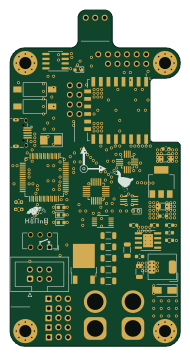 ESP8266
Flight controller v2
Eryk-Mozdzen
45 × 89 mm108 parts4LNo license9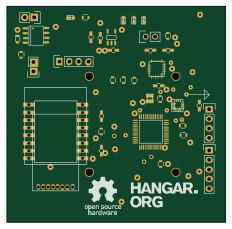 STM32
Cjmcu2
aeracoop
57.8 × 57.2 mm62 parts2LGPL-3.09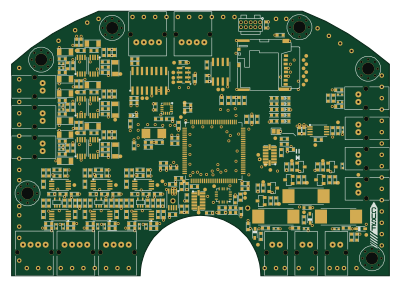 STM32
M2fc
cuspaceflight
100 × 70 mm348 parts4LNo license5- schematic only · 170 parts
Yatagarasu red
DCoJA
170 partsCC-BY-SA-4.05 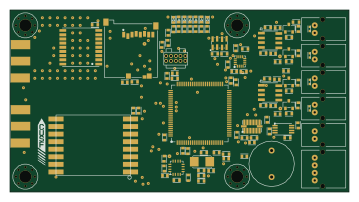 STM32
Avionics14
89.5 × 48 mm110 parts2LNo license4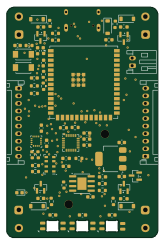 ESP32
UWB Fly Drone
DynamicWhiteHat
40 × 61 mm75 parts2LNo license4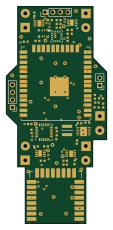 ESP32
MiniRobots
Kmshanley
26.5 × 57.4 mm42 parts4LNo license1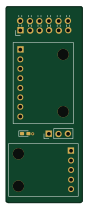
Kicad accl magn pmod
s59mz
20.3 × 52.1 mm16 parts2LGPL-3.01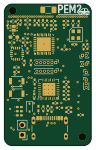 ESP32
Pem tiny car
AmeyDEWan
23 × 37.5 mm91 parts4LNo license0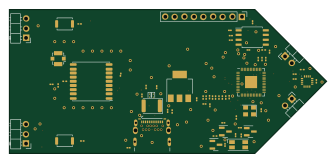 RP2040/RP2350
PULP
JAS-UCF
84 × 38.1 mm68 parts2LCERN-OHL-S-2.00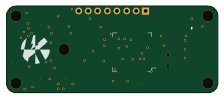 NXP
Rocketometer6050
kwan3217
55.9 × 22.9 mm72 partsGPL-2.02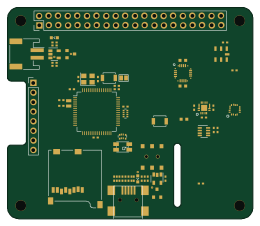 NXP
Loginator pihat
65 × 56 mm65 parts2LGPL-2.02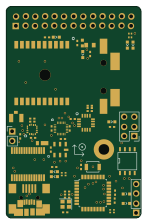 AVR/Arduino
Tomo
35.6 × 55.9 mm57 parts2LGPL-2.02
How designs wire the HMC5883L
Read from the KiCad layouts of 11 open source designs, one per repository: what each pin of the HMC5883L connects to, and the resistors, capacitors and other passives placed on it.
- The SCL pins have a pull-up to 3.3V on 10 of 11 designs, most often 10 kΩ (then 4.7 kΩ).
- The VDD pin has a decoupling capacitor on 10 of 11 designs, most often 100 nF (then 1 µF).
- The C1 pin has a capacitor to GND on 10 of 10 designs, most often 4.7 µF (then 100 nF).
- The SDA pin has a pull-up to 3.3V on 9 of 10 designs, most often 10 kΩ (then 4.7 kΩ).
| Pin | Connected to | Parts on the pin |
|---|---|---|
| SCLpin 1, 3 | Connected to: The microcontroller 36% · not connected 41% |
|
| VDDpin 2 | Connected to: 3.3V 91% |
|
| S1pin 4 | Connected to: 3.3V 73% | — |
| DRDYpin 5, 15 | Connected to: Not connected 71% · a signal 24% | — |
| 6(NC)pin 6 | Connected to: Not connected 90% | — |
| 7(NC)pin 7 | Connected to: Not connected 90% | — |
| SETPpin 8 | Connected to: Signal 80% · not connected 20% |
|
| GNDpin 9, 11 | Connected to: GND 100% | — |
| C1pin 10 | Connected to: Signal 90% |
|
| SETCpin 12 | Connected to: Signal 80% · not connected 20% |
|
| VDDIOpin 13 | Connected to: 3.3V 90% |
|
| 14(NC)pin 14 | Connected to: Not connected 90% | — |
| SDApin 16 | Connected to: The microcontroller 80%, a connector 30%, MPU-6050 30% |
|
Connections count pins, parts count designs; values in brackets are how many parts had that value. Designs read include Stubby by thebiguno, Cjmcu2 by aeracoop, Flight controller v2 by Eryk-Mozdzen and M2fc by cuspaceflight.
The HMC5883L in open source designs
The gallery holds 14 open source boards using the HMC5883L from 12 GitHub repositories; a typical one measures about 49.5 × 55.9 mm and carries around 70 components.
67% are two-layer designs, the rest use four layers or more, and 50% carry an open source license.
The most starred is Stubby by thebiguno.
Parts used alongside the HMC5883L
Microcontrollers on boards using the HMC5883L
What boards using the HMC5883L are built for
HMC5883L: common questions
Where can I find a HMC5883L reference design?
Each of the 14 boards on this page is a real design using the HMC5883L. Open one to see how it is wired up, with the full BOM, a render of the layout and links to its KiCad files.
What pull-up resistor is used on the HMC5883L SCL pin?
The SCL pins have a pull-up to 3.3V on 10 of 11 designs, most often 10 kΩ (then 4.7 kΩ). Counted from the KiCad layouts of 11 open source designs using the HMC5883L.
What decoupling capacitors do designs use on the HMC5883L VDD pin?
The VDD pin has a decoupling capacitor on 10 of 11 designs, most often 100 nF (then 1 µF). Counted from the KiCad layouts of 11 open source designs using the HMC5883L.
How is the HMC5883L C1 pin connected?
The C1 pin has a capacitor to GND on 10 of 10 designs, most often 4.7 µF (then 100 nF). Counted from the KiCad layouts of 11 open source designs using the HMC5883L.
What parts are used alongside the HMC5883L?
The ADXL345, L3G4200D, MPU-6050, MS5611-01BA03 and ADP3335 appear in the most repositories here.
Which microcontrollers do boards using the HMC5883L use?
Most are built on ESP32 (3), STM32 (3), AVR/Arduino (2) and NXP (2).
How big is a typical board using the HMC5883L?
The median is 49.5 × 55.9 mm, and 67% are two-layer designs.
What is the most popular open source board using the HMC5883L?
By GitHub stars, Stubby by thebiguno, with 36 stars.
Can I simulate one of these boards using the HMC5883L before building it?
Yes. HardLabs turns a board's netlist and BOM into a working simulation, so you can boot and test firmware against it with no hardware on your desk.