
17 open source boards using the TCA9555PWR
Real designs built with the TCA9555PWR, from public GitHub projects: a quick way to see how others power, decouple and connect it. Each board comes with its KiCad files, full parts list and a render — and you can simulate its firmware on HardLabs.
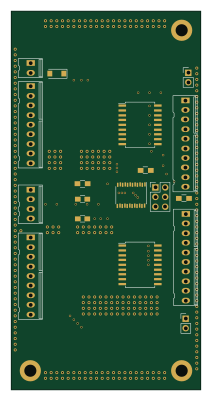
Alexi2C
F6ITU
50 × 100 mm22 parts2LNo license4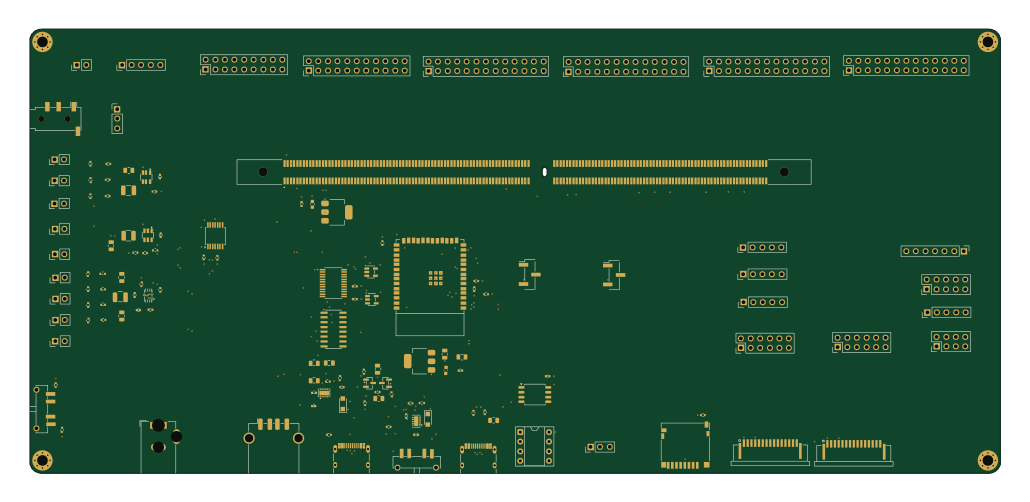 ESP32
Teacup carrier
thingino
257 × 117.5 mm133 parts4LGPL-3.02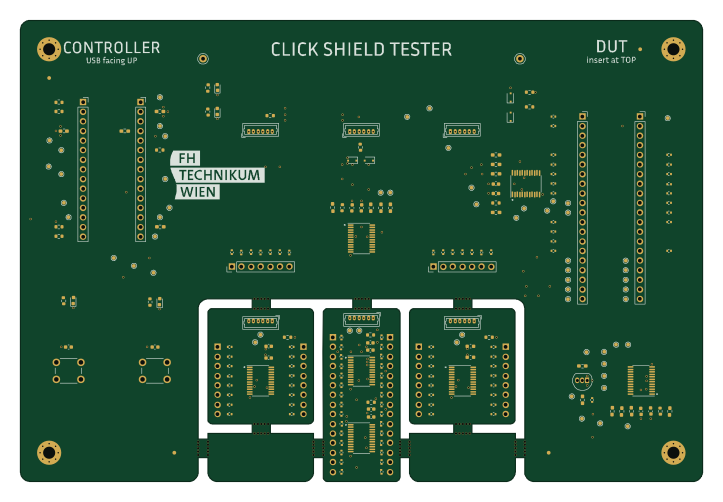
ClickTest
mtfinding
180.3 × 121.9 mm315 parts2LNo license0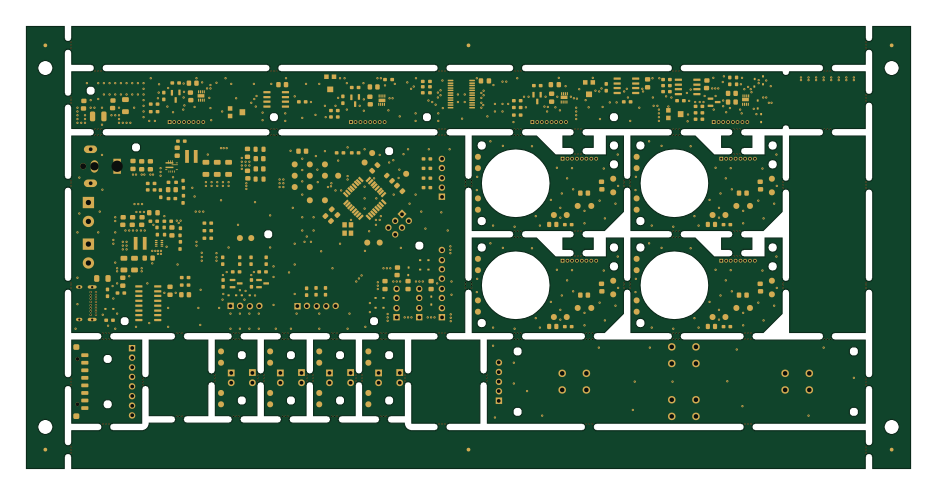 AVR/Arduino
Pillex main
xPiTi
234 × 117 mm209 parts2LNo license0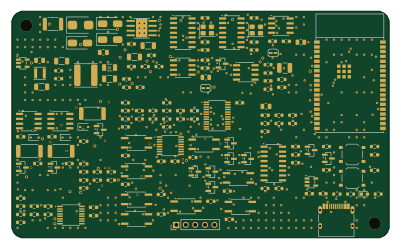 ESP32
Cyd obd adapter
ssjrocks
100 × 60 mm166 parts4LAGPL-3.00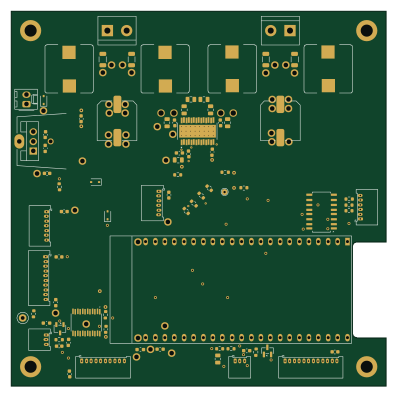 ESP32
Tas5805m mux board
cbaurtx
99.1 × 99.1 mm96 parts4LCERN-OHL-W-2.00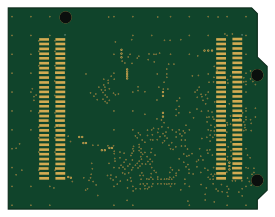
Unoq hat
Leif-Rydenfalk
68.6 × 53.3 mm77 parts4LApache-2.00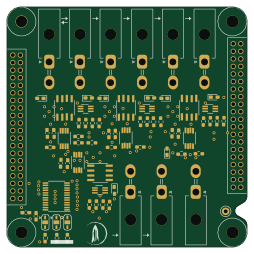
Cas pyro hw
calstar
63.5 × 63.5 mm69 parts4LBSD-3-Clause0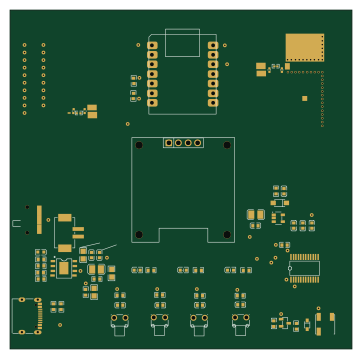 ESP32
Policyatdc33
mosfet0
90.4 × 89.6 mm64 parts2LGPL-3.00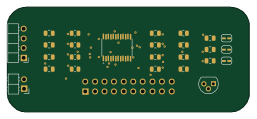
RC2014-front panel i2c
wdl1908
64 × 27.7 mm24 parts2LCERN-OHL-W-2.00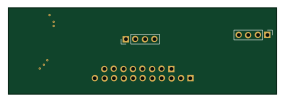
McDapBots KiCad ReflectanceAdapter
ayun1998-3
71.1 × 22.9 mm5 parts2LNo license0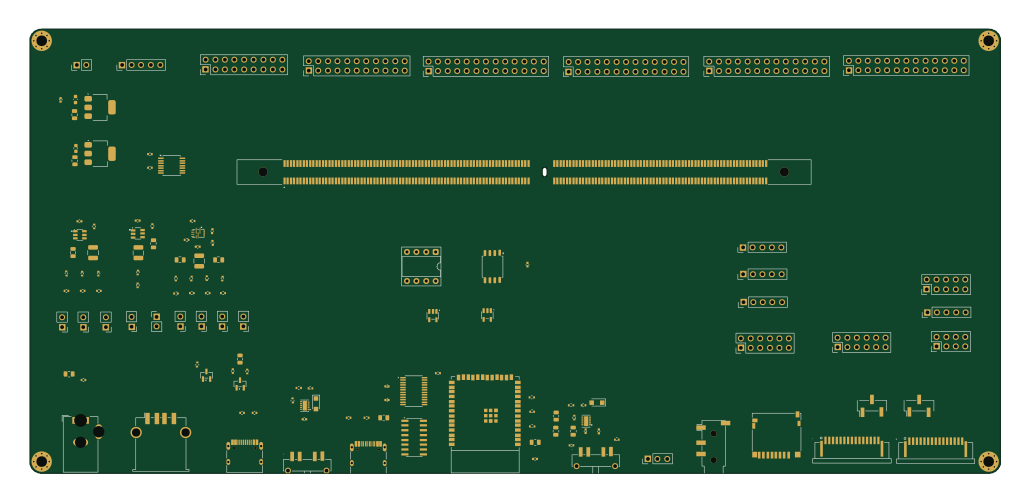 ESP32
Teacup carrier merge test
257 × 117.5 mm131 parts4LGPL-3.02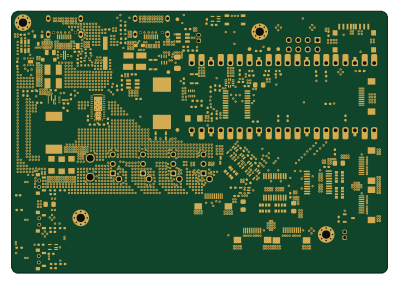 RP2040/RP2350
Universal Power Delivery and Control Board
Oscyloskop444
99.5 × 69.3 mm174 parts4LGPL-3.00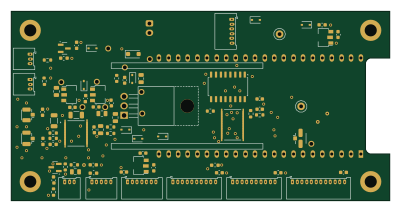 ESP32
Pcm5102a mux board
100 × 50 mm80 parts4LCERN-OHL-W-2.00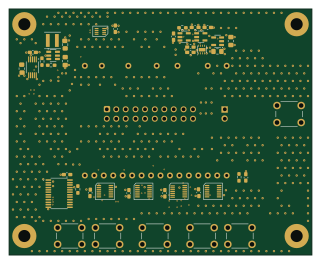
Alarm IO Board
super-cow-powers
80 × 65 mm45 parts2LBSD-3-Clause0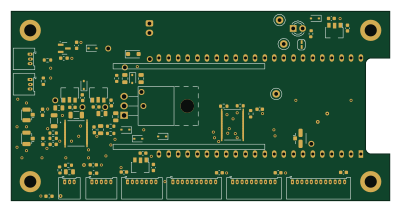 ESP32
Pcm5102a board
100 × 50 mm79 parts4LCERN-OHL-W-2.00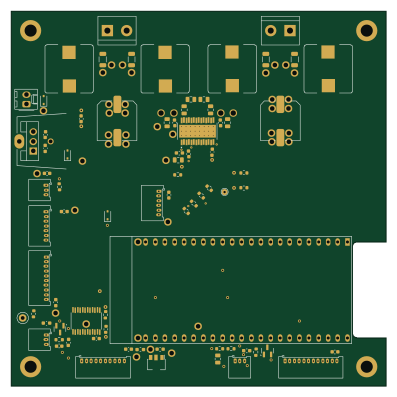 ESP32
Tas5805m board
99.1 × 99.1 mm78 parts4LCERN-OHL-W-2.00
How designs wire the TCA9555PWR
Read from the KiCad layouts of 13 open source designs, one per repository: what each pin of the TCA9555PWR connects to, and the resistors, capacitors and other passives placed on it.
- The VCC pin has a decoupling capacitor on 11 of 13 designs, most often 100 nF (then 10 nF).
- The A0 pin is tied to GND on 8 of 13 designs (a signal on 5).
- The SCL pin has a pull-up to 3.3V on 6 of 13 designs, most often 4.7 kΩ (then 3.3 kΩ).
- The SDA pin has a pull-up to 3.3V on 6 of 13 designs, most often 4.7 kΩ (then 3.3 kΩ).
| Pin | Connected to | Parts on the pin |
|---|---|---|
| P02pin 6 | Connected to: A connector 38% |
|
| P03pin 7 | Connected to: A connector 38% |
|
| GNDpin 12 | Connected to: GND 100% | — |
| P17pin 20 | Connected to: A connector 23% · not connected 38% |
|
| A0pin 21 | Connected to: GND 62% · a signal 38% | — |
| SCLpin 22 | Connected to: A connector 62%, the microcontroller 38% |
|
| SDApin 23 | Connected to: A connector 62%, the microcontroller 38% |
|
| VCCpin 24 | Connected to: 3.3V 85% · a signal 15% |
|
16 more pins vary from design to design. Connections count pins, parts count designs; values in brackets are how many parts had that value. Designs read include Alexi2C by F6ITU, Teacup carrier by thingino, McDapBots KiCad ReflectanceAdapter by ayun1998-3 and Cas pyro hw by calstar.
The TCA9555PWR in open source designs
The gallery holds 17 open source boards using the TCA9555PWR from 13 GitHub repositories; a typical one measures about 99.1 × 69.3 mm and carries around 79 components.
59% use four copper layers or more, and 76% carry an open source license.
The most starred is Alexi2C by F6ITU.
Microcontrollers on boards using the TCA9555PWR
What boards using the TCA9555PWR are built for
TCA9555PWR: common questions
Where can I find a TCA9555PWR reference design?
Each of the 17 boards on this page is a real design using the TCA9555PWR. Open one to see how it is wired up, with the full BOM, a render of the layout and links to its KiCad files.
What decoupling capacitors do designs use on the TCA9555PWR VCC pin?
The VCC pin has a decoupling capacitor on 11 of 13 designs, most often 100 nF (then 10 nF). Counted from the KiCad layouts of 13 open source designs using the TCA9555PWR.
How is the TCA9555PWR A0 pin connected?
The A0 pin is tied to GND on 8 of 13 designs (a signal on 5). Counted from the KiCad layouts of 13 open source designs using the TCA9555PWR.
What pull-up resistor is used on the TCA9555PWR SCL pin?
The SCL pin has a pull-up to 3.3V on 6 of 13 designs, most often 4.7 kΩ (then 3.3 kΩ). Counted from the KiCad layouts of 13 open source designs using the TCA9555PWR.
Which microcontrollers do boards using the TCA9555PWR use?
Most are built on ESP32 (8), AVR/Arduino (1) and RP2040/RP2350 (1).
How big is a typical board using the TCA9555PWR?
The median is 99.1 × 69.3 mm, and 41% are two-layer designs.
What is the most popular open source board using the TCA9555PWR?
By GitHub stars, Alexi2C by F6ITU, with 4 stars.
Can I simulate one of these boards using the TCA9555PWR before building it?
Yes. HardLabs turns a board's netlist and BOM into a working simulation, so you can boot and test firmware against it with no hardware on your desk.