
15 open source boards using the TPS54560BDDA
Real designs built with the TPS54560BDDA, from public GitHub projects: a quick way to see how others power, decouple and connect it. Each board comes with its KiCad files, full parts list and a render — and you can simulate its firmware on HardLabs.
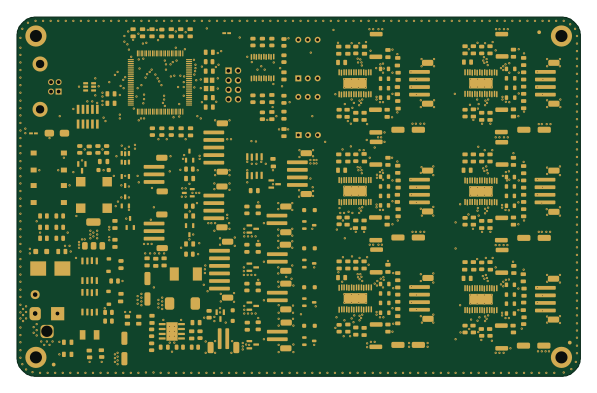 STM32
LumenPnP Motherboard
opulo-inc
149 × 95 mm296 parts4LCC-BY-SA-4.03.7k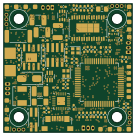 STM32
OpenDrone HW AIO FC F405
phonght32
34 × 34 mm211 parts8LMIT50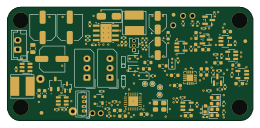
Grippette - USB hub and Dynamixel device
pollen-robotics
65 × 30 mm113 parts4LApache-2.010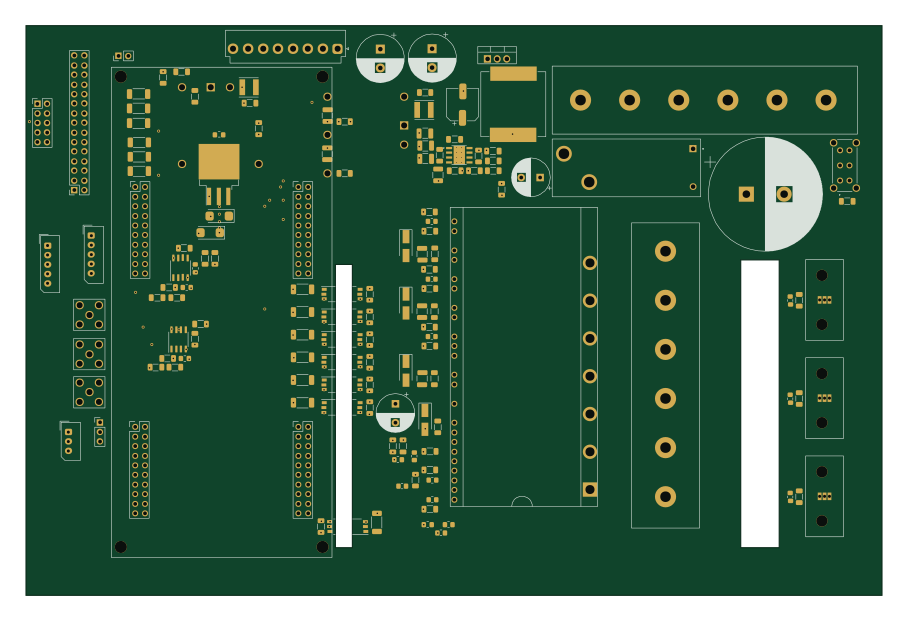
2021BEV
jaeyeon302
226.6 × 150.8 mm144 parts2LNo license4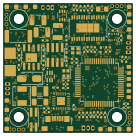 STM32
Qnot1
SushEdge
34 × 34 mm211 parts8LNo license1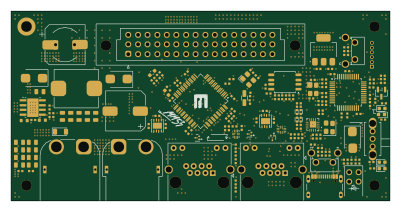 STM32
MMS3
ArthorH
100 × 50 mm156 parts4LNo license1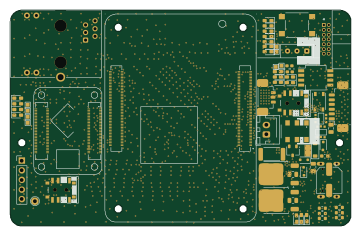 STM32
RasPi
Tomoshibi-technology
90 × 57 mm270 parts4LNo license0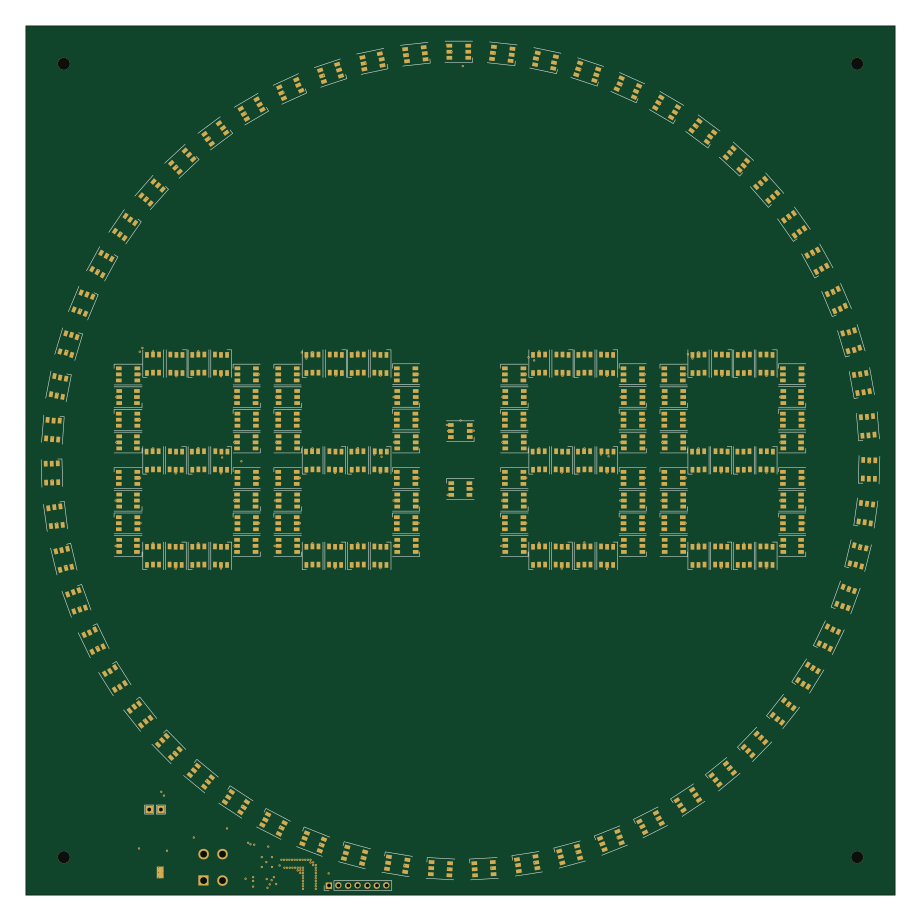 Nordic nRF
Nrf rgb clock
Ihysol
230 × 230 mm214 parts4LNo license0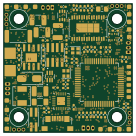 STM32
Qnot
34 × 34 mm211 parts8LNo license0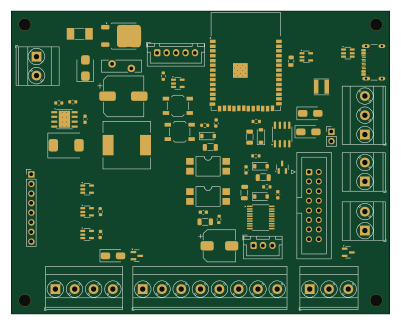 ESP32
ParkFlow
kgchord
100 × 80 mm145 parts2LNo license0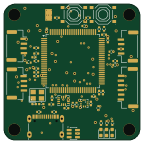 STM32
SATVIK-26
SavvySatvikCodes
36 × 36 mm76 parts4LNo license0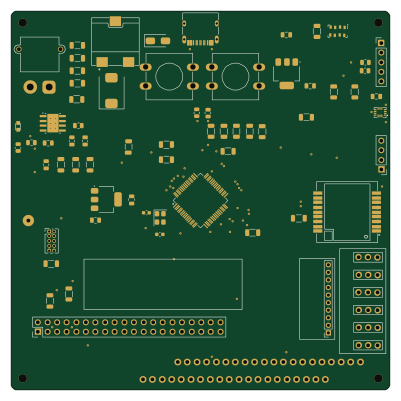 STM32
National robotics challenge submission
advaitconty
100 × 100 mm72 parts4LNo license0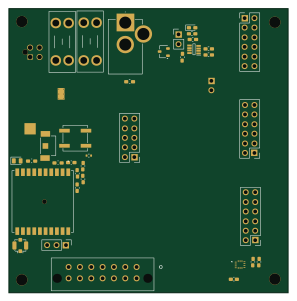
VCAT-TelemetryLeaderInterface
lhr-solar
74 × 75.2 mm62 parts2LCustom license0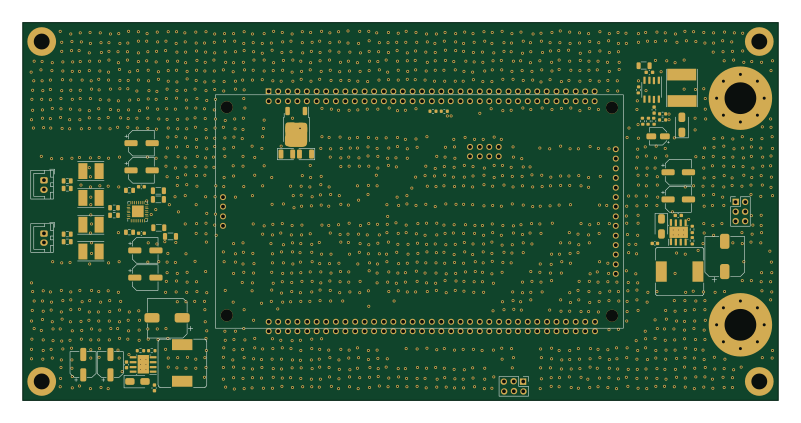
RC Charger MainBoard
aokblast
200 × 100 mm67 parts2LNo license0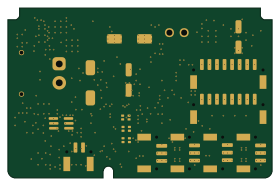 STM32
Computing power hub
bluesatunsw
70 × 45 mm182 parts6LApache-2.05
How designs wire the TPS54560BDDA
Read from the KiCad layouts of 15 open source designs, one per repository: what each pin of the TPS54560BDDA connects to, and the resistors, capacitors and other passives placed on it.
- The BOOT pin has a series capacitor on 15 of 15 designs, most often 100 nF.
- The SW pin has a series capacitor on 15 of 15 designs, most often 100 nF.
- The RT/CLK pin has a resistor to GND on 14 of 15 designs, most often 243 kΩ (then 274 kΩ).
- The SW pin has a inductor on 14 of 15 designs, most often 10 µH (then 15 µH).
| Pin | Connected to | Parts on the pin |
|---|---|---|
| BOOTpin 1 | Connected to: Signal 100% |
|
| VINpin 2 | Connected to: BATT 47% · a signal 47% |
|
| ENpin 3 | Connected to: Not connected 53% · a signal 47% |
|
| RT/CLKpin 4 | Connected to: Signal 100% |
|
| FBpin 5 | Connected to: Signal 93% |
|
| COMPpin 6 | Connected to: Signal 93% |
|
| GNDpin 7, 9 | Connected to: GND 97% | — |
| SWpin 8 | Connected to: Signal 100% |
|
Connections count pins, parts count designs; values in brackets are how many parts had that value. Designs read include LumenPnP Motherboard by opulo-inc, OpenDrone HW AIO FC F405 by phonght32, Grippette - USB hub and Dynamixel device by pollen-robotics and Computing power hub by bluesatunsw.
The TPS54560BDDA in open source designs
The gallery holds 15 open source boards using the TPS54560BDDA from 15 GitHub repositories; a typical one measures about 90 × 57 mm and carries around 156 components.
73% use four copper layers or more, and 27% carry an open source license.
The most starred is LumenPnP Motherboard by opulo-inc.
Parts used alongside the TPS54560BDDA
Microcontrollers on boards using the TPS54560BDDA
What boards using the TPS54560BDDA are built for
TPS54560BDDA: common questions
Where can I find a TPS54560BDDA reference design?
Each of the 15 boards on this page is a real design using the TPS54560BDDA. Open one to see how it is wired up, with the full BOM, a render of the layout and links to its KiCad files.
How is the TPS54560BDDA BOOT pin connected?
The BOOT pin has a series capacitor on 15 of 15 designs, most often 100 nF. Counted from the KiCad layouts of 15 open source designs using the TPS54560BDDA.
How is the TPS54560BDDA SW pin connected?
The SW pin has a series capacitor on 15 of 15 designs, most often 100 nF. Counted from the KiCad layouts of 15 open source designs using the TPS54560BDDA.
What resistor goes on the TPS54560BDDA RT/CLK pin?
The RT/CLK pin has a resistor to GND on 14 of 15 designs, most often 243 kΩ (then 274 kΩ). Counted from the KiCad layouts of 15 open source designs using the TPS54560BDDA.
What parts are used alongside the TPS54560BDDA?
The STM32F405RGTx, AT7456, BMP280, OUTLINE and RT9013-33GB appear in the most repositories here.
Which microcontrollers do boards using the TPS54560BDDA use?
Most are built on STM32 (9), ESP32 (1) and Nordic nRF (1).
How big is a typical board using the TPS54560BDDA?
The median is 90 × 57 mm, and 27% are two-layer designs.
What is the most popular open source board using the TPS54560BDDA?
By GitHub stars, LumenPnP Motherboard by opulo-inc, with 3,655 stars.
Can I simulate one of these boards using the TPS54560BDDA before building it?
Yes. HardLabs turns a board's netlist and BOM into a working simulation, so you can boot and test firmware against it with no hardware on your desk.