
29 open source boards using the 3.3V
Real designs built with the 3.3V, from public GitHub projects: a quick way to see how others power, decouple and connect it. Each board comes with its KiCad files, full parts list and a render — and you can simulate its firmware on HardLabs.
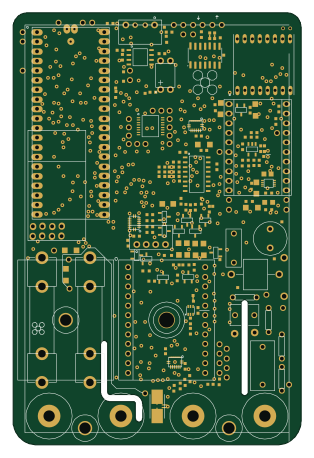 RP2040/RP2350
HydraMeter 0.4
jduffy105
76.2 × 114.3 mm288 parts2LCERN-OHL-S-2.0174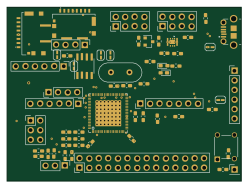
F1c200s dev board
Mr-Bossman
62 × 46 mm58 parts2LNo license16- schematic only · 69 partsAVR/Arduino
Thotcon0x5
Workshop88
69 partsNo license7 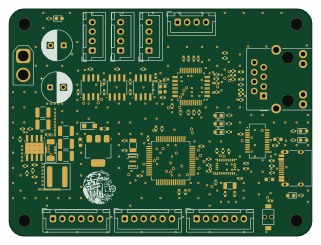 STM32
STM32GN10Mainboard
ararobo
80 × 60 mm124 parts4LNo license2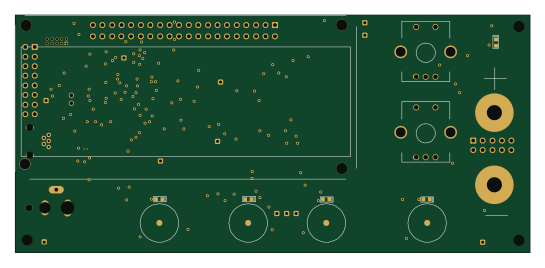 STM32
STM32Lps display rev 10
jerryok826
136.1 × 62.7 mm130 parts2LMIT1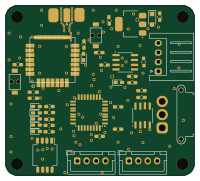 STM32
STM32PowerCutoffBoard1
50 × 45 mm42 parts2LNo license1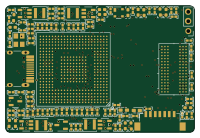
Slimarm hypericum
jlywxy
50 × 33.5 mm126 parts4LGPL-2.00- schematic only · 49 partsFPGA
Gate to glass
OoEthanoO
49 partsNo license0  Nordic nRF
Seeed Studio XIAO nRF52840 v1.3
dhirptl
21 × 17.8 mm79 parts2LMIT3 Nordic nRF
Seeed Studio XIAO nRF52840 v1.3
Videocraft10
21 × 17.8 mm79 parts2LMIT2 Nordic nRF
Seeed Studio XIAO nRF52840 v1.3
feastorg
21 × 17.8 mm79 parts2LCC0-1.01 Nordic nRF
Seeed Studio XIAO nRF52840 v1.3
sinismylastname
21 × 17.8 mm79 parts2LNo license1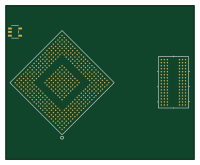
Slarm zero awa20.1
49.9 × 40.7 mm124 parts4LGPL-2.00 Nordic nRF
Seeed Studio XIAO nRF52840 v1.3
AM1NOM
21 × 17.8 mm79 parts2LMIT0 Nordic nRF
Seeed Studio XIAO nRF52840 v1.3
newtontriumphant
21 × 17.8 mm79 parts2LNo license0 Nordic nRF
Seeed Studio XIAO nRF52840 v1.3
samanbeer
21 × 17.8 mm79 parts2LNo license0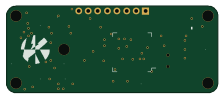 NXP
NXPRocketometer6050
kwan3217
55.9 × 22.9 mm72 partsGPL-2.02 Nordic nRF
Seeed Studio XIAO nRF52840 v1.3
jadenvv
21 × 17.8 mm79 parts2LNo license1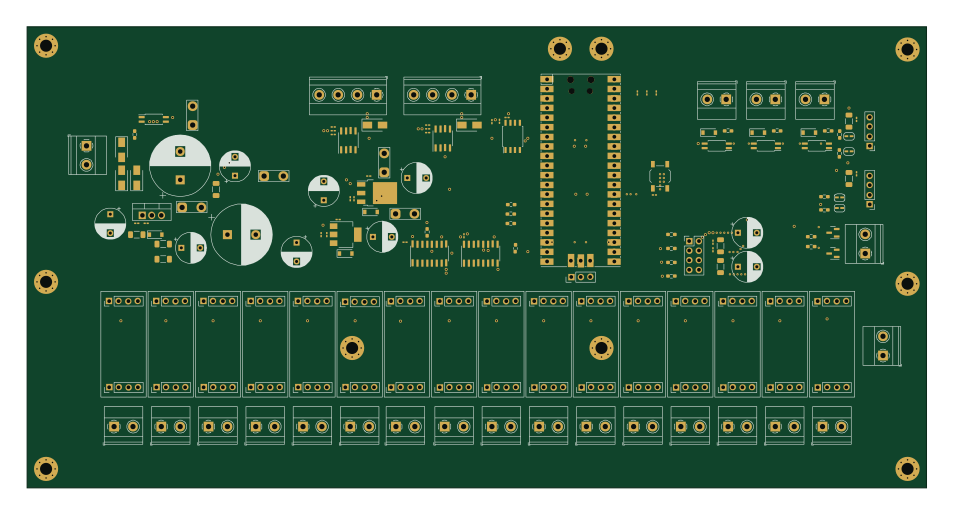 RP2040/RP2350
Output controller
mekatrol
238 × 122 mm161 parts2LNo license0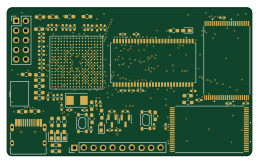
Us3c
64.6 × 39.2 mm90 parts4LGPL-2.00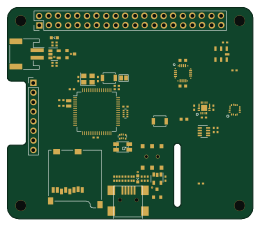 NXP
NXPLoginator pihat
65 × 56 mm65 parts2LGPL-2.02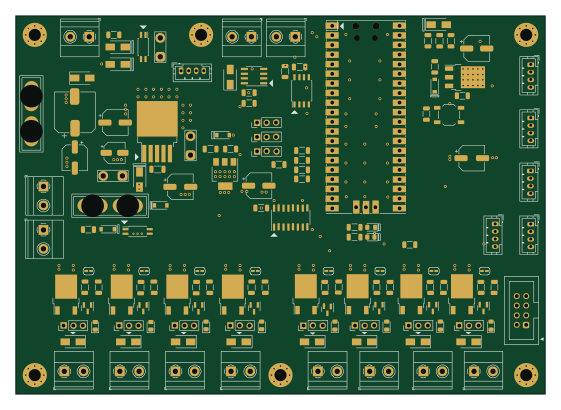 RP2040/RP2350
Controller
140 × 100 mm146 parts2LNo license0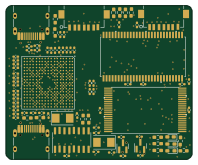
Slimarm classic 2410
49.3 × 40.8 mm86 parts4LGPL-2.00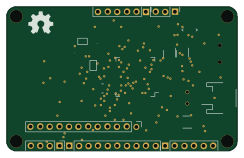 NXP
NXPLoginator2148
61 × 38.1 mm57 partsGPL-2.02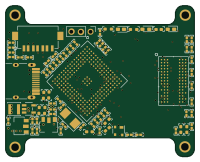
Slimarm carambola
50 × 39.9 mm84 parts4LGPL-2.00 Nordic nRF
Seeed Studio XIAO nRF52840 v1.3
Josephrp
21 × 17.8 mm79 parts2LCustom license12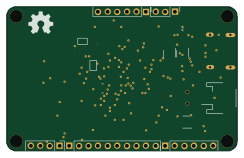
LoginatorM7
61 × 38.1 mm49 partsGPL-2.02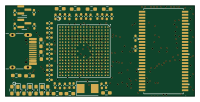
Slimarm almond b
50 × 23.9 mm70 parts4LGPL-2.00
Slimarm classic 2416
14.6 × 16.6 mm3 parts2LGPL-2.00
The 3.3V in open source designs
The gallery holds 29 open source boards using the 3.3V from 19 GitHub repositories; a typical one measures about 50 × 38.1 mm and carries around 79 components.
71% are two-layer designs, the rest use four layers or more, and 59% carry an open source license.
The most starred is HydraMeter 0.4 by jduffy105.
Parts used alongside the 3.3V
Microcontrollers on boards using the 3.3V
What boards using the 3.3V are built for
3.3V: common questions
Where can I find a 3.3V reference design?
Each of the 29 boards on this page is a real design using the 3.3V. Open one to see how it is wired up, with the full BOM, a render of the layout and links to its KiCad files.
What parts are used alongside the 3.3V?
The BQ25100, LSM6DS3TR-C, 5V, MCP2562-E-SN and W25Q128JVS appear in the most repositories here.
Which microcontrollers do boards using the 3.3V use?
Most are built on Nordic nRF (9), NXP (3), RP2040/RP2350 (3) and STM32 (3).
How big is a typical board using the 3.3V?
The median is 50 × 38.1 mm, and 71% are two-layer designs.
What is the most popular open source board using the 3.3V?
By GitHub stars, HydraMeter 0.4 by jduffy105, with 174 stars.
Can I simulate one of these boards using the 3.3V before building it?
Yes. HardLabs turns a board's netlist and BOM into a working simulation, so you can boot and test firmware against it with no hardware on your desk.