
35 open source boards using the BME688
Real designs built with the BME688, from public GitHub projects: a quick way to see how others power, decouple and connect it. Each board comes with its KiCad files, full parts list and a render — and you can simulate its firmware on HardLabs.
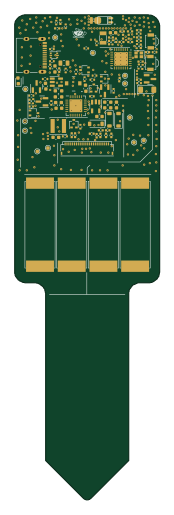 ESP32
Plantpal
teapotlaboratories
38.4 × 128.5 mm109 parts4LMIT98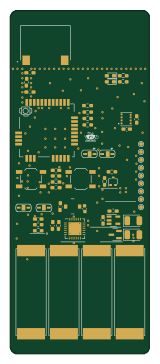
Teapotlabs BWLR1E
36.8 × 90.9 mm50 parts2LMIT35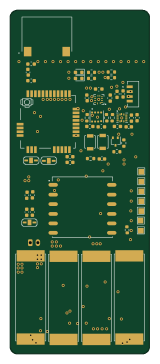
Bwlr3d
36.8 × 90.9 mm88 parts2LMIT18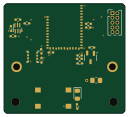
BeeLight
Kampi
32 × 29 mm20 parts2LGPL-3.016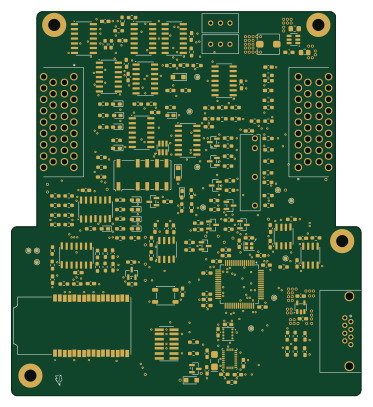 STM32
VCU
formulaslug
92.5 × 101.6 mm202 parts4LNo license7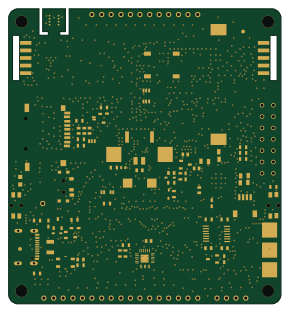 ESP32
Soldered Inkplate 4 TEMPERA with glass panel
SolderedElectronics
72 × 78 mm246 parts4LTAPR-OHL-1.05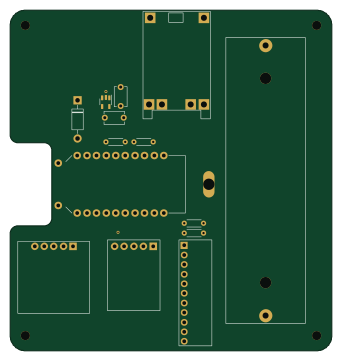 Nordic nRF
Schematics
LyubomirNachev
85 × 90 mm15 parts2LNo license2 STM32
BME688-ML-V1
Strooom
25.4 × 25.4 mm25 parts2LNo license1
BME680-Breakout
Destination-SPACE
14 × 14.1 mm10 parts2LCERN-OHL-P-2.01- schematic only · 13 parts
Hardware
CropSentry
13 partsGPL-3.01 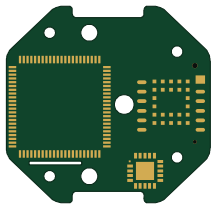 ESP32
CanSat
budabalint
54 × 52 mm439 parts4LNo license0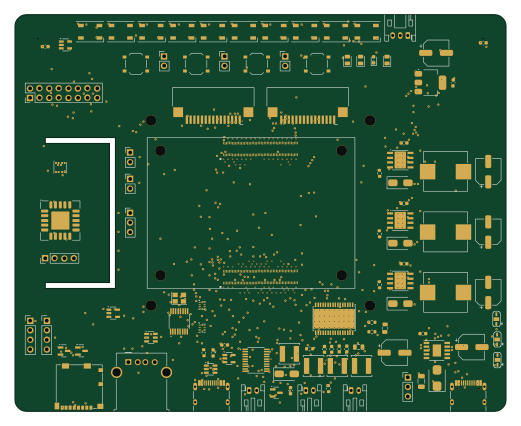 Raspberry Pi
HomeDeck
Kilan777
130 × 105 mm220 parts4LNo license0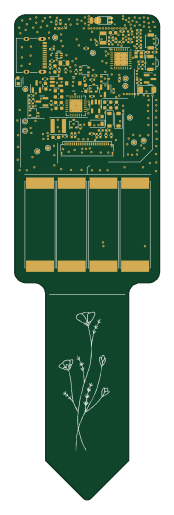 ESP32
Plantpal
rajeev2705
38.4 × 128.5 mm110 parts4LNo license0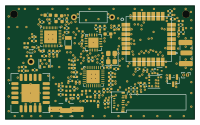
Cc1200-balloon
tmpk13
50 × 30 mm100 parts4LMIT0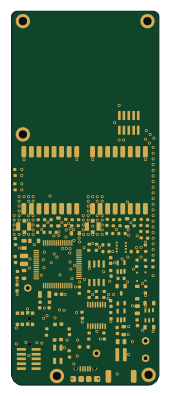 Microchip SAM
Roamer
ezzatisawesome
39 × 99 mm92 parts4LNo license0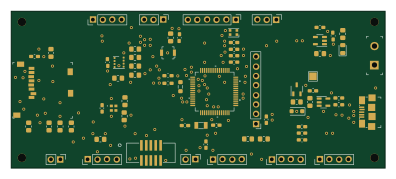 Microchip SAM
EE156 4 Layer
valex2
99 × 41.5 mm82 parts4LNo license0 ESP32
ESP32-C6-IoT
rappepi
20 × 41.5 mm73 parts4LCC-BY-NC-4.00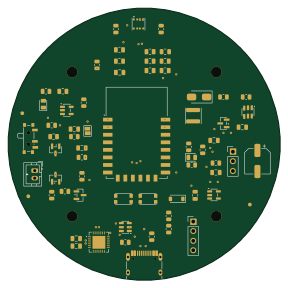 ESP8266
Air quality
NilsEngelbach
72 × 72 mm65 parts2LNo license0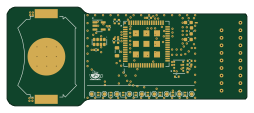
Teapotlabs BWLR1F
63.5 × 26.1 mm59 parts4LNo license0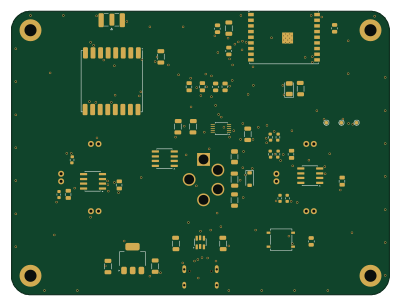 ESP32
AirQuality
leslier7
100 × 75 mm50 parts2LNo license0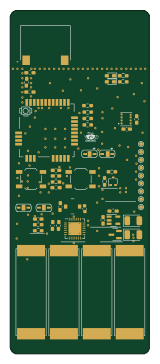
Teapotlabs BWLR1E
Volumetry
36.8 × 90.9 mm50 parts2LNo license0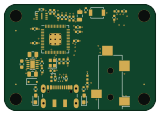 RP2040/RP2350
Harp.device.environment sensor
AllenNeuralDynamics
39.9 × 28 mm46 parts4LMIT0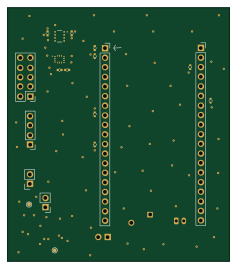
Kaciga je sve niz rijeku
Vlado-Perkovic
58.8 × 67.2 mm34 parts4LNo license0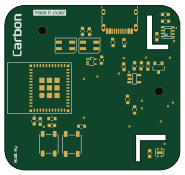 ESP32
Carbon
Enderman8843
46.3 × 43.4 mm31 parts2LNo license0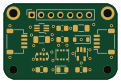
Bme688-breakouty
30 × 20 mm15 parts4LNo license0- schematic only · 84 parts
Daedalus v0
gregtidanian
84 partsNo license0  ESP32
Soldered Inkplate 4 TEMPERA with glass panel panel
1.9 × 12 mm246 parts4LTAPR-OHL-1.05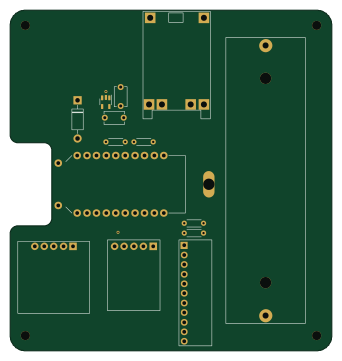 Nordic nRF
Schematics final
85 × 90 mm15 parts2LNo license2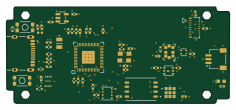 RP2040/RP2350
RP2350
sai-ydev
59 × 25.5 mm59 parts4LMIT1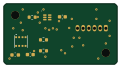
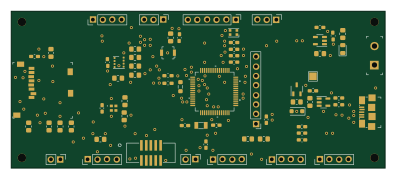
Wooden Smart Clock — sensor board
 tibm30 × 16 mm29 parts4LNo license1
 Microchip SAM
KairosV2
99 × 41.5 mm82 parts4LNo license0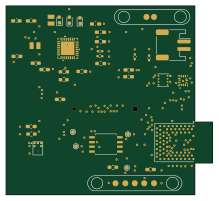 Nordic nRF
Board 1
Triksha-health
54.7 × 50 mm38 parts4LNo license0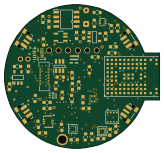
ZSWatch
yuxiangcheng2002
40.9 × 38 mm62 parts4LNo license0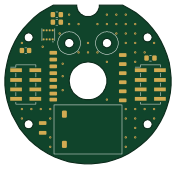
QNOB Touch Screen Adapter
alperbasarn
44 × 42 mm24 parts2LNo license0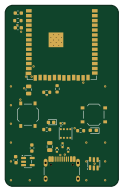 ESP32
Esp32 bme688
HeyPCB
30 × 48 mm24 parts4LCERN-OHL-S-2.00
How designs wire the BME688
Read from the KiCad layouts of 30 open source designs, one per repository: what each pin of the BME688 connects to, and the resistors, capacitors and other passives placed on it.
- The VDD pin has a decoupling capacitor on 24 of 29 designs, most often 100 nF (then 10 µF).
- The VDDIO pin has a decoupling capacitor on 23 of 29 designs, most often 100 nF (then 1 µF).
- The SDI pin has a pull-up to 3.3V on 19 of 30 designs, most often 10 kΩ (then 4.7 kΩ).
- The SCK pin has a pull-up to 3.3V on 18 of 30 designs, most often 10 kΩ (then 4.7 kΩ).
| Pin | Connected to | Parts on the pin |
|---|---|---|
| GNDpin 1, 7 | Connected to: GND 98% | — |
| SDIpin 3 | Connected to: The microcontroller 47%, a connector 27% |
|
| SCKpin 4 | Connected to: The microcontroller 43%, a connector 27% |
|
| SDOpin 5 | Connected to: Signal 50% · GND 33% |
|
| VDDIOpin 6 | Connected to: 3.3V 97% |
|
| VDDpin 8 | Connected to: 3.3V 97% |
|
1 more pin varies from design to design. Connections count pins, parts count designs; values in brackets are how many parts had that value. Designs read include Plantpal by teapotlaboratories, Teapotlabs BWLR1E by teapotlaboratories, Bwlr3d by teapotlaboratories and BeeLight by Kampi.
The BME688 in open source designs
The gallery holds 35 open source boards using the BME688 from 32 GitHub repositories; a typical one measures about 44 × 48 mm and carries around 59 components.
64% use four copper layers or more, and 34% carry an open source license.
The most starred is Plantpal by teapotlaboratories.
Parts used alongside the BME688
Microcontrollers on boards using the BME688
What boards using the BME688 are built for
BME688: common questions
Where can I find a BME688 reference design?
Each of the 35 boards on this page is a real design using the BME688. Open one to see how it is wired up, with the full BOM, a render of the layout and links to its KiCad files.
What decoupling capacitors do designs use on the BME688 VDD pin?
The VDD pin has a decoupling capacitor on 24 of 29 designs, most often 100 nF (then 10 µF). Counted from the KiCad layouts of 30 open source designs using the BME688.
What decoupling capacitors do designs use on the BME688 VDDIO pin?
The VDDIO pin has a decoupling capacitor on 23 of 29 designs, most often 100 nF (then 1 µF). Counted from the KiCad layouts of 30 open source designs using the BME688.
What pull-up resistor is used on the BME688 SDI pin?
The SDI pin has a pull-up to 3.3V on 19 of 30 designs, most often 10 kΩ (then 4.7 kΩ). Counted from the KiCad layouts of 30 open source designs using the BME688.
What parts are used alongside the BME688?
The AEM10941-QFN, USBLC6-2SC6, AP2112K-3.3TRG1, BMI270 and BMP581 appear in the most repositories here.
Which microcontrollers do boards using the BME688 use?
Most are built on ESP32 (9), Microchip SAM (3), Nordic nRF (3) and STM32 (2).
How big is a typical board using the BME688?
The median is 44 × 48 mm, and 36% are two-layer designs.
What is the most popular open source board using the BME688?
By GitHub stars, Plantpal by teapotlaboratories, with 98 stars.
Can I simulate one of these boards using the BME688 before building it?
Yes. HardLabs turns a board's netlist and BOM into a working simulation, so you can boot and test firmware against it with no hardware on your desk.