
25 open source boards using the ESP8266EX
Real designs built with the ESP8266EX, from public GitHub projects: a quick way to see how others power, decouple and connect it. Each board comes with its KiCad files, full parts list and a render — and you can simulate its firmware on HardLabs.
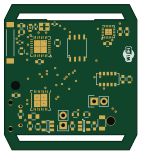 ESP8266
Esp8266-smartwatch
Jeija
35 × 38.4 mm59 parts2LNo license233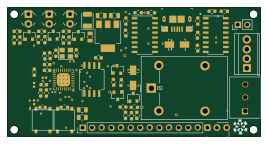 ESP8266
ME-ESP8266
MaloufSleep
66.8 × 34 mm73 parts2LMIT204 ESP8266
Wiflier EXP
cnlohr
37.8 × 21.5 mm61 parts2LMIT92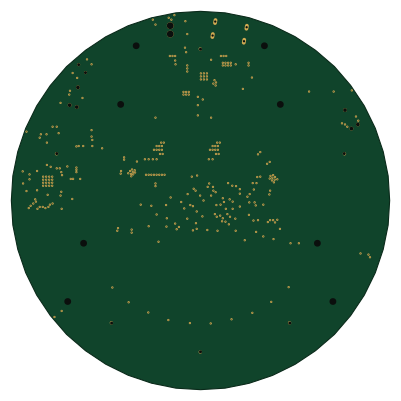 ESP8266
Enlightened-Otter
Jana-Marie
100 × 100 mm171 parts2LGPL-3.035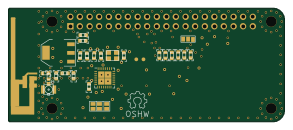 ESP8266
Esp hat
al177
73 × 30 mm20 parts2LCC-BY-4.025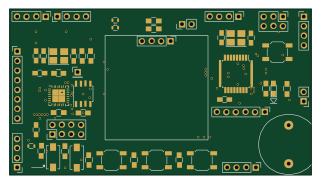 ESP8266
OpenCritter DevKit1
SuperMechaCow
80 × 44 mm52 parts2LMIT20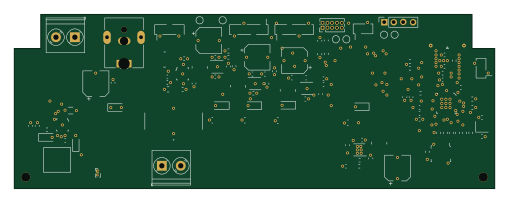 ESP8266
Motherboard
KhazAkar
127 × 46 mm108 partsMIT4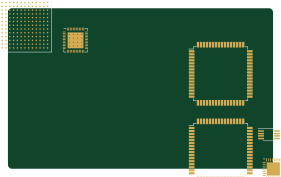 ESP8266
Echelon
systemsculptor
70.2 × 42.5 mm5 parts2LNo license2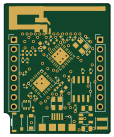 ESP8266
Neatboard esp8266
galjonsfigur
28 × 34.2 mm49 parts2LMIT1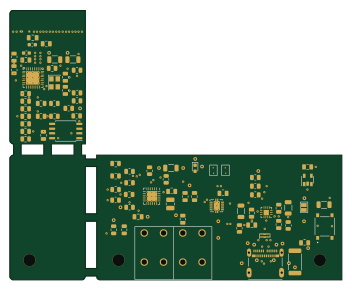 ESP8266
WeatherStation
aleksul
87.9 × 71.4 mm163 parts2LMIT0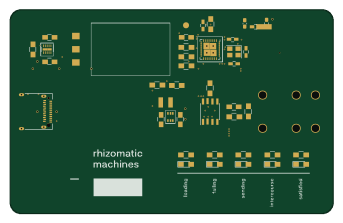 ESP8266
Rhizomatic sublime
maxwolfs
85.6 × 54 mm48 parts2LNo license0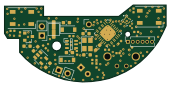 ESP8266
Lightball
42.6 × 20.3 mm46 parts2LNo license0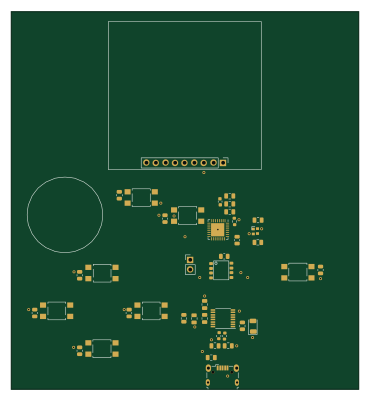 ESP8266
Gamerboy
no5pace
92 × 100 mm41 parts2LNo license0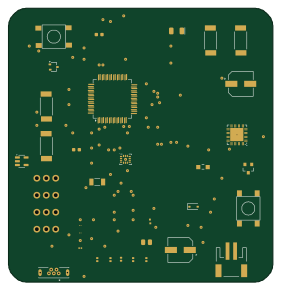 STM32
Flight-Controller-Design-2025
sthabisoslushaba
70 × 72.5 mm35 parts2LNo license0 ESP8266
Esp8266-core module
sonnyyin
22.4 × 14.8 mm26 parts4LNo license0 ESP8266
ESP01
Ashwini17p
40 × 10 mm19 parts2LNo license0- schematic only · 9 partsESP32
Automatic irrigation system
david-oliver-karunia
9 partsMIT0 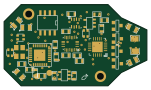 ESP8266
Wiflier EXP B
37.8 × 21.5 mm61 parts2LMIT92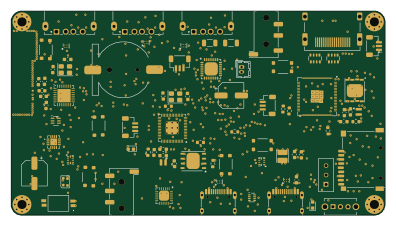 RP2040/RP2350
Frank next
rh1tech
99 × 54 mm245 parts4LGPL-3.065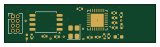 ESP8266
ESP01 redesign
40 × 10 mm19 parts2LNo license0- schematic only · 72 partsESP32
Kicad
goog-yaml
72 parts2LNo license0 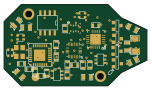 ESP8266
WiflierB
37.8 × 21.5 mm61 parts2LMIT92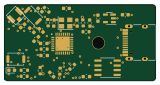 ESP8266
 Wireless DAP
ZhuYanzhen1
40 × 20 mm39 parts2LAGPL-3.057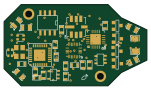 ESP8266
Wiflier
37.8 × 21.5 mm57 parts2LMIT92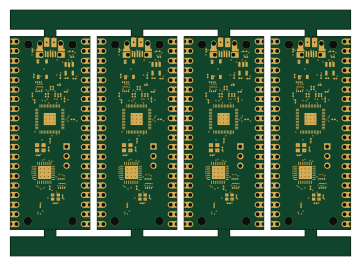 RP2040/RP2350
Panel
zeankundev
90 × 65 mm72 parts4LNo license1
How designs wire the ESP8266EX
Read from the KiCad layouts of 18 open source designs, one per repository: what each pin of the ESP8266EX connects to, and the resistors, capacitors and other passives placed on it.
- The RES12K pin has a resistor to GND on 16 of 18 designs, most often 12 kΩ.
- The VDDA pins have a decoupling capacitor on 15 of 18 designs, most often 100 nF (then 10 µF).
- The VDD_RTC pin is left unconnected on 18 of 18 designs.
- The XTAL_OUT pin has a crystal on 15 of 18 designs, most often 26 MHz (then 40 MHz).
| Pin | Connected to | Parts on the pin |
|---|---|---|
| VDDApin 1, 30 | Connected to: 3.3V 72% · a signal 28% |
|
| LNApin 2 | Connected to: Signal 94% |
|
| VDD3P3pin 3, 4 | Connected to: 3.3V 61% · a signal 33% |
|
| VDD_RTCpin 5 | Connected to: Not connected 100% | — |
| CHIP_PUpin 7 | Connected to: A connector 22% |
|
| XPD_DCDCpin 8 | Connected to: Not connected 61% · a signal 39% | — |
| VDDPSTpin 11, 17 | Connected to: 3.3V 78% · a signal 19% |
|
| MTDOpin 13 | Connected to: A connector 22% |
|
| GPIO2pin 14 | Connected to: A connector 44% |
|
| GPIO0pin 15 | Connected to: A connector 44% |
|
| SDIO_CLKpin 21 | Connected to: Signal 94% |
|
| U0TXDpin 26 | Connected to: A connector 44% |
|
| XTAL_OUTpin 27 | Connected to: Signal 94% |
|
| XTAL_INpin 28 | Connected to: Signal 89% |
|
| VDDDpin 29 | Connected to: 3.3V 72% · a signal 28% |
|
| RES12Kpin 31 | Connected to: Signal 94% |
|
| EXT_RSTBpin 32 | Connected to: A connector 22% · not connected 28% |
|
| GNDpin 33 | Connected to: GND 89% | — |
12 more pins vary from design to design. Connections count pins, parts count designs; values in brackets are how many parts had that value. Designs read include Esp8266-smartwatch by Jeija, ME-ESP8266 by MaloufSleep, Wiflier by cnlohr and Frank next by rh1tech.
The ESP8266EX in open source designs
The gallery holds 25 open source boards using the ESP8266EX from 21 GitHub repositories; a typical one measures about 66.8 × 34.2 mm and carries around 52 components.
87% are two-layer designs, the rest use four layers or more, and 56% carry an open source license.
The most starred is Esp8266-smartwatch by Jeija.
Parts used alongside the ESP8266EX
Microcontrollers on boards using the ESP8266EX
What boards using the ESP8266EX are built for
ESP8266EX: common questions
Where can I find a ESP8266EX reference design?
Each of the 25 boards on this page is a real design using the ESP8266EX. Open one to see how it is wired up, with the full BOM, a render of the layout and links to its KiCad files.
What resistor goes on the ESP8266EX RES12K pin?
The RES12K pin has a resistor to GND on 16 of 18 designs, most often 12 kΩ. Counted from the KiCad layouts of 18 open source designs using the ESP8266EX.
What decoupling capacitors do designs use on the ESP8266EX VDDA pin?
The VDDA pins have a decoupling capacitor on 15 of 18 designs, most often 100 nF (then 10 µF). Counted from the KiCad layouts of 18 open source designs using the ESP8266EX.
How is the ESP8266EX VDD_RTC pin connected?
The VDD_RTC pin is left unconnected on 18 of 18 designs. Counted from the KiCad layouts of 18 open source designs using the ESP8266EX.
Which microcontrollers do boards using the ESP8266EX use?
Most are built on ESP8266 (20), ESP32 (2), RP2040/RP2350 (2) and STM32 (1).
How big is a typical board using the ESP8266EX?
The median is 66.8 × 34.2 mm, and 87% are two-layer designs.
What is the most popular open source board using the ESP8266EX?
By GitHub stars, Esp8266-smartwatch by Jeija, with 233 stars.
Can I simulate one of these boards using the ESP8266EX before building it?
Yes. HardLabs turns a board's netlist and BOM into a working simulation, so you can boot and test firmware against it with no hardware on your desk.