
19 open source boards using the NRF52840-QIAA-R
Real designs built with the NRF52840-QIAA-R, from public GitHub projects: a quick way to see how others power, decouple and connect it. Each board comes with its KiCad files, full parts list and a render — and you can simulate its firmware on HardLabs.
 ESP32
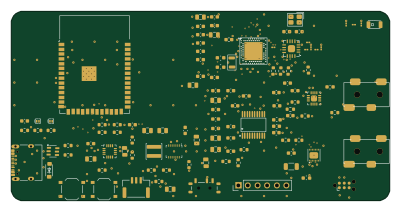
Open motorcycle intercom
d3vv3
100 × 50 mm116 parts4LMIT68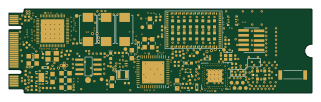 Nordic nRF
M2-smart iot module
antmicro
80.2 × 22.2 mm210 parts4LApache-2.030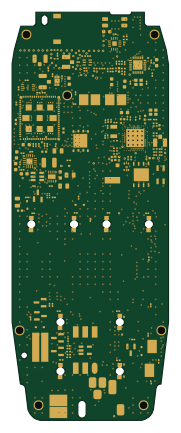 Nordic nRF
The-Mesh3310-Project
JLTelectronics
41.4 × 108 mm171 parts4LMIT26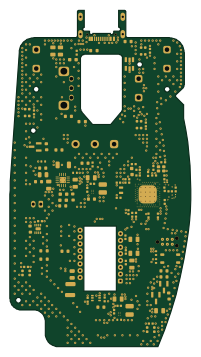 Nordic nRF
Cenere-Mouse
willwaush
47.8 × 89 mm104 parts4LCC-BY-NC-4.022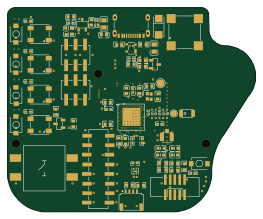 Nordic nRF
Ecad coffeecaller
tiacsys
65.6 × 54 mm78 parts2LCERN-OHL-S-2.014 Nordic nRF
Nitrokey-3a mini nrf52-hardware
Nitrokey
16.4 × 11.1 mm24 parts4LCERN-OHL-S-2.010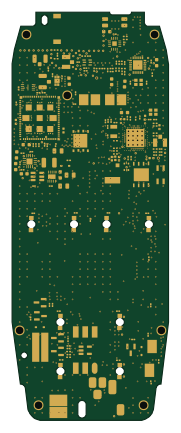 Nordic nRF
The-Mesh3310-Project
41.4 × 108 mm165 parts6LMIT9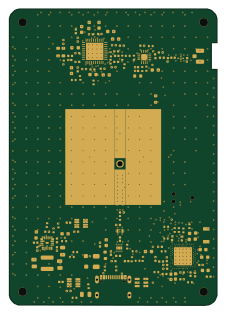 Nordic nRF
BEACON PhoneModule
Matthew-Marsicano
55 × 78.5 mm143 parts4LNo license2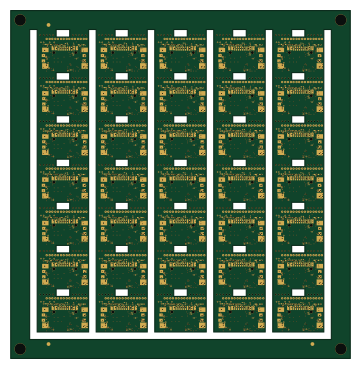 Nordic nRF
Meenie panel
RobbyV2
89.9 × 92.1 mm1120 parts8LNo license1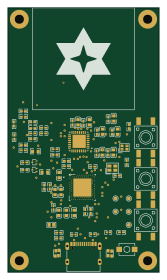 Nordic nRF
KiKard old
m5kro
40 × 70 mm70 parts2LNo license1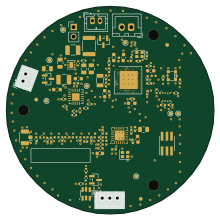 Nordic nRF
Lora ble sensor node
Mehdi-Ldj
55 × 55 mm96 parts4LCERN-OHL-P-2.00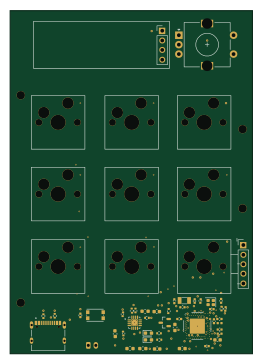 Nordic nRF
Macrotype
Gnoled5660
64.2 × 90.9 mm57 parts4LNo license0 Nordic nRF
Slim-Sleep-Tracker
NicholasKorth
31.8 × 15.3 mm57 parts4LCC-BY-NC-4.00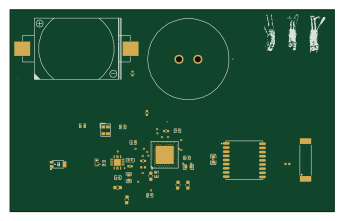 Nordic nRF
Wtrack
supisbe12
85.8 × 53.4 mm34 parts2LNo license0 Nordic nRF
Masters Thesis
Keaton-Ruthardt
25 × 20 mm29 parts2LMIT0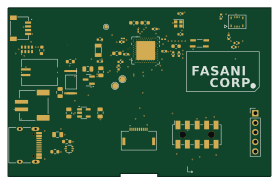 Nordic nRF
Sharp-LV
martinberlin
69.7 × 44.7 mm50 parts4LMIT1 Nordic nRF
Meenie
13.6 × 9.4 mm32 parts8LNo license1 Nordic nRF
Meenie board
13.6 × 9.4 mm32 parts8LNo license1 Nordic nRF
AN NRF52840 BLE
laforestlabs
146.2 × 58.2 mm25 parts2LNo license0
How designs wire the NRF52840-QIAA-R
Read from the KiCad layouts of 17 open source designs, one per repository: what each pin of the NRF52840-QIAA-R connects to, and the resistors, capacitors and other passives placed on it.
- The XC2 pin has a capacitor to GND on 17 of 17 designs, most often 12 pF (then 15 pF).
- The XC1 pin has a capacitor to GND on 17 of 17 designs, most often 12 pF (then 15 pF).
- The DEC1 pin has a capacitor to GND on 17 of 17 designs, most often 100 nF.
- The DEC4 pin has a capacitor to GND on 16 of 17 designs, most often 1 µF (then 47 nF).
| Pin | Connected to | Parts on the pin |
|---|---|---|
| VSSpin 74, B7 | Connected to: GND 100% | — |
| DEC2pin A18 | Connected to: Signal 53% · not connected 41% |
|
| VDDpin A22, AD14, AD23, B1, W1 | Connected to: 3.3V 88% |
|
| XC2pin A23 | Connected to: Signal 100% |
|
| DCCHpin AB2 | Connected to: Not connected 76% · a signal 24% | — |
| DECUSBpin AC5 | Connected to: Signal 76% · not connected 24% |
|
| P0.14pin AC9 | Connected to: Not connected 76% · a signal 24% | — |
| P0.16pin AC11 | Connected to: Not connected 71% · a signal 29% | — |
| P0.19pin AC15 | Connected to: Not connected 76% · a signal 24% | — |
| P0.21pin AC17 | Connected to: Not connected 71% · a signal 29% | — |
| P0.23pin AC19 | Connected to: Not connected 71% · a signal 29% | — |
| P0.25pin AC21 | Connected to: Not connected 71% · a signal 29% | — |
| VBUSpin AD2 | Connected to: VBUS 59% · GND 18% |
|
| DCCpin B3 | Connected to: Signal 71% · not connected 29% |
|
| DEC4pin B5 | Connected to: Signal 94% |
|
| P0.30/AIN6pin B9 | Connected to: Not connected 82% · a signal 18% | — |
| P0.28/AIN4pin B11 | Connected to: Not connected 71% · a signal 29% | — |
| P1.14pin B15 | Connected to: Not connected 76% · a signal 24% | — |
| P1.12pin B17 | Connected to: Not connected 76% · a signal 24% | — |
| P1.11pin B19 | Connected to: Not connected 76% · a signal 24% | — |
| XC1pin B24 | Connected to: Signal 100% |
|
| DEC1pin C1 | Connected to: Signal 100% |
|
| P0.00/XL1pin D2 | Connected to: Signal 71% · not connected 29% |
|
| DEC3pin D23 | Connected to: Signal 88% |
|
| DEC6pin E24 | Connected to: Signal 88% |
|
| P0.01/XL2pin F2 | Connected to: Signal 71% · not connected 29% |
|
| VSS_PApin F23 | Connected to: GND 100% | — |
| P0.27pin H2 | Connected to: Not connected 76% · a signal 24% | — |
| ANTpin H23 | Connected to: Signal 94% |
|
| P0.10/NFC2pin J24 | Connected to: Not connected 82% · a signal 18% | — |
| P0.05/AIN3pin K2 | Connected to: Not connected 76% · a signal 24% | — |
| P0.09/NFC1pin L24 | Connected to: Not connected 82% · a signal 18% | — |
| P0.07/TRACECLKpin M2 | Connected to: Not connected 88% | — |
| DEC5pin N24 | Connected to: Signal 76% · not connected 18% |
|
| P1.08pin P2 | Connected to: Not connected 82% · a signal 18% | — |
| P0.11/TRACEDATA2pin T2 | Connected to: Not connected 76% · a signal 24% | — |
| P1.05pin T23 | Connected to: Not connected 65% · a signal 35% | — |
| P1.03pin V23 | Connected to: Not connected 71% · a signal 29% | — |
| VDDHpin Y2 | Connected to: 3.3V 82% · a signal 18% |
|
| P1.01pin Y23 | Connected to: Not connected 65% · a signal 35% | — |
29 more pins vary from design to design. Connections count pins, parts count designs; values in brackets are how many parts had that value. Designs read include Open motorcycle intercom by d3vv3, M2-smart iot module by antmicro, The-Mesh3310-Project by JLTelectronics and Cenere-Mouse by willwaush.
The NRF52840-QIAA-R in open source designs
The gallery holds 19 open source boards using the NRF52840-QIAA-R from 17 GitHub repositories; a typical one measures about 55 × 54 mm and carries around 70 components.
74% use four copper layers or more, and 47% carry an open source license.
The most starred is Open motorcycle intercom by d3vv3.
Parts used alongside the NRF52840-QIAA-R
Microcontrollers on boards using the NRF52840-QIAA-R
What boards using the NRF52840-QIAA-R are built for
NRF52840-QIAA-R: common questions
Where can I find a NRF52840-QIAA-R reference design?
Each of the 19 boards on this page is a real design using the NRF52840-QIAA-R. Open one to see how it is wired up, with the full BOM, a render of the layout and links to its KiCad files.
How is the NRF52840-QIAA-R XC2 pin connected?
The XC2 pin has a capacitor to GND on 17 of 17 designs, most often 12 pF (then 15 pF). Counted from the KiCad layouts of 17 open source designs using the NRF52840-QIAA-R.
How is the NRF52840-QIAA-R XC1 pin connected?
The XC1 pin has a capacitor to GND on 17 of 17 designs, most often 12 pF (then 15 pF). Counted from the KiCad layouts of 17 open source designs using the NRF52840-QIAA-R.
How is the NRF52840-QIAA-R DEC1 pin connected?
The DEC1 pin has a capacitor to GND on 17 of 17 designs, most often 100 nF. Counted from the KiCad layouts of 17 open source designs using the NRF52840-QIAA-R.
What parts are used alongside the NRF52840-QIAA-R?
The SX1262IMLTRT, USBLC6-2P6, 595-TPS63031DSKR, 700-MAX16054AZTT and BME280 appear in the most repositories here.
Which microcontrollers do boards using the NRF52840-QIAA-R use?
Most are built on Nordic nRF (18) and ESP32 (1).
How big is a typical board using the NRF52840-QIAA-R?
The median is 55 × 54 mm, and 26% are two-layer designs.
What is the most popular open source board using the NRF52840-QIAA-R?
By GitHub stars, Open motorcycle intercom by d3vv3, with 68 stars.
Can I simulate one of these boards using the NRF52840-QIAA-R before building it?
Yes. HardLabs turns a board's netlist and BOM into a working simulation, so you can boot and test firmware against it with no hardware on your desk.