
15 open source boards using the FT2232HL-REEL
Real designs built with the FT2232HL-REEL, from public GitHub projects: a quick way to see how others power, decouple and connect it. Each board comes with its KiCad files, full parts list and a render — and you can simulate its firmware on HardLabs.
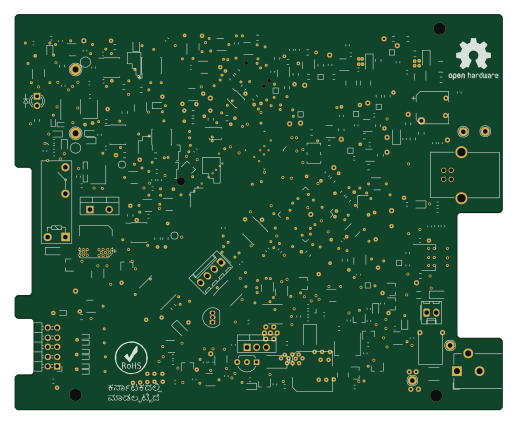
Zs1100a
zscircuits
129 × 104.6 mm486 partsNo license76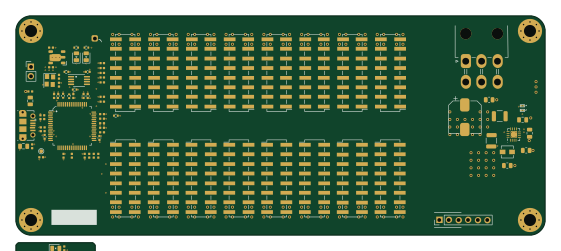 FPGA
Icepool board
jkiv
140 × 58 mm116 parts4LCC-BY-NC-4.06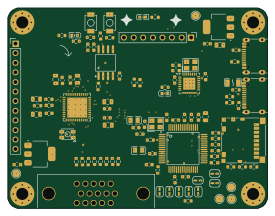 FPGA
Icey
darshg321
68.7 × 53 mm96 parts4LCERN-OHL-P-2.06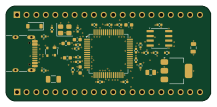
DTGC-a small-GPU-on an-FPGA-driven over-USB
CodeStuffed
54 × 25 mm39 parts4LNo license3 STM32
OpenVent
Open-Vent-Bristol
195.5 × 76.2 mm250 partsMIT2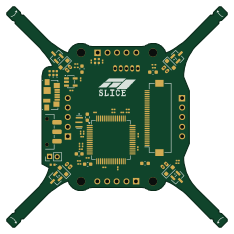 ESP32
Riskybirdv3
ucb-bar
58.3 × 58.3 mm172 parts4LNo license2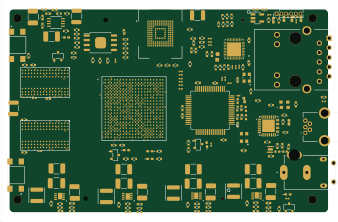 FPGA
MA-XILINX-FPGA-10-LAYER
moafkaljabi
84.2 × 53.6 mm425 parts10LNo license1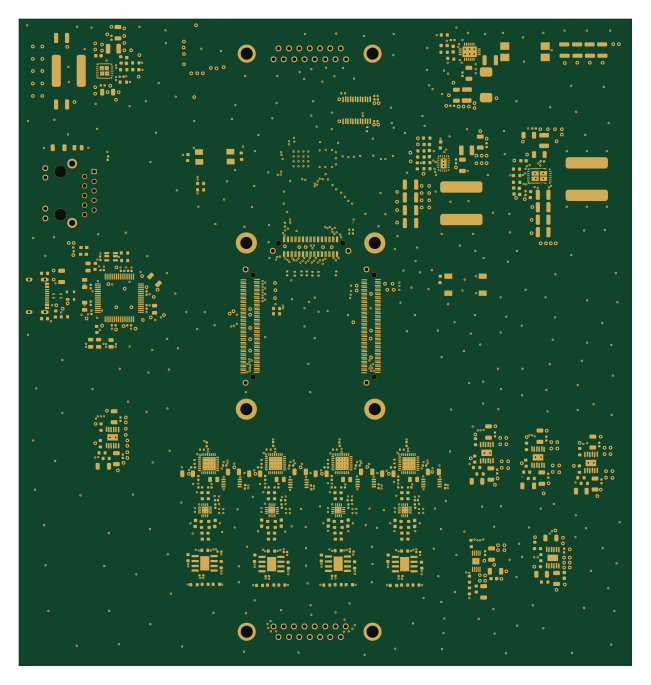
4-channel adc module
bcancinov
162 × 171 mm383 parts6LNo license1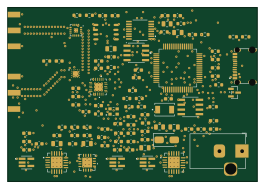
K band fmcw radar
HearnChristian
66 × 46 mm99 parts4LNo license1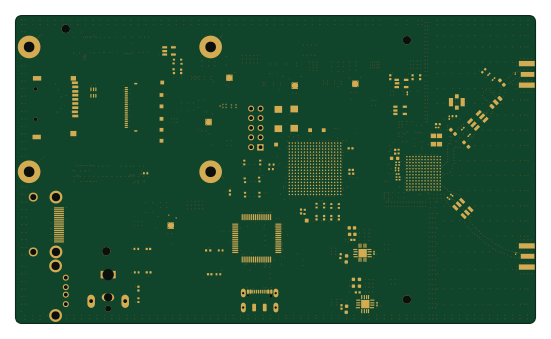 FPGA
PeriR
nihcoc
137.4 × 81.3 mm249 parts6LCustom license0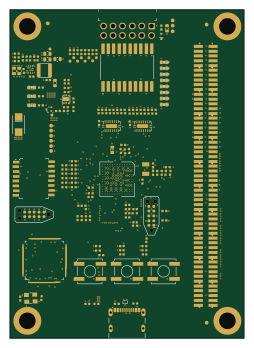
Mec1723-espi debugger
antmicro
62 × 87 mm204 parts8LApache-2.00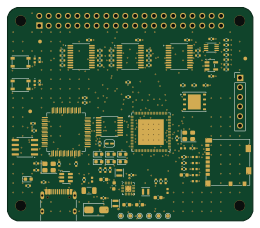 FPGA
Tangnano9k kr260-hat
calperxd
65 × 56.5 mm168 parts4LCustom license0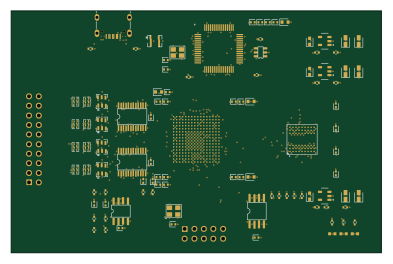 FPGA
VibePCB-LA
PaulBichl
98 × 64 mm103 parts6LNo license0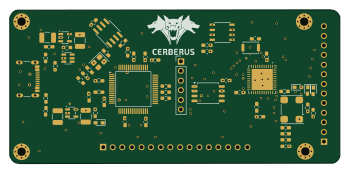 FPGA
CERBERUS
Darkops-cpu
87.3 × 40.5 mm85 parts4LNo license0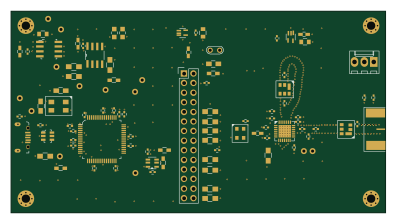
Usb gps
oresat
99.1 × 53.3 mm86 parts4LCERN-OHL-S-2.034
How designs wire the FT2232HL-REEL
Read from the KiCad layouts of 15 open source designs, one per repository: what each pin of the FT2232HL-REEL connects to, and the resistors, capacitors and other passives placed on it.
- The REF pin has a resistor to GND on 15 of 15 designs, most often 12 kΩ.
- The VCORE_12 pin has a decoupling capacitor on 15 of 15 designs, most often 100 nF (then 4.7 µF).
- The VCORE_37 pin has a decoupling capacitor on 15 of 15 designs, most often 100 nF (then 4.7 µF).
- The VREGOUT pin has a capacitor to GND on 15 of 15 designs, most often 100 nF (then 3.3 µF).
| Pin | Connected to | Parts on the pin |
|---|---|---|
| GND_1pin 1 | Connected to: GND 100% | — |
| OSCIpin 2 | Connected to: Signal 100% |
|
| OSCOpin 3 | Connected to: Signal 80% · not connected 20% |
|
| VPHYpin 4 | Connected to: Signal 73% · 3.3V 27% |
|
| GNDpin 5, 11, 15, 25, 35, 47, 51 | Connected to: GND 100% | — |
| REFpin 6 | Connected to: Signal 100% |
|
| VPLLpin 9 | Connected to: Signal 73% · 3.3V 27% |
|
| AGNDpin 10 | Connected to: GND 100% | — |
| VCORE_12pin 12 | Connected to: 1.8V 53% · a signal 47% |
|
| TESTpin 13 | Connected to: GND 93% | — |
| RESETpin 14 | Connected to: Signal 100% |
|
| VCCIO_20pin 20 | Connected to: 3.3V 73% · a signal 27% |
|
| ADBUS6pin 23 | Connected to: Not connected 60% · a signal 40% | — |
| ADBUS7pin 24 | Connected to: Not connected 60% · a signal 40% | — |
| ACBUS1pin 27 | Connected to: Not connected 67% · a signal 33% | — |
| ACBUS2pin 28 | Connected to: Not connected 73% · a signal 27% | — |
| ACBUS3pin 29 | Connected to: Not connected 67% · a signal 33% | — |
| ACBUS4pin 30 | Connected to: Not connected 73% · a signal 27% | — |
| VCCIO_31pin 31 | Connected to: 3.3V 73% · a signal 27% |
|
| ACBUS5pin 32 | Connected to: Not connected 73% · a signal 27% | — |
| ACBUS6pin 33 | Connected to: Not connected 73% · a signal 27% | — |
| ACBUS7pin 34 | Connected to: Not connected 93% | — |
| SUSPENDpin 36 | Connected to: Not connected 93% | — |
| VCORE_37pin 37 | Connected to: 1.8V 53% · a signal 47% |
|
| BDBUS0pin 38 | Connected to: Signal 67% · not connected 33% |
|
| BDBUS1pin 39 | Connected to: Signal 67% · not connected 33% |
|
| BDBUS2pin 40 | Connected to: Not connected 73% · a signal 27% | — |
| BDBUS3pin 41 | Connected to: Not connected 87% | — |
| VCCIO_42pin 42 | Connected to: 3.3V 73% · a signal 27% |
|
| BDBUS4pin 43 | Connected to: Not connected 80% · a signal 20% | — |
| BDBUS5pin 44 | Connected to: Not connected 100% | — |
| BDBUS6pin 45 | Connected to: Not connected 80% · a signal 20% | — |
| BDBUS7pin 46 | Connected to: Not connected 80% · a signal 20% | — |
| BCBUS0pin 48 | Connected to: Not connected 93% | — |
| VREGOUTpin 49 | Connected to: Signal 53% · 1.8V 47% |
|
| VREGINpin 50 | Connected to: 3.3V 73% · a signal 27% |
|
| BCBUS1pin 52 | Connected to: Not connected 87% | — |
| BCBUS2pin 53 | Connected to: Not connected 93% | — |
| BCBUS3pin 54 | Connected to: Not connected 67% · a signal 33% | — |
| BCBUS4pin 55 | Connected to: Not connected 80% · a signal 20% | — |
18 more pins vary from design to design. Connections count pins, parts count designs; values in brackets are how many parts had that value. Designs read include Zs1100a by zscircuits, Usb gps by oresat, Icey by darshg321 and Icepool board by jkiv.
The FT2232HL-REEL in open source designs
The gallery holds 15 open source boards using the FT2232HL-REEL from 15 GitHub repositories; a typical one measures about 87.3 × 58 mm and carries around 168 components.
100% use four copper layers or more, and 27% carry an open source license.
The most starred is Zs1100a by zscircuits.
Parts used alongside the FT2232HL-REEL
What boards using the FT2232HL-REEL are built for
FT2232HL-REEL: common questions
Where can I find a FT2232HL-REEL reference design?
Each of the 15 boards on this page is a real design using the FT2232HL-REEL. Open one to see how it is wired up, with the full BOM, a render of the layout and links to its KiCad files.
What resistor goes on the FT2232HL-REEL REF pin?
The REF pin has a resistor to GND on 15 of 15 designs, most often 12 kΩ. Counted from the KiCad layouts of 15 open source designs using the FT2232HL-REEL.
What decoupling capacitors do designs use on the FT2232HL-REEL VCORE_12 pin?
The VCORE_12 pin has a decoupling capacitor on 15 of 15 designs, most often 100 nF (then 4.7 µF). Counted from the KiCad layouts of 15 open source designs using the FT2232HL-REEL.
What decoupling capacitors do designs use on the FT2232HL-REEL VCORE_37 pin?
The VCORE_37 pin has a decoupling capacitor on 15 of 15 designs, most often 100 nF (then 4.7 µF). Counted from the KiCad layouts of 15 open source designs using the FT2232HL-REEL.
What parts are used alongside the FT2232HL-REEL?
The 93LC56B-I/SN, 93LC56BT-I/SN, 93LCxxB, SN74LVC8T245PWR and USBLC6-2SC6 appear in the most repositories here.
Which microcontrollers do boards using the FT2232HL-REEL use?
Most are built on FPGA (7), ESP32 (1) and STM32 (1).
How big is a typical board using the FT2232HL-REEL?
The median is 87.3 × 58 mm, and 0% are two-layer designs.
What is the most popular open source board using the FT2232HL-REEL?
By GitHub stars, Zs1100a by zscircuits, with 76 stars.
Can I simulate one of these boards using the FT2232HL-REEL before building it?
Yes. HardLabs turns a board's netlist and BOM into a working simulation, so you can boot and test firmware against it with no hardware on your desk.