
14 open source boards using the TLV73333PDBVR
Real designs built with the TLV73333PDBVR, from public GitHub projects: a quick way to see how others power, decouple and connect it. Each board comes with its KiCad files, full parts list and a render — and you can simulate its firmware on HardLabs.
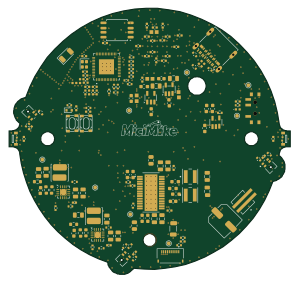 ESP32
Nest mini drop in
iMike78
74.5 × 70.6 mm243 parts4LCERN-OHL-S-2.0598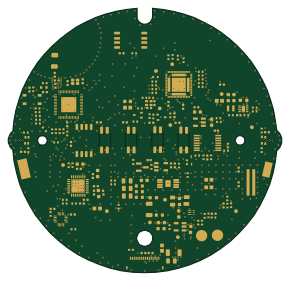 ESP32
Home mini v1-drop in
72.4 × 70 mm223 parts4LCERN-OHL-S-2.0408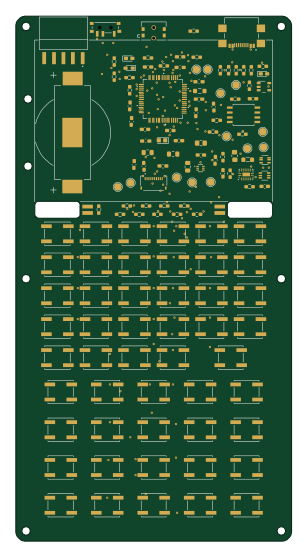 STM32
Main
apoluekt
73 × 139 mm121 parts2LCERN-OHL-P-2.0407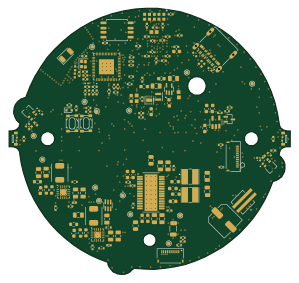 ESP32
Nest mini v2-voice
marceldale
74.5 × 70.6 mm231 parts4LCERN-OHL-S-2.01
Boardoza MS5611 Barometric Pressure Sensor Breakout Board
Boardoza
20 × 20 mm16 parts2LCC-BY-SA-4.01
Boardoza TH09C Temperature Humidity Sensor Breakout Board
20 × 20 mm13 parts2LCC-BY-SA-4.01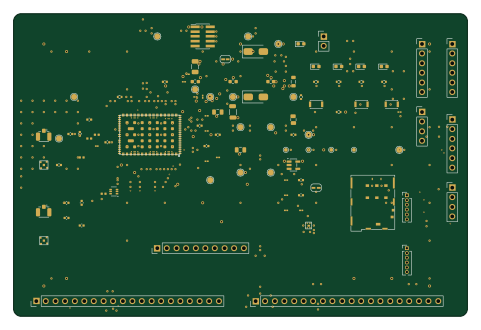 Nordic nRF
NRF9161-DEV-BOARD
anand2532
120 × 80 mm78 parts4LNo license0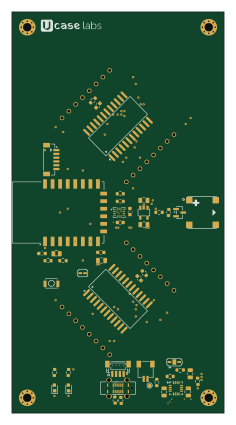 ESP8266
Chronopixel
alphaseneca
56 × 106 mm46 parts2LMIT0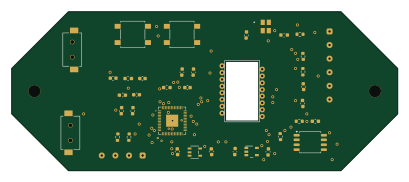 RP2040/RP2350
CornerCursor
daredllama
102 × 42 mm39 parts2LNo license0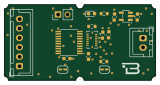
Boardoza BMI088 6-Axis IMU Breakout Board
40 × 20 mm16 parts2LCC-BY-SA-4.00
Boardoza LSM303 Triple Axis Accelerometer Magnetometer Breakout Board
20 × 20 mm15 parts2LCC-BY-SA-4.00
Boardoza MLX90640 Thermal Camera Breakout Board
20 × 20 mm12 parts2LCC-BY-SA-4.00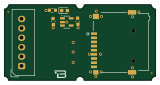
Boardoza MicroSD Breakout Board
40 × 20 mm7 parts2LCC-BY-SA-4.00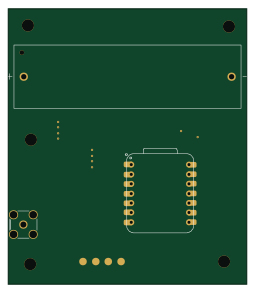 RP2040/RP2350
Nodes
Simonhajd
63.3 × 73 mm7 parts2LNo license0
How designs wire the TLV73333PDBVR
Read from the KiCad layouts of 14 open source designs, one per repository: what each pin of the TLV73333PDBVR connects to, and the resistors, capacitors and other passives placed on it.
- The OUT pin is tied to 3.3V on 13 of 14 designs.
- The IN pin is tied to 5V on 12 of 14 designs (a signal on 2).
| Pin | Connected to | Parts on the pin |
|---|---|---|
| INpin 1 | Connected to: 5V 86% | — |
| GNDpin 2 | Connected to: GND 100% | — |
| NCpin 4 | Connected to: Not connected 100% | — |
| OUTpin 5 | Connected to: 3.3V 93% | — |
1 more pin varies from design to design. Connections count pins, parts count designs; values in brackets are how many parts had that value. Designs read include Nest mini drop in pcb by iMike78, Home mini v1-drop in pcb by iMike78, Main by apoluekt and Boardoza MS5611 Barometric Pressure Sensor Breakout Board by Boardoza.
The TLV73333PDBVR in open source designs
The gallery holds 14 open source boards using the TLV73333PDBVR from 14 GitHub repositories; a typical one measures about 59.6 × 56 mm and carries around 28 components.
71% are two-layer designs, the rest use four layers or more, and 79% carry an open source license.
The most starred is Nest mini drop in pcb by iMike78.
Parts used alongside the TLV73333PDBVR
Microcontrollers on boards using the TLV73333PDBVR
What boards using the TLV73333PDBVR are built for
TLV73333PDBVR: common questions
Where can I find a TLV73333PDBVR reference design?
Each of the 14 boards on this page is a real design using the TLV73333PDBVR. Open one to see how it is wired up, with the full BOM, a render of the layout and links to its KiCad files.
How is the TLV73333PDBVR OUT pin connected?
The OUT pin is tied to 3.3V on 13 of 14 designs. Counted from the KiCad layouts of 14 open source designs using the TLV73333PDBVR.
How is the TLV73333PDBVR IN pin connected?
The IN pin is tied to 5V on 12 of 14 designs (a signal on 2). Counted from the KiCad layouts of 14 open source designs using the TLV73333PDBVR.
What parts are used alongside the TLV73333PDBVR?
The ESP32-S3R8, MPR121QR2, SN74LVC125APWR, TPS62065DSGR and W25Q128JVSIQ appear in the most repositories here.
Which microcontrollers do boards using the TLV73333PDBVR use?
Most are built on ESP32 (3), RP2040/RP2350 (2), ESP8266 (1) and Nordic nRF (1).
How big is a typical board using the TLV73333PDBVR?
The median is 59.6 × 56 mm, and 71% are two-layer designs.
What is the most popular open source board using the TLV73333PDBVR?
By GitHub stars, Nest mini drop in pcb by iMike78, with 598 stars.
Can I simulate one of these boards using the TLV73333PDBVR before building it?
Yes. HardLabs turns a board's netlist and BOM into a working simulation, so you can boot and test firmware against it with no hardware on your desk.