
22 open source boards using the ATmega328P-P
Real designs built with the ATmega328P-P, from public GitHub projects: a quick way to see how others power, decouple and connect it. Each board comes with its KiCad files, full parts list and a render — and you can simulate its firmware on HardLabs.
 AVR/Arduino
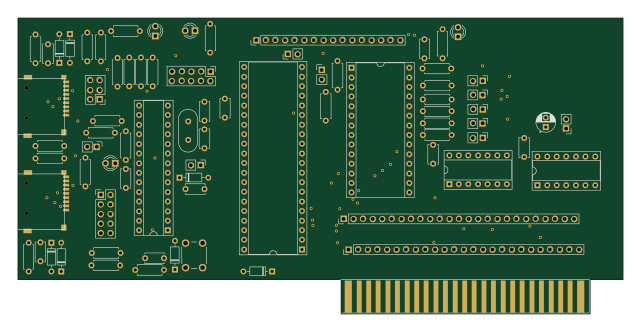
Apple2Card
profdc9
160 × 78.2 mm77 parts2LNo license95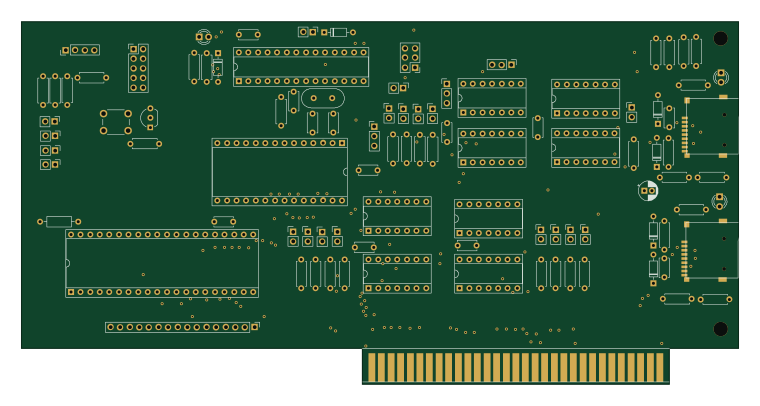 AVR/Arduino
ISACard
189.7 × 95.9 mm99 parts2LCC-BY-SA-4.046- schematic only · 15 partsAVR/Arduino
Kicad firmware generation
DLR-RY
15 partsMIT26 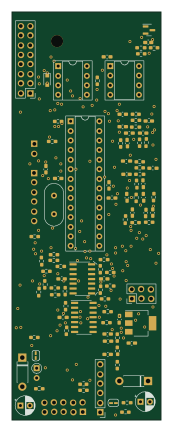 AVR/Arduino
Mainboard
jypma
39.4 × 108 mm122 parts2LNo license8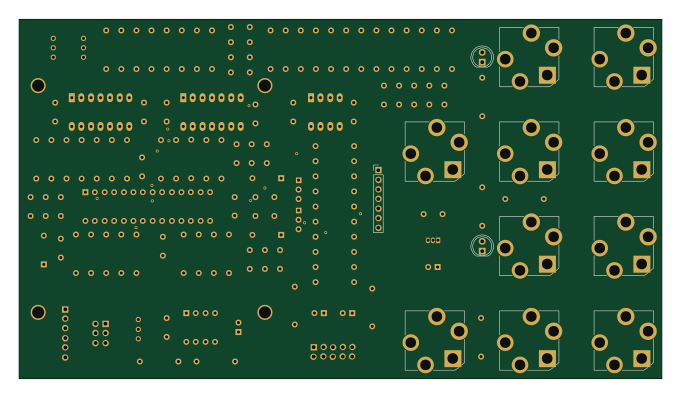 AVR/Arduino
QuantizerBack
BenRufenacht
170 × 95 mm130 parts2LNo license1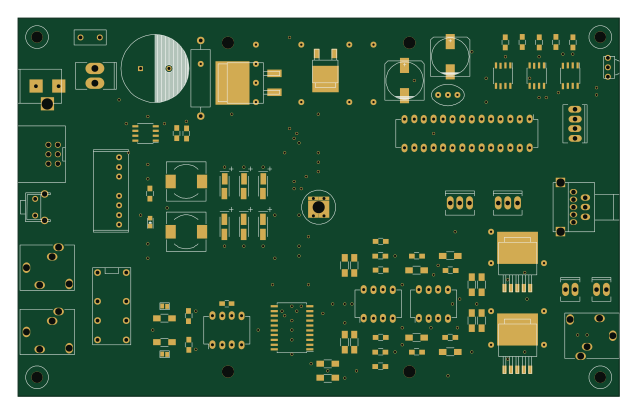 AVR/Arduino
IR remote controlled amplifier main board
ak1211
159 × 100 mm123 parts2LMIT1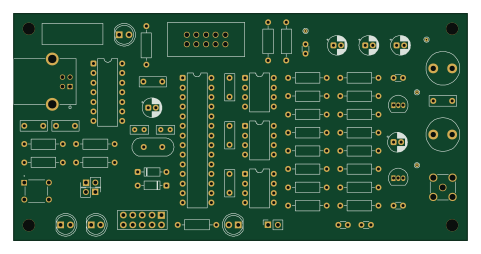 AVR/Arduino
Rtty transmitter
bazsimarkus
120 × 60 mm71 parts2LNo license1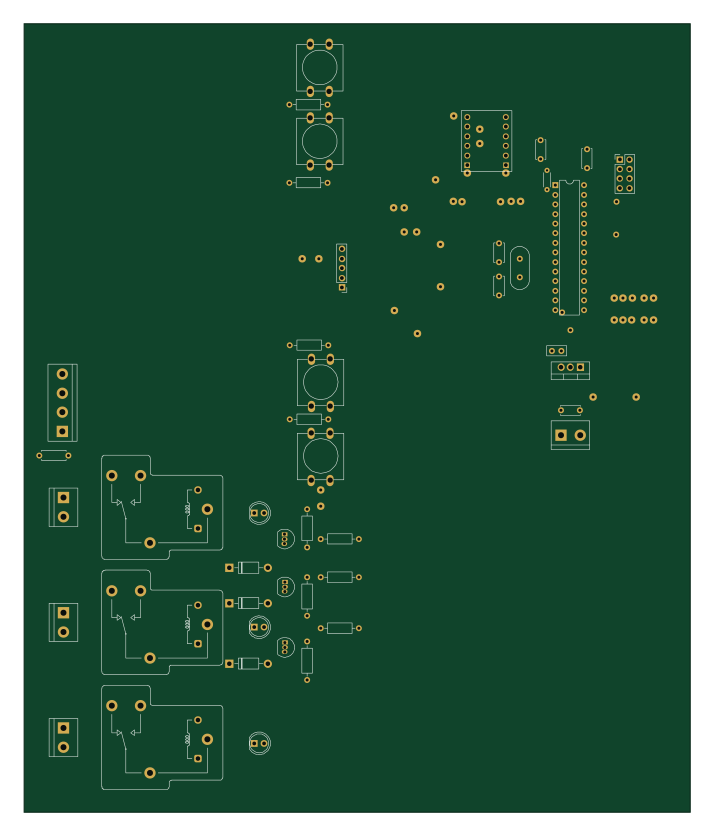 ESP8266
Placa todo en uno
NicolasSchkurko
176.3 × 208.8 mm50 parts2LNo license1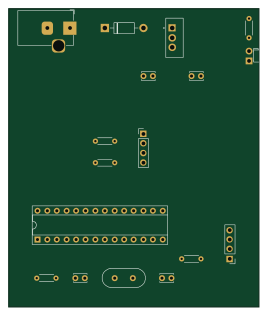 AVR/Arduino
Station-Meteo-ATmega328P
Jordan-eng
66 × 78.7 mm17 parts2LNo license1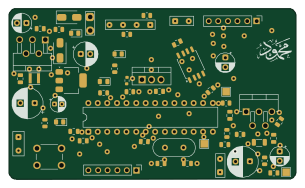 AVR/Arduino
AthanLamp
Mahmoud1205
76 × 45.2 mm57 parts2LMIT0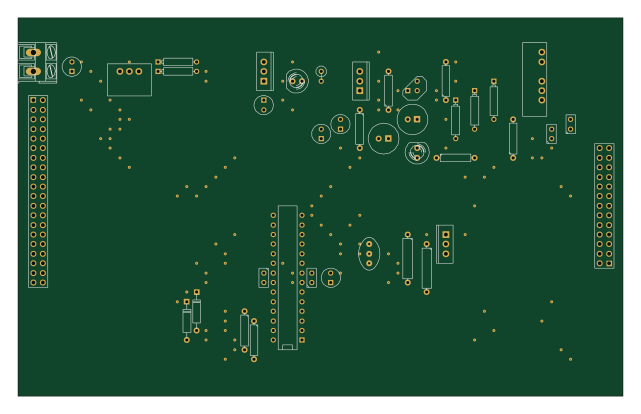 AVR/Arduino
Board
160 × 100 mm118 parts2LMIT1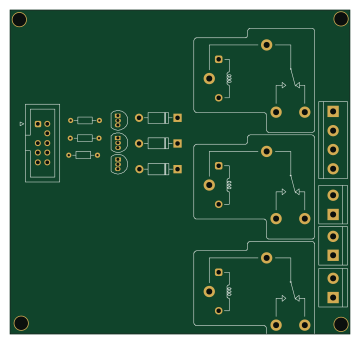 ESP8266
Proyecto V2
89.9 × 85.7 mm47 parts2LNo license1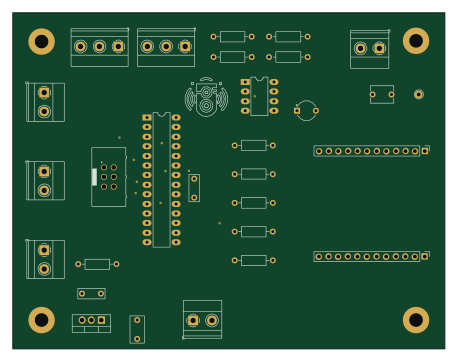 AVR/Arduino
Atmega BM83 RevB
Antonio-Balestrino
114.3 × 88.9 mm29 parts2LApache-2.01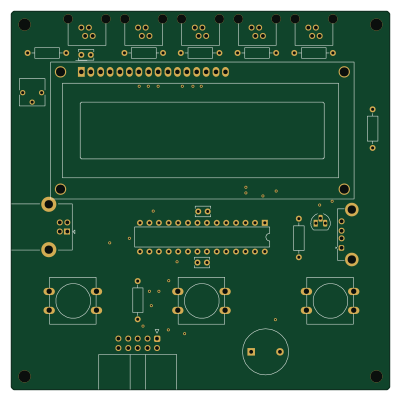 AVR/Arduino
Kamaji classic v1
iley
100 × 100 mm27 parts2LMIT4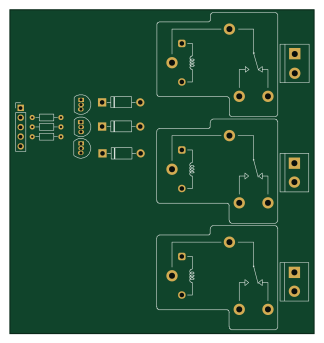 AVR/Arduino
Proyecto V2(1)
80.5 × 85.7 mm44 parts2LNo license1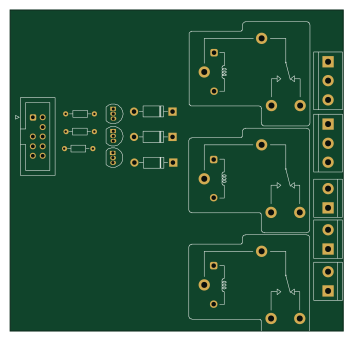 ESP8266
Proyecto V2 backup ESP
88.2 × 84.9 mm44 parts2LNo license1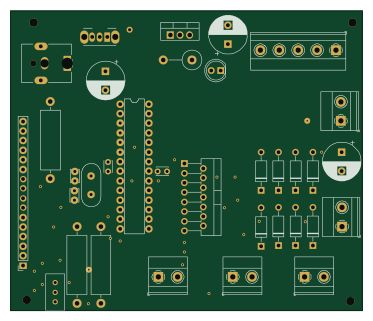 AVR/Arduino
Pcb1
odobot
93.1 × 79.3 mm34 parts2LNo license1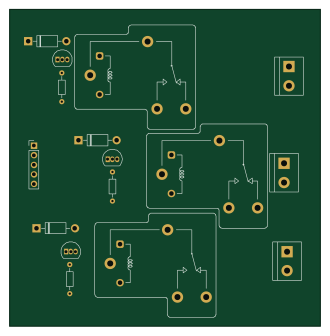 AVR/Arduino
Proyecto V2 nico
82.2 × 83.8 mm44 parts2LNo license1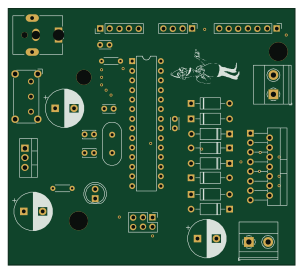 AVR/Arduino
Atmega32 Robot
75.9 × 67.9 mm28 parts2LNo license1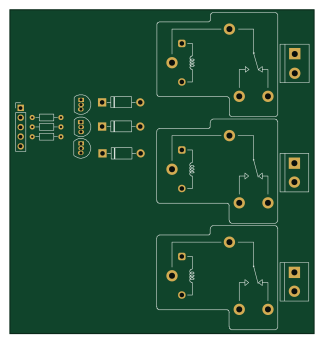 AVR/Arduino
Proyecto V2bckp
80.5 × 85.7 mm44 parts2LNo license1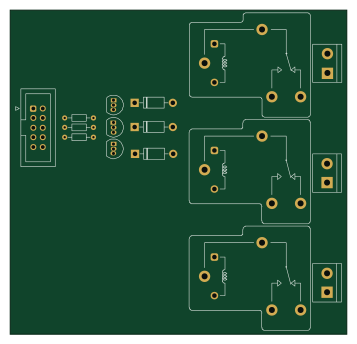 AVR/Arduino
Proyecto V2 backup lvlsens y tempsens
89 × 85.7 mm42 parts2LNo license1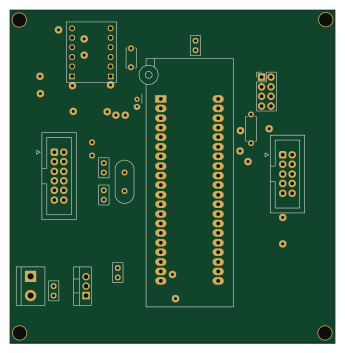 AVR/Arduino
Placa main ESPtestsocket
86.1 × 88.2 mm17 parts2LNo license1
The ATmega328P-P in open source designs
The gallery holds 22 open source boards using the ATmega328P-P from 13 GitHub repositories; a typical one measures about 89.9 × 85.7 mm and carries around 44 components.
100% are two-layer designs, the rest use four layers or more, and 32% carry an open source license.
The most starred is Apple2Card by profdc9.
Microcontrollers on boards using the ATmega328P-P
What boards using the ATmega328P-P are built for
ATmega328P-P: common questions
Where can I find a ATmega328P-P reference design?
Each of the 22 boards on this page is a real design using the ATmega328P-P. Open one to see how it is wired up, with the full BOM, a render of the layout and links to its KiCad files.
What parts are used alongside the ATmega328P-P?
The 28C256, 82C55A and TL074 appear in the most repositories here.
Which microcontrollers do boards using the ATmega328P-P use?
Most are built on AVR/Arduino (19) and ESP8266 (3).
How big is a typical board using the ATmega328P-P?
The median is 89.9 × 85.7 mm, and 100% are two-layer designs.
What is the most popular open source board using the ATmega328P-P?
By GitHub stars, Apple2Card by profdc9, with 95 stars.
Can I simulate one of these boards using the ATmega328P-P before building it?
Yes. HardLabs turns a board's netlist and BOM into a working simulation, so you can boot and test firmware against it with no hardware on your desk.