
18 open source boards using the CH334R
Real designs built with the CH334R, from public GitHub projects: a quick way to see how others power, decouple and connect it. Each board comes with its KiCad files, full parts list and a render — and you can simulate its firmware on HardLabs.
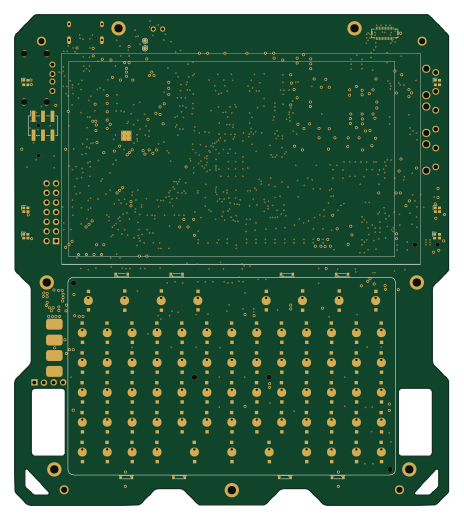 ESP32
Tanmatsu hardware
Nicolai-Electronics
114.9 × 129.9 mm320 parts4LCERN-OHL-P-2.09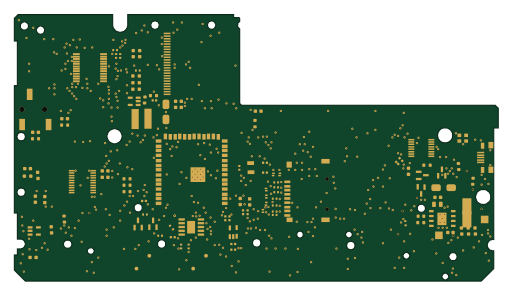 ESP32
EL6170 Pro Max Plus
jsjsjsjsjsjsjson
128 × 70.5 mm159 parts2LNo license7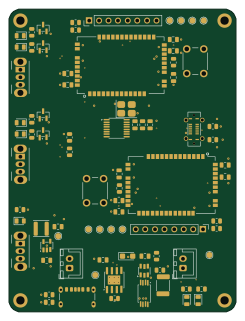
Meshphone
DerRKDCB
60 × 80 mm72 parts2LNo license5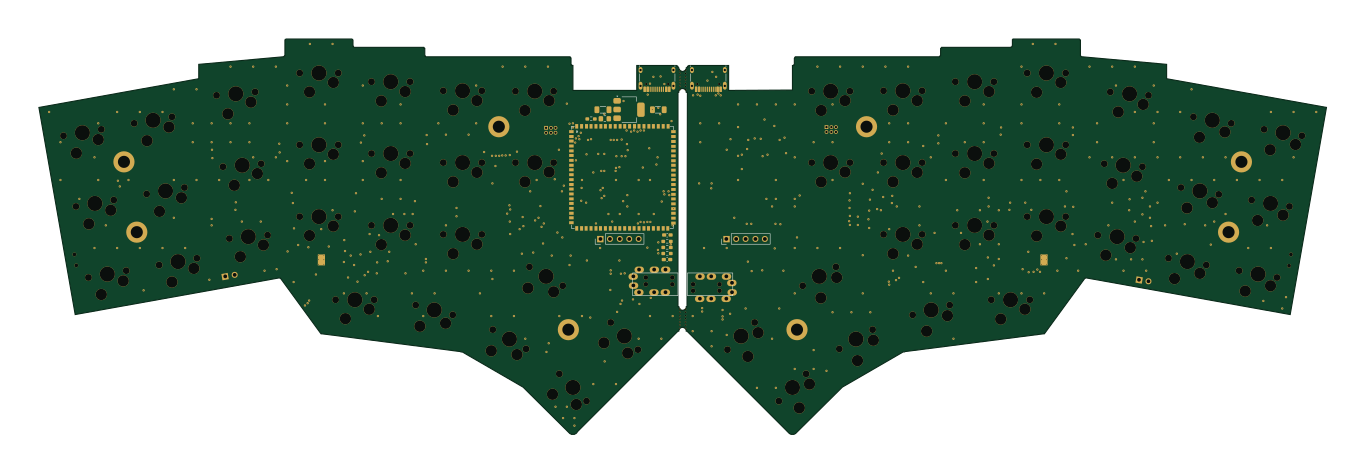 ESP32
Niphar
mornepousse
340.8 × 104.7 mm275 parts4LMIT4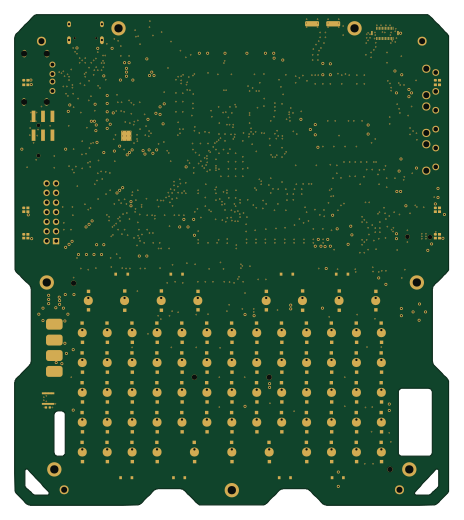 ESP32
Why2025
ranzbak
114.9 × 129.9 mm327 parts4LNo license1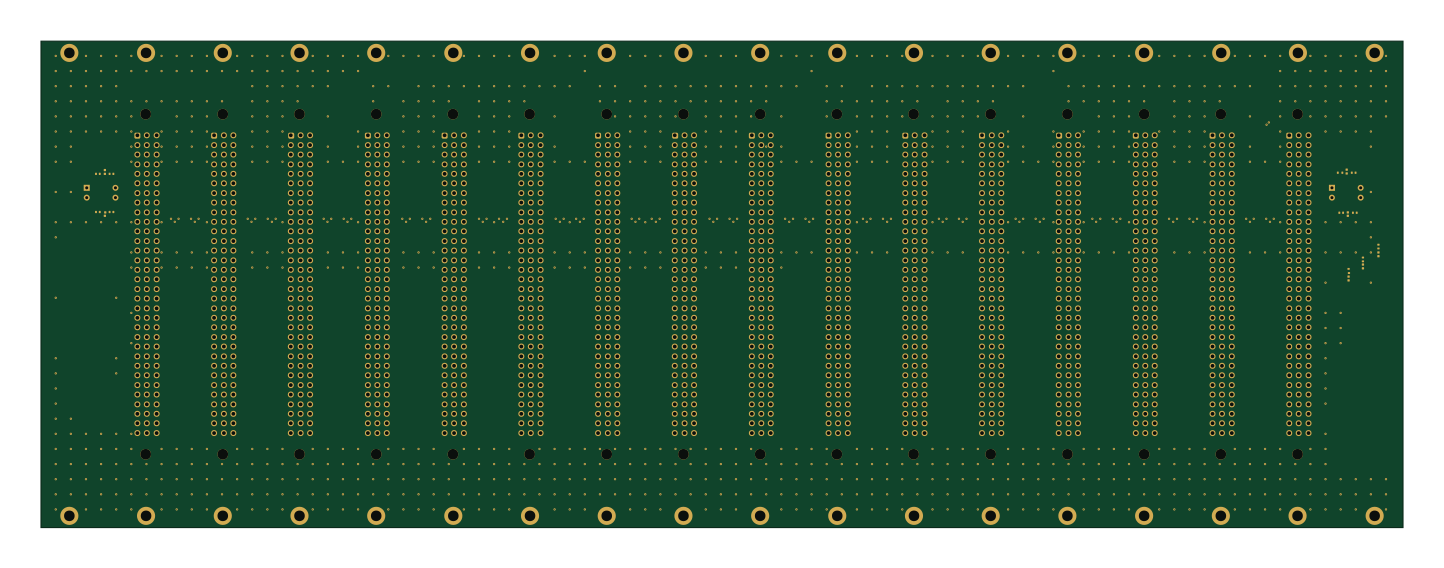
ModuCard backplane
ArthorH
360.4 × 128.7 mm66 parts2LNo license1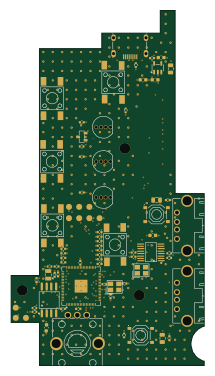 RP2040/RP2350
Das4-controller
brandonrc
51.2 × 94 mm58 parts4LMIT1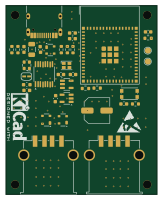 ESP32
Dude dirty usb disconnect
ldab
40 × 50 mm36 parts2LWTFPL1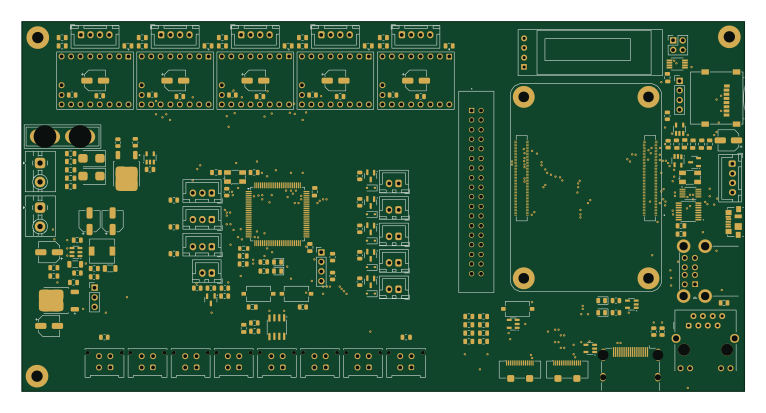 STM32
XYmatics-E64
XyrusB2010
191.3 × 97.8 mm277 parts2LNo license0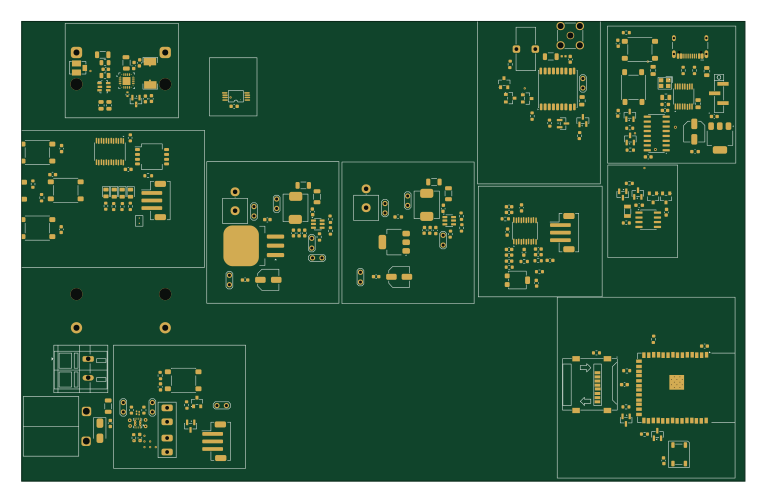 ESP32
Kicad foxhunt batterytest
gx1400
191.5 × 121.8 mm253 parts4LNo license0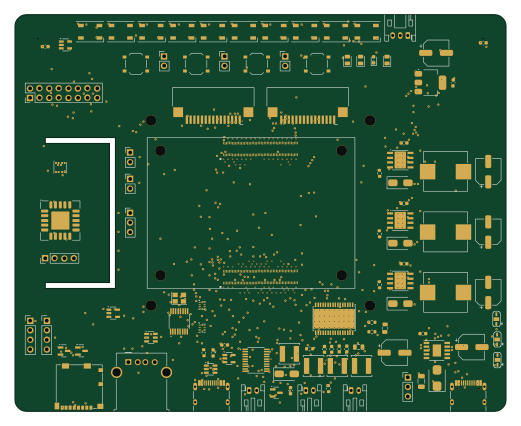 Raspberry Pi
HomeDeck
Kilan777
130 × 105 mm220 parts4LNo license0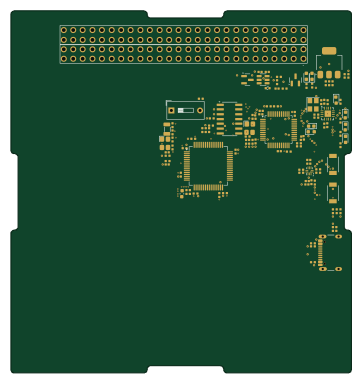 STM32
Template board
Wust-Sat
90.2 × 95.9 mm117 parts4LMIT0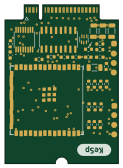 ESP32
Dongle
30 × 42 mm40 parts4LNo license0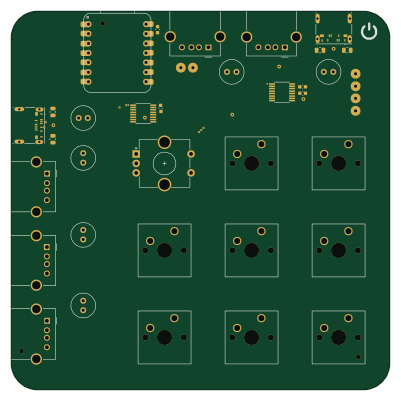 RP2040/RP2350
TheMasterPad
z3phydev
100 × 100 mm34 parts2LNo license0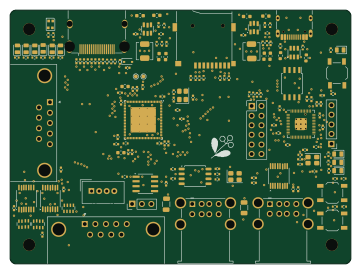 RP2040/RP2350
Misterydev20k
MiSTle-Dev
90 × 67 mm162 parts2LNo license22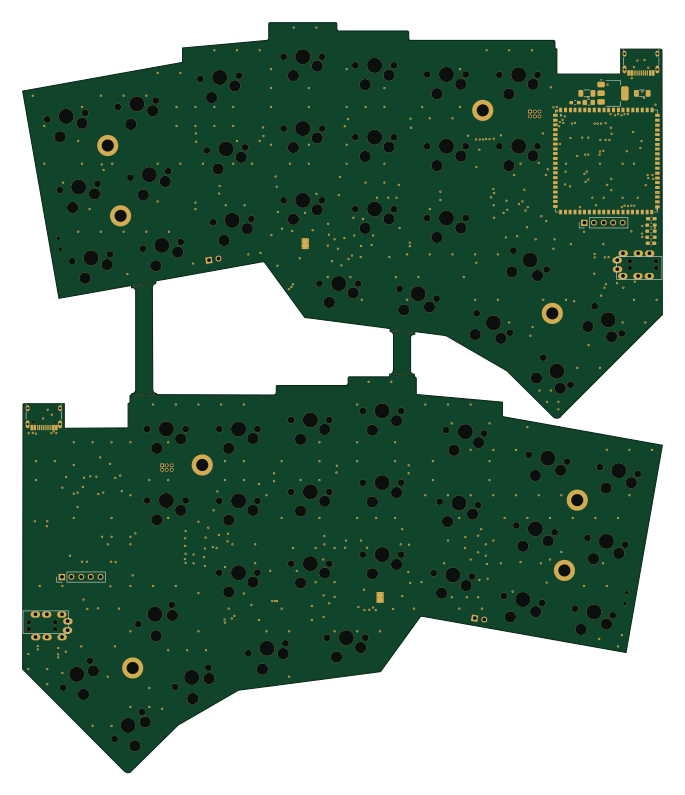 ESP32
Rot
169.3 × 198.4 mm275 parts4LMIT4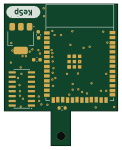 ESP32
Dongle
30 × 37.5 mm29 parts4LNo license0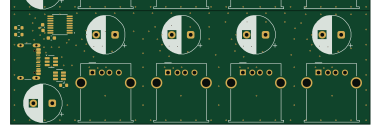
Ch334-usbhub vcut
Netetra
95 × 30 mm34 parts2LNo license0
How designs wire the CH334R
Read from the KiCad layouts of 17 open source designs, one per repository: what each pin of the CH334R connects to, and the resistors, capacitors and other passives placed on it.
- The VDD33 pin has a capacitor to GND on 12 of 16 designs, most often 10 µF (then 100 nF).
- The V5 pin has a decoupling capacitor on 11 of 16 designs, most often 10 µF (then 1 µF).
- The XO pin has a crystal on 11 of 16 designs, most often 12 MHz (then 24 MHz).
- The XI pin has a crystal on 11 of 16 designs, most often 12 MHz (then 24 MHz).
| Pin | Connected to | Parts on the pin |
|---|---|---|
| RESET/CDPpin 9 | Connected to: Not connected 81% · a signal 19% | — |
| V5pin 12 | Connected to: 5V 94% |
|
| VDD33pin 13 | Connected to: Signal 56% · 3.3V 44% |
|
| GNDpin 14 | Connected to: GND 100% | — |
| XOpin 15 | Connected to: Signal 69% · not connected 31% |
|
| XIpin 16 | Connected to: Signal 69% · GND 19% |
|
10 more pins vary from design to design. Connections count pins, parts count designs; values in brackets are how many parts had that value. Designs read include Misterydev20k by MiSTle-Dev, Tanmatsu hardware by Nicolai-Electronics, EL6170 Pro Max Plus by jsjsjsjsjsjsjson and Meshphone by DerRKDCB.
The CH334R in open source designs
The gallery holds 18 open source boards using the CH334R from 17 GitHub repositories; a typical one measures about 107.5 × 96.8 mm and carries around 138 components.
56% use four copper layers or more, and 33% carry an open source license.
The most starred is Misterydev20k by MiSTle-Dev.
Parts used alongside the CH334R
Microcontrollers on boards using the CH334R
What boards using the CH334R are built for
CH334R: common questions
Where can I find a CH334R reference design?
Each of the 18 boards on this page is a real design using the CH334R. Open one to see how it is wired up, with the full BOM, a render of the layout and links to its KiCad files.
How is the CH334R VDD33 pin connected?
The VDD33 pin has a capacitor to GND on 12 of 16 designs, most often 10 µF (then 100 nF). Counted from the KiCad layouts of 17 open source designs using the CH334R.
What decoupling capacitors do designs use on the CH334R V5 pin?
The V5 pin has a decoupling capacitor on 11 of 16 designs, most often 10 µF (then 1 µF). Counted from the KiCad layouts of 17 open source designs using the CH334R.
How is the CH334R XO pin connected?
The XO pin has a crystal on 11 of 16 designs, most often 12 MHz (then 24 MHz). Counted from the KiCad layouts of 17 open source designs using the CH334R.
What parts are used alongside the CH334R?
The USBLC6-2SC6, W25Q128JVS, AMS1117-3.3, ESP32-S3-WROOM-1 and NRF24L01_Breakout appear in the most repositories here.
Which microcontrollers do boards using the CH334R use?
Most are built on ESP32 (9), RP2040/RP2350 (3), STM32 (2) and Raspberry Pi (1).
How big is a typical board using the CH334R?
The median is 107.5 × 96.8 mm, and 44% are two-layer designs.
What is the most popular open source board using the CH334R?
By GitHub stars, Misterydev20k by MiSTle-Dev, with 22 stars.
Can I simulate one of these boards using the CH334R before building it?
Yes. HardLabs turns a board's netlist and BOM into a working simulation, so you can boot and test firmware against it with no hardware on your desk.