
17 open source boards using the RFM98PW
Real designs built with the RFM98PW, from public GitHub projects: a quick way to see how others power, decouple and connect it. Each board comes with its KiCad files, full parts list and a render — and you can simulate its firmware on HardLabs.
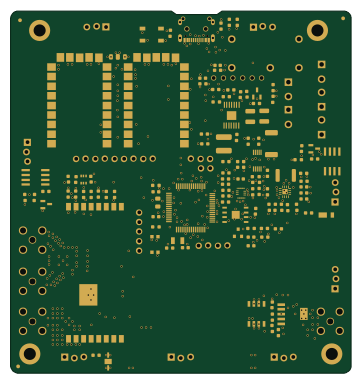 Microchip SAM
Mainboard
pycubed
90.2 × 95.9 mm196 parts2LNo license97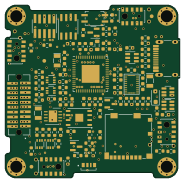 Microchip SAM
Mainboard
AFS-pt
46.1 × 45.6 mm191 parts4LNo license15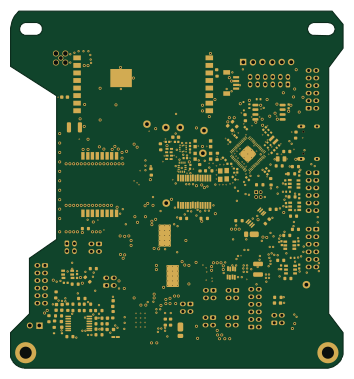 RP2040/RP2350
FC V5d Pro Rev1
proveskit
88 × 94.5 mm255 parts4LCERN-OHL-W-2.06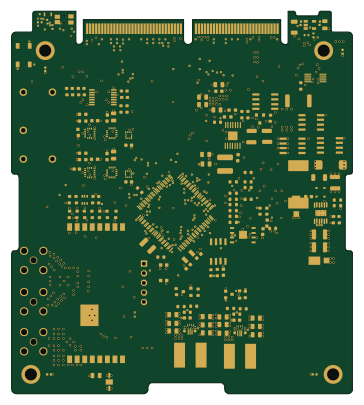 Microchip SAM
Mainboard before drastic
Sierra-Lobo
90.2 × 101.1 mm353 parts6LCC-BY-SA-4.01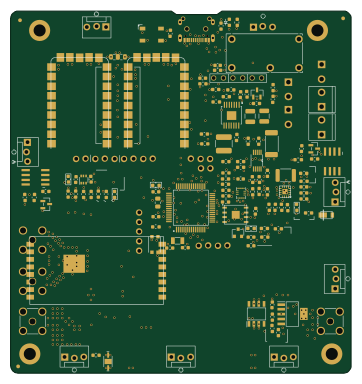 Microchip SAM
Mainboard
alxklso
90.2 × 95.9 mm196 parts4LMIT1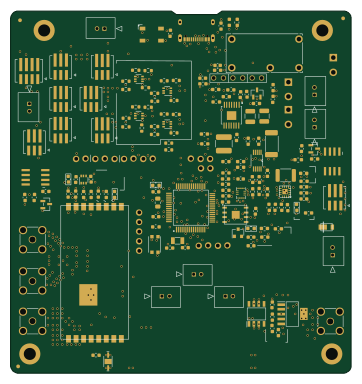 Microchip SAM
Mainboard
stanford-ssi
90.2 × 95.9 mm248 parts2LNo license0- schematic only · 369 partsRaspberry Pi
PiCubed
NeilKhera
369 parts2LNo license0 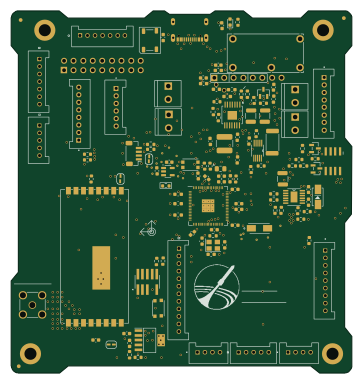 RP2040/RP2350
PiCubed
90.2 × 95.9 mm176 parts4LNo license13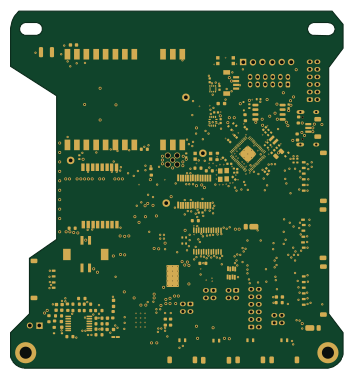 RP2040/RP2350
FC V5e Production Rev1
88 × 94.5 mm244 parts4LCERN-OHL-W-2.06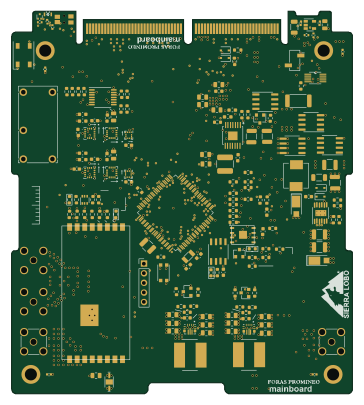 Microchip SAM
Mainboard
90.2 × 101.1 mm312 parts6LCC-BY-SA-4.01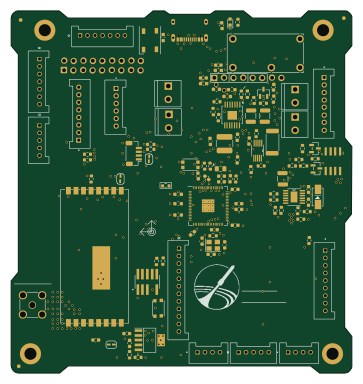 RP2040/RP2350
Mainboard
pete4radio
90.2 × 95.9 mm175 parts4LNo license0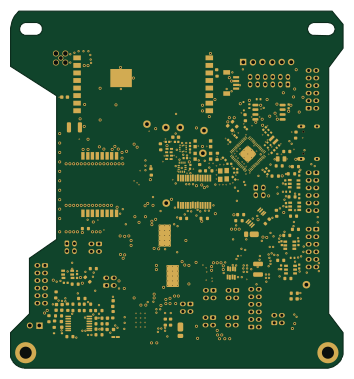 RP2040/RP2350
FC V5d Production Rev2
88 × 94.5 mm243 parts4LCERN-OHL-W-2.06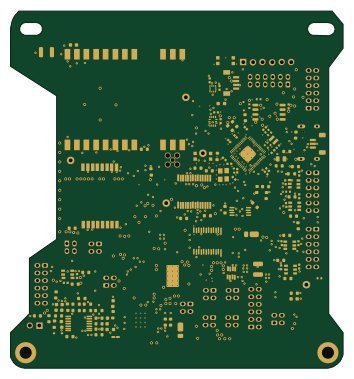 RP2040/RP2350
FC V5e
88 × 94.5 mm242 parts4LCERN-OHL-W-2.06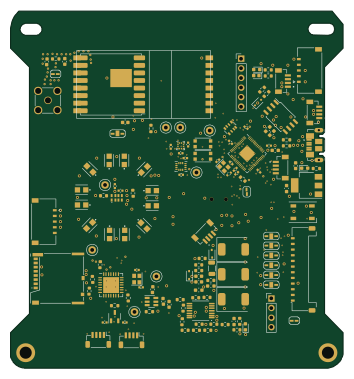 RP2040/RP2350
FC V4c Express
88 × 94.5 mm147 parts4LCERN-OHL-W-2.06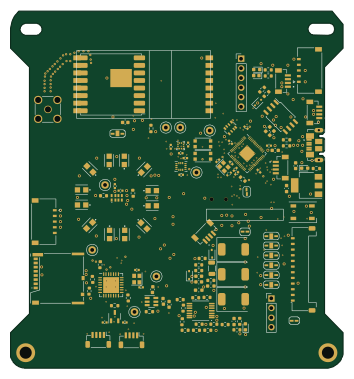 RP2040/RP2350
FC V4c InspireFly Special
88 × 94.5 mm144 parts4LCERN-OHL-W-2.06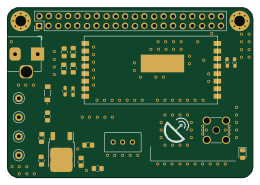 Raspberry Pi
PROMETHEUS-1 Ground Station
65 × 45 mm26 parts2LNo license15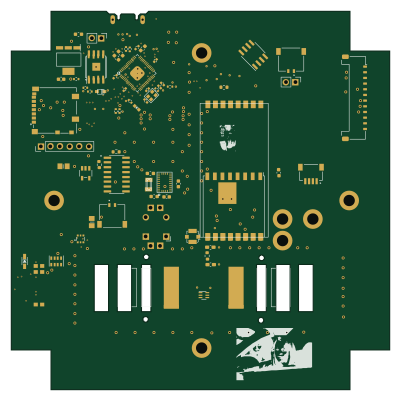 RP2040/RP2350
FC Board v3
100 × 100 mm73 parts4LCERN-OHL-W-2.06
How designs wire the RFM98PW
Read from the KiCad layouts of 8 open source designs, one per repository: what each pin of the RFM98PW connects to, and the resistors, capacitors and other passives placed on it.
- The NSS pin has a pull-up to 3.3V on 8 of 8 designs, most often 10 kΩ.
- The GPIO_3 pin is left unconnected on 8 of 8 designs.
- The GPIO_2 pin is left unconnected on 8 of 8 designs.
- The GPIO_5 pin is left unconnected on 8 of 8 designs.
| Pin | Connected to | Parts on the pin |
|---|---|---|
| GNDpin 2, 16, 17 | Connected to: GND 100% | — |
| GPIO_3pin 3 | Connected to: Not connected 100% | — |
| VCCpin 5 | Connected to: VCC_RF1 63% · a signal 38% |
|
| GPIO_1pin 7 | Connected to: Not connected 88% | — |
| GPIO_2pin 8 | Connected to: Not connected 100% | — |
| 3.3Vpin 9 | Connected to: 3.3V 63% · a signal 25% | — |
| MISOpin 10 | Connected to: The microcontroller 25% |
|
| MOSIpin 11 | Connected to: The microcontroller 25% |
|
| SCKpin 12 | Connected to: The microcontroller 25% |
|
| NSSpin 13 | Connected to: The microcontroller 88% |
|
| GPIO_5pin 15 | Connected to: Not connected 100% | — |
4 more pins vary from design to design. Connections count pins, parts count designs; values in brackets are how many parts had that value. Designs read include Mainboard by pycubed, Mainboard by AFS-pt, PiCubed by stanford-ssi and FC Board v3 by proveskit.
The RFM98PW in open source designs
The gallery holds 17 open source boards using the RFM98PW from 9 GitHub repositories; a typical one measures about 89.1 × 95.2 mm and carries around 196 components.
76% use four copper layers or more, and 59% carry an open source license.
The most starred is Mainboard by pycubed.
Parts used alongside the RFM98PW
Microcontrollers on boards using the RFM98PW
What boards using the RFM98PW are built for
RFM98PW: common questions
Where can I find a RFM98PW reference design?
Each of the 17 boards on this page is a real design using the RFM98PW. Open one to see how it is wired up, with the full BOM, a render of the layout and links to its KiCad files.
What pull-up resistor is used on the RFM98PW NSS pin?
The NSS pin has a pull-up to 3.3V on 8 of 8 designs, most often 10 kΩ. Counted from the KiCad layouts of 8 open source designs using the RFM98PW.
How is the RFM98PW GPIO_3 pin connected?
The GPIO_3 pin is left unconnected on 8 of 8 designs. Counted from the KiCad layouts of 8 open source designs using the RFM98PW.
How is the RFM98PW GPIO_2 pin connected?
The GPIO_2 pin is left unconnected on 8 of 8 designs. Counted from the KiCad layouts of 8 open source designs using the RFM98PW.
What parts are used alongside the RFM98PW?
The ADM1176-1ARMZ-R7, BQ25883RGER, TPS7A4501DCQT, MAX706RESA and PE014006 TE appear in the most repositories here.
Which microcontrollers do boards using the RFM98PW use?
Most are built on RP2040/RP2350 (9), Microchip SAM (6) and Raspberry Pi (2).
How big is a typical board using the RFM98PW?
The median is 89.1 × 95.2 mm, and 24% are two-layer designs.
What is the most popular open source board using the RFM98PW?
By GitHub stars, Mainboard by pycubed, with 97 stars.
Can I simulate one of these boards using the RFM98PW before building it?
Yes. HardLabs turns a board's netlist and BOM into a working simulation, so you can boot and test firmware against it with no hardware on your desk.