
29 open source boards using the TPS62840DLCR
Real designs built with the TPS62840DLCR, from public GitHub projects: a quick way to see how others power, decouple and connect it. Each board comes with its KiCad files, full parts list and a render — and you can simulate its firmware on HardLabs.
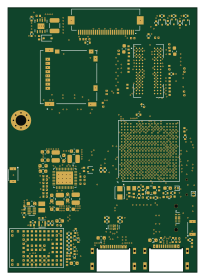 STM32
MPU MOD
Decktrix-Lab
50 × 70 mm294 parts8LNo license63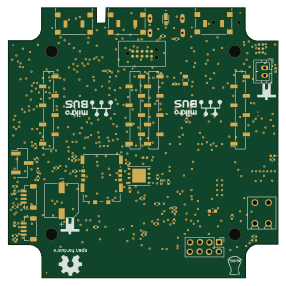 ESP32
Elixir hw
golioth
71.5 × 71.5 mm218 parts4LCERN-OHL-P-2.036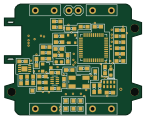 AVR/Arduino
Kicad Smart Watch
AFLProjects
36.4 × 29.4 mm48 parts2LNo license12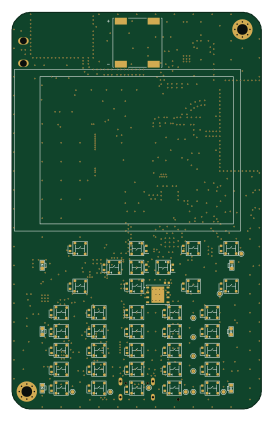 RP2040/RP2350
MokyaLora
tengigabytes
66 × 105 mm328 parts6LCustom license7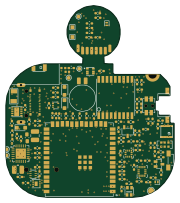 ESP32
Kompic Mk1b
porupski
44.5 × 50.6 mm121 parts4LGPL-3.03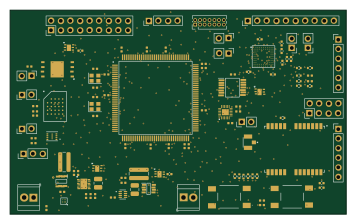 STM32
OBCProto
Kmshanley
89 × 54 mm110 parts4LGPL-3.03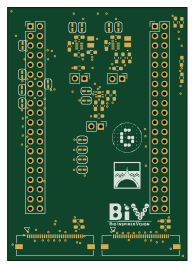
Ecp5-fpc adapter
NUBIVlab
47.5 × 67 mm51 parts4LMIT3 STM32
Step devices
OlinSTEP
12 × 20 mm26 parts4LNo license3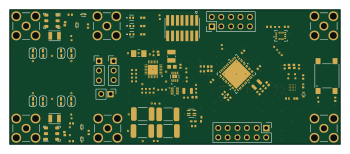 STM32
Eqs energy harvesting frontend
lkoehli
87.4 × 35.6 mm108 parts4LNo license1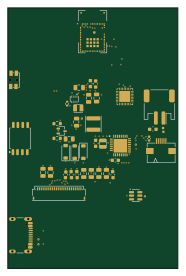 STM32
Nocta-One-Hardware
NoctaLabs-Sh
45 × 69 mm55 parts4LCERN-OHL-S-2.01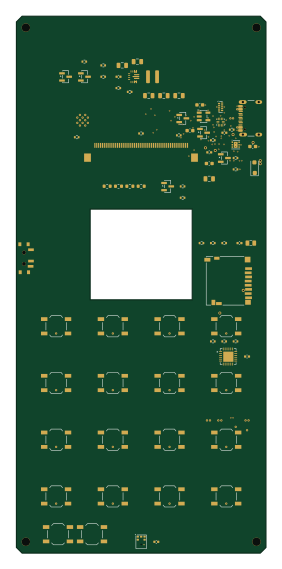 ESP32
Handset
JeremyLakeyJr
66 × 142 mm217 parts4LNo license0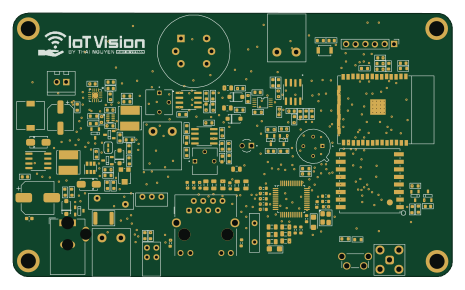 ESP32
Hardware
nguyenmihn
116.2 × 69.6 mm163 parts2LApache-2.00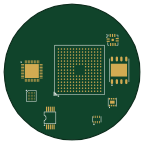 STM32
X-Watch
Han-ZenX
36 × 36 mm118 parts2LMIT0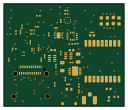 STM32
Pangotag PCB LCSC compat2
andrewo3
31.9 × 27.2 mm91 parts6LNo license0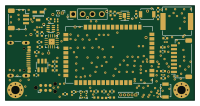
BPV4 Collar
rees3901
50 × 25 mm51 parts2LNo license0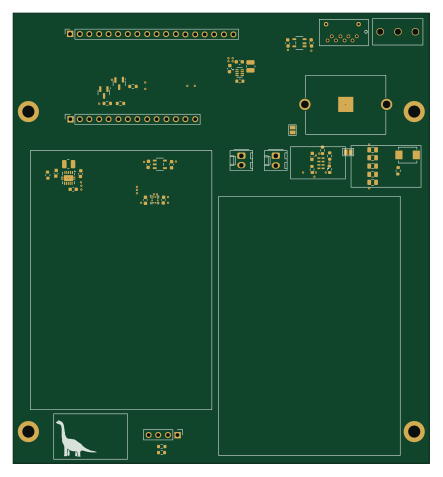
BRACHIOSAURUS
FelixStA52
110 × 119 mm48 parts2LNo license0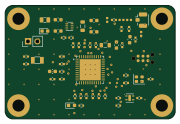 STM32
CHIPDOWNARM
8aChristian
45 × 30 mm45 parts4LNo license0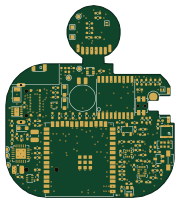 ESP32
Kompic Mk1
44.5 × 50.6 mm119 parts4LGPL-3.03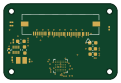
Hm0360 breakout
30 × 20 mm28 parts4LMIT3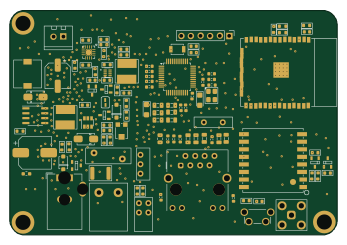 ESP32
DATN
86.7 × 59.5 mm110 parts2LApache-2.00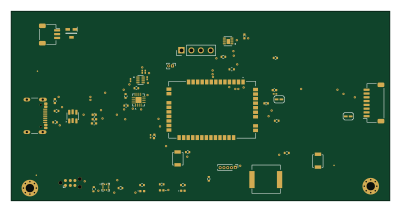
BPV4 CollarEVAL
100 × 50 mm51 parts2LNo license0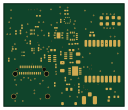 STM32
Pangotag PCB LCSC compat3
31.9 × 27.2 mm80 parts6LNo license0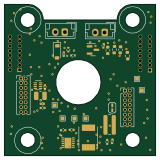
PassthroughBoardRev0 B
40 × 40 mm43 parts4LGPL-3.03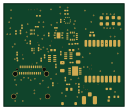 STM32
Pangotag PCB LCSC compat4
31.9 × 27.2 mm80 parts6LNo license0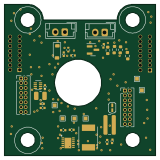
PassthroughBoardRev0 C
40 × 40 mm43 parts4LGPL-3.03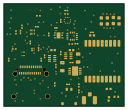 STM32
Pangotag PCB LCSC compat
31.9 × 27.2 mm79 parts6LNo license0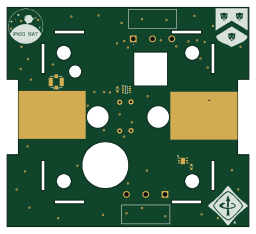
BaseplateBackup
64 × 58 mm38 parts4LGPL-3.03 STM32
Only Tag
31.9 × 27.2 mm77 parts6LNo license0 STM32
Only Tag2
31.9 × 27.2 mm77 parts6LNo license0
How designs wire the TPS62840DLCR
Read from the KiCad layouts of 17 open source designs, one per repository: what each pin of the TPS62840DLCR connects to, and the resistors, capacitors and other passives placed on it.
- The SW pin has a inductor on 17 of 17 designs, most often 2.2 µH.
- The VIN pin has a decoupling capacitor on 16 of 17 designs, most often 4.7 µF (then 10 µF).
- The VOS pin has a inductor on 15 of 17 designs, most often 2.2 µH.
- The VOS pin has a decoupling capacitor on 14 of 17 designs, most often 10 µF (then 1 µF).
| Pin | Connected to | Parts on the pin |
|---|---|---|
| GNDpin 1 | Connected to: GND 100% | — |
| VINpin 2 | Connected to: VSYS 59% · a signal 41% |
|
| MODEpin 3 | Connected to: GND 82% · a signal 18% | — |
| VSETpin 5 | Connected to: Signal 59% · GND 41% |
|
| STOPpin 6 | Connected to: GND 71% · a signal 18% | — |
| SWpin 7 | Connected to: Signal 100% |
|
| VOSpin 8 | Connected to: 3.3V 71% · a signal 24% |
|
1 more pin varies from design to design. Connections count pins, parts count designs; values in brackets are how many parts had that value. Designs read include MPU MOD by Decktrix-Lab, Elixir hw by golioth, Kicad Smart Watch by AFLProjects and MokyaLora by tengigabytes.
The TPS62840DLCR in open source designs
The gallery holds 29 open source boards using the TPS62840DLCR from 17 GitHub repositories; a typical one measures about 45 × 40 mm and carries around 79 components.
76% use four copper layers or more, and 45% carry an open source license.
The most starred is MPU MOD by Decktrix-Lab.
Parts used alongside the TPS62840DLCR
Microcontrollers on boards using the TPS62840DLCR
What boards using the TPS62840DLCR are built for
TPS62840DLCR: common questions
Where can I find a TPS62840DLCR reference design?
Each of the 29 boards on this page is a real design using the TPS62840DLCR. Open one to see how it is wired up, with the full BOM, a render of the layout and links to its KiCad files.
How is the TPS62840DLCR SW pin connected?
The SW pin has a inductor on 17 of 17 designs, most often 2.2 µH. Counted from the KiCad layouts of 17 open source designs using the TPS62840DLCR.
What decoupling capacitors do designs use on the TPS62840DLCR VIN pin?
The VIN pin has a decoupling capacitor on 16 of 17 designs, most often 4.7 µF (then 10 µF). Counted from the KiCad layouts of 17 open source designs using the TPS62840DLCR.
How is the TPS62840DLCR VOS pin connected?
The VOS pin has a inductor on 15 of 17 designs, most often 2.2 µH. Counted from the KiCad layouts of 17 open source designs using the TPS62840DLCR.
What parts are used alongside the TPS62840DLCR?
The APS6404L-SQN-ZR, DRV2605LDGSR, LIS2DW12TR, LSM6DSV16XTR and MAX17048G_T10 appear in the most repositories here.
Which microcontrollers do boards using the TPS62840DLCR use?
Most are built on STM32 (13), ESP32 (6), AVR/Arduino (1) and RP2040/RP2350 (1).
How big is a typical board using the TPS62840DLCR?
The median is 45 × 40 mm, and 24% are two-layer designs.
What is the most popular open source board using the TPS62840DLCR?
By GitHub stars, MPU MOD by Decktrix-Lab, with 63 stars.
Can I simulate one of these boards using the TPS62840DLCR before building it?
Yes. HardLabs turns a board's netlist and BOM into a working simulation, so you can boot and test firmware against it with no hardware on your desk.