
6,183 open source PCB designs, indexed by the chip they’re built around
Real boards from 3,016 public GitHub repositories, read straight from their KiCad files: size, layers, the full parts list and a render of the PCB. Find one close to what you’re building, then simulate its firmware on HardLabs before you order anything.
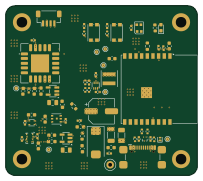 ESP32
ESP32Air quality sensor
roepkefeller
50.8 × 45 mm75 parts4LNo license58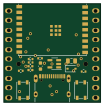 ESP32
ESP32ESP32-C3-DevBoard
21km43
25.4 × 26 mm15 parts2LNo license20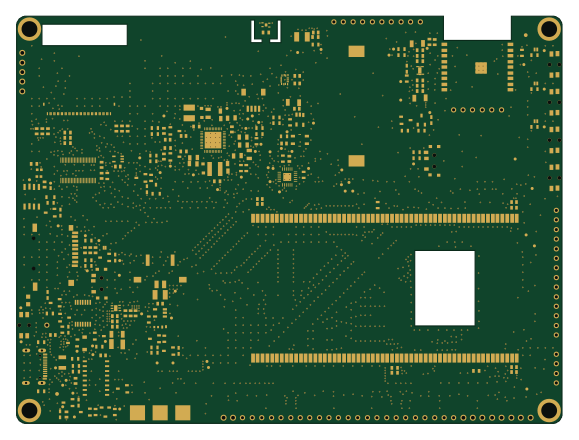 ESP32
ESP32Soldered Inkplate 6 MOTION
SolderedElectronics
144.4 × 107.8 mm313 parts2LTAPR-OHL-1.04- schematic only · 2 partsESP32
Architon cli
badimirzai
2 partsAGPL-3.04 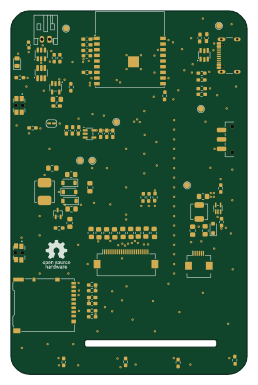 ESP32
ESP32ESP32 E-Reader
IS7V4N
62.5 × 96.2 mm85 parts4LNo license2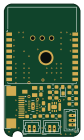 ESP32
ESP32ESP Racer 2025
plenprojectcompany
20 × 35 mm22 parts2LMIT2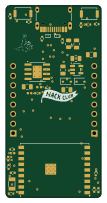 ESP32
ESP32CUSTOM-ESP32-C3-MINI
sasukeop108
25.2 × 50.8 mm42 parts2LMIT1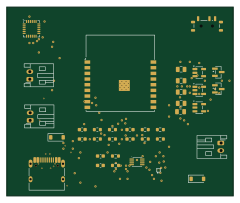 ESP32
ESP32ACPI
Snt8
60 × 50 mm37 parts2LNo license1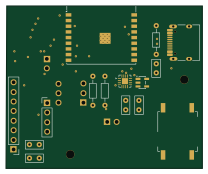 ESP32
ESP32Eidolon
alaotach
52 × 43 mm19 parts2LNo license1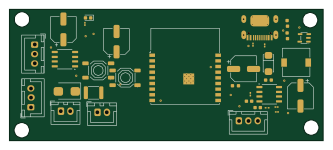 ESP32
ESP32LeTube
llextv
83.1 × 34.9 mm34 parts2LNo license0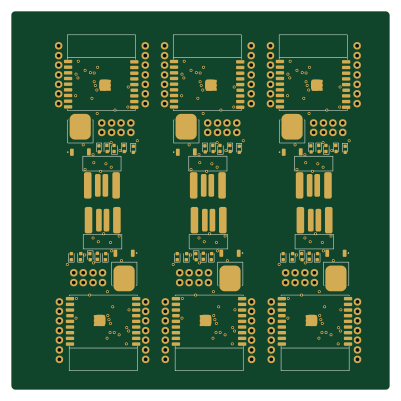 ESP32
ESP32Esp32c3
daidai100
100 × 100 mm12 parts2LMIT0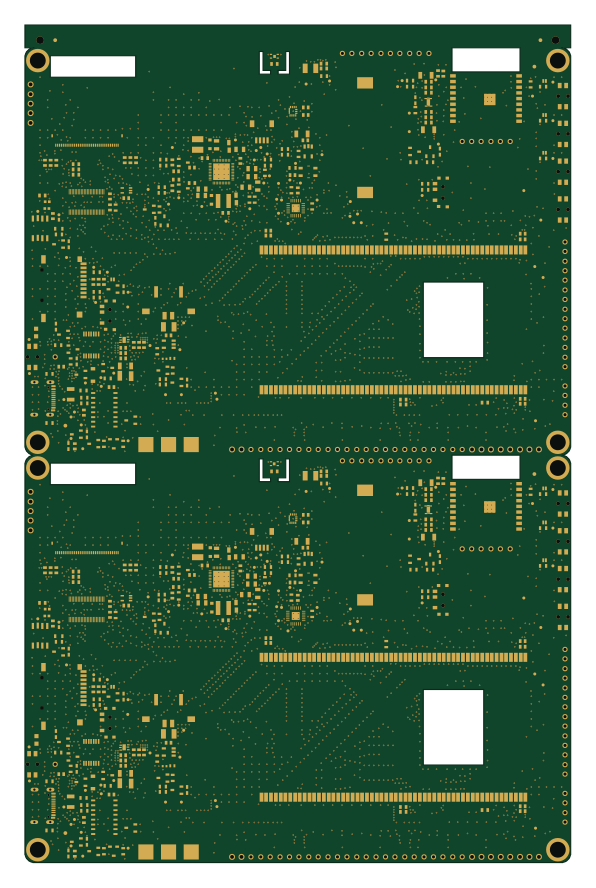 ESP32
ESP32Soldered Inkplate 6 MOTION panel
144.4 × 221.6 mm313 parts2LTAPR-OHL-1.04 ESP32
ESP32ESP Racer 2025.kicad pcb imposition
20 × 35 mm19 parts2LMIT2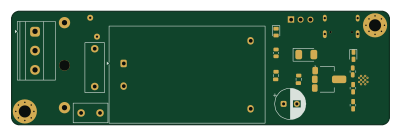 ESP32
ESP32Test backup
himanshu40304
100 × 30 mm30 parts2LNo license1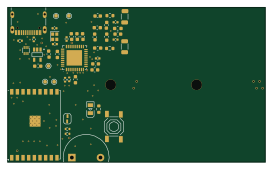 ESP32
ESP32Esphome nfc
aeremin
68.3 × 41 mm43 parts4LNo license0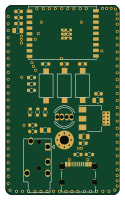 ESP32
ESP32PowerMeterLC
dianventer
30 × 50 mm30 parts4LNo license0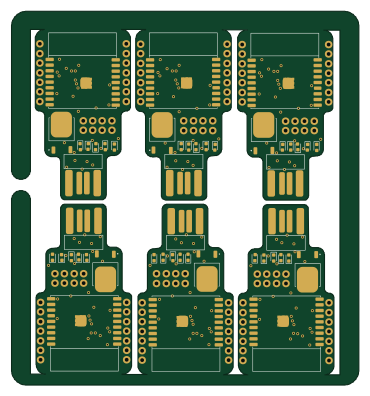 ESP32
ESP32Esp32c3 panell
92 × 99 mm12 parts2LMIT0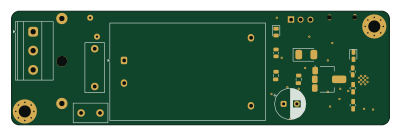 ESP32
ESP32Converter
100 × 30 mm28 parts2LNo license1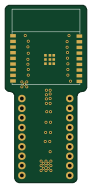 ESP32
ESP32Esp32c3 test
21.6 × 47 mm3 parts2LMIT0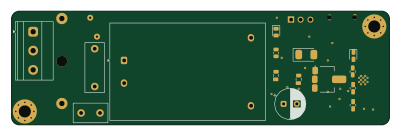 ESP32
ESP32Converter v9 plot temp
100 × 30 mm28 parts2LNo license1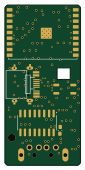 ESP32
ESP32WiFi KeyMouse
74th
20 × 42.4 mm26 parts2LMIT1
About these open source PCB designs
Every board here is a published hardware project: a public GitHub repository with KiCad design files and a bill of materials. HardLabs reads those files directly — the board outline for its size, the copper layers, every footprint for the parts list — and draws the render from the layout itself, so what you see is the design as committed rather than a product photo.
Boards are indexed by the microcontroller they are built around, by what they are for, and by every IC and module on them. That makes the gallery a quick way to find a reference design: look up a part number to see how other engineers power, decouple and connect it.
Using an open source board as a reference design
- Find boards built on your chip or with the part you are designing around.
- Compare their size, layer count and bill of materials, and open the KiCad files on GitHub.
- Check the license before reusing any of the design.
- Simulate the firmware on HardLabs to test your changes before you order a PCB.
Open source PCB designs: common questions
What is an open source PCB?
A printed circuit board whose design files — schematic, layout and bill of materials — are published for anyone to study and, depending on the license, to modify and manufacture.
Are these PCB designs free to use?
It depends on each project's license. Open hardware licenses such as CERN-OHL and CC BY-SA, and software licenses such as MIT, allow reuse on their terms; a repository with no license keeps all rights with its author. Every board page shows its license.
What design files do the boards come with?
They are KiCad projects: the .kicad_pcb layout and the schematic (or a netlist from older KiCad versions), plus a bill of materials, usually a CSV. Each board page links to those files in the original GitHub repository.
How do I find boards that use a specific part?
Search for the part number, or open the part's page from the list of parts. It shows every board built with that part and the parts most often used alongside it.
How many boards are there, and how often is the list updated?
6,183 boards from 3,016 repositories today. New projects are found and added every night.
Can I test a board's firmware before ordering the PCB?
Yes. HardLabs builds a simulation of a board from its netlist and BOM, so you can boot and debug firmware against it with no hardware on your desk.