
49 open source boards using the ESP32-S3-WROOM-1-N16R8
Real designs built with the ESP32-S3-WROOM-1-N16R8, from public GitHub projects: a quick way to see how others power, decouple and connect it. Each board comes with its KiCad files, full parts list and a render — and you can simulate its firmware on HardLabs.
 ESP32
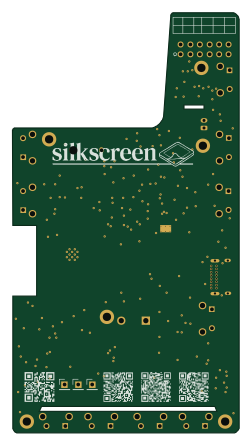
ESP32Silkscreen
iandchasse
60 × 111.3 mm171 parts2LCERN-OHL-S-2.0554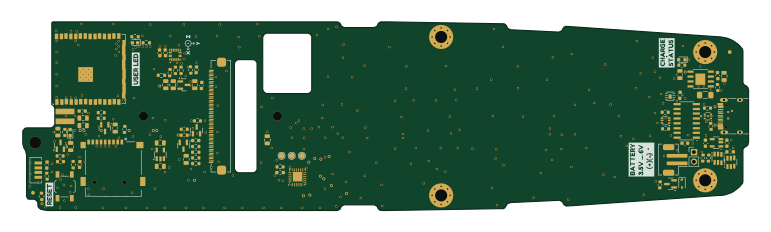 ESP32
ESP32OMOTE - Open Universal Remote
OMOTE-Community
192.4 × 50 mm135 parts2LGPL-3.0142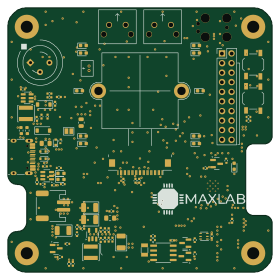 ESP32
ESP32Tokay lite
maxlab-io
70 × 70 mm146 parts4LCERN-OHL-P-2.0126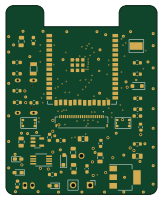 ESP32
ESP32Timeleapcam
hnz1102
40 × 50 mm90 parts4LNo license39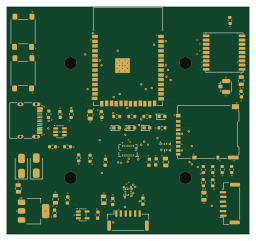 ESP32
ESP32Dronemagnav
ajisrawi
64 × 60 mm56 parts4LCustom license11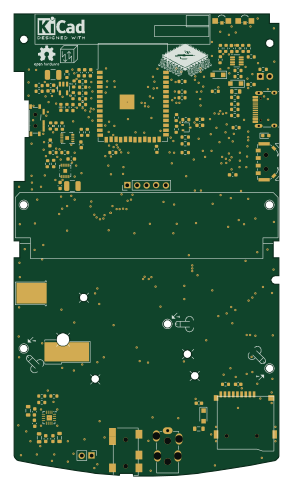 ESP32
ESP32ILI9341 ESP32 GBC
theBrutzler
70 × 122.3 mm111 parts2LNo license8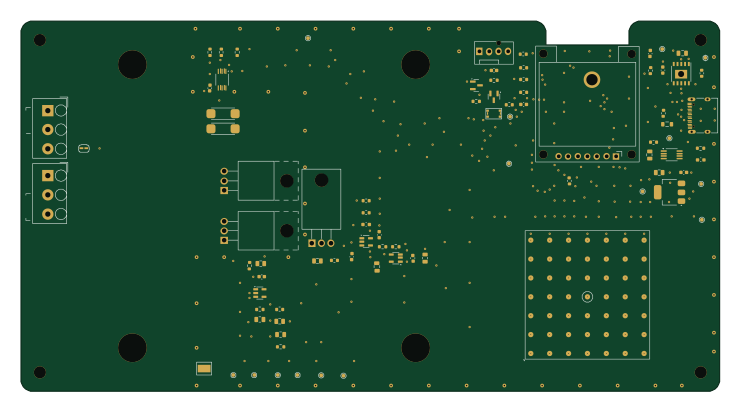 ESP32
ESP32Electricload
185 × 98 mm71 parts2LNo license5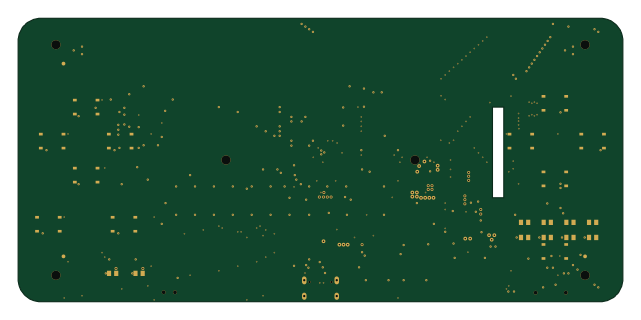 ESP32
ESP32Esp32-emu turbo
pjcau
160 × 75 mm102 parts4LNo license4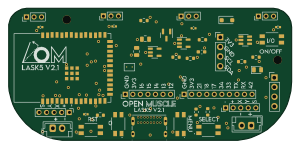 ESP32
ESP32LASK5 V2-0
Open-Muscle
75 × 35 mm43 parts2LCERN-OHL-S-2.03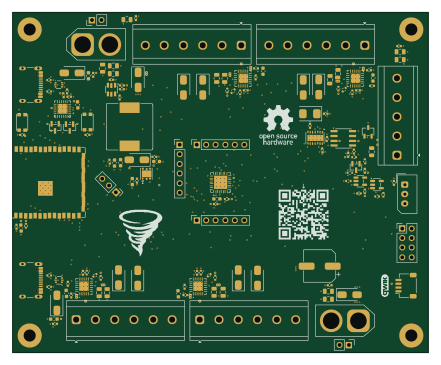 ESP32
ESP32URC
spikonado
110 × 90 mm150 parts4LCERN-OHL-W-2.02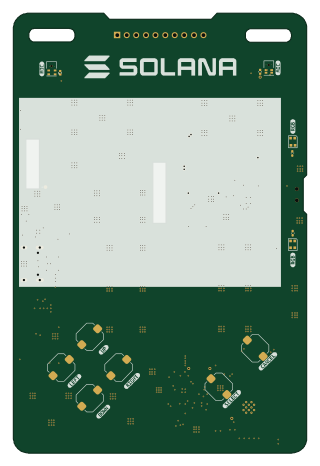 ESP32
ESP32Solana badge
spacemandev-git
77.6 × 116.3 mm81 parts2LNo license2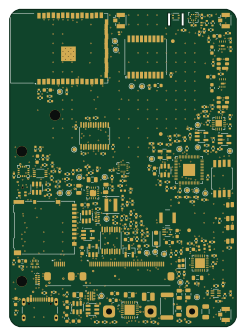 RP2040/RP2350
StratosCore
pantojinho
60 × 84 mm245 parts4LNo license1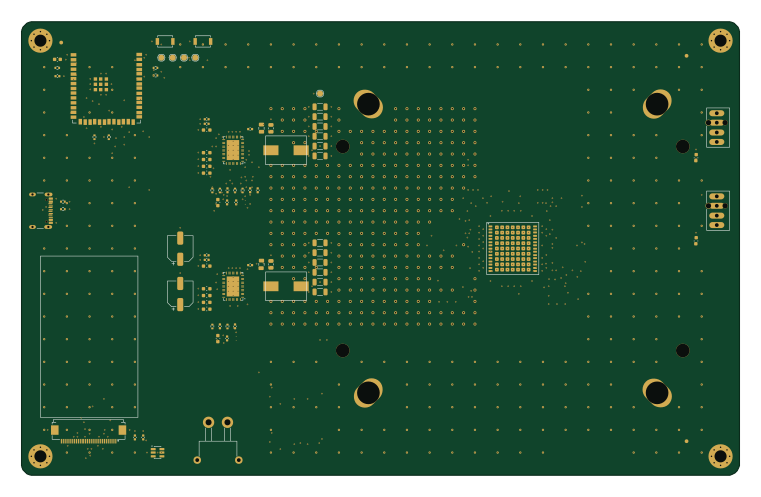 ESP32
ESP32BitaxeFlux
Zayno
190 × 120 mm150 parts6LCERN-OHL-S-2.01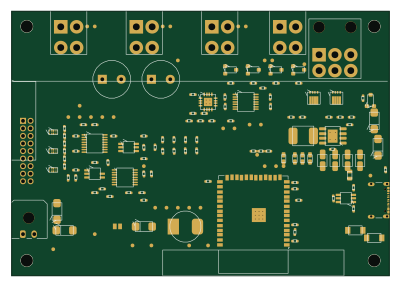 ESP32
ESP32Chainaxe
johnny9
100 × 70 mm109 parts4LCERN-OHL-S-2.01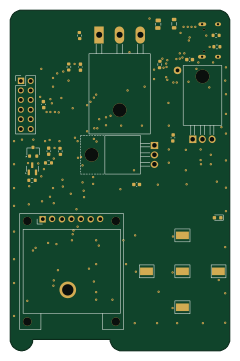 ESP32
ESP32Dcpower
58 × 90 mm101 parts2LNo license1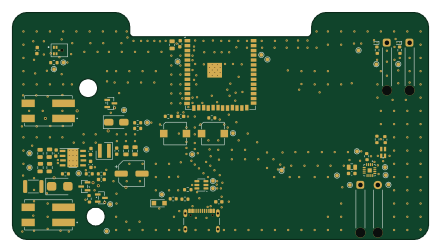 ESP32
ESP32ClearBell V0.2
akoerner-dev
110 × 60 mm57 parts4LMIT1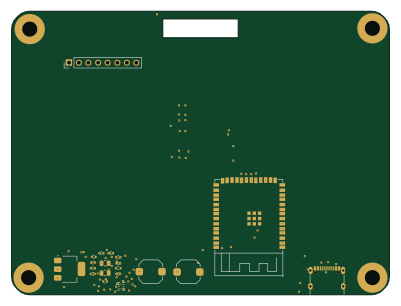 ESP32
ESP32PCB-Business-Card
Studented0
100 × 75 mm20 parts2LMIT1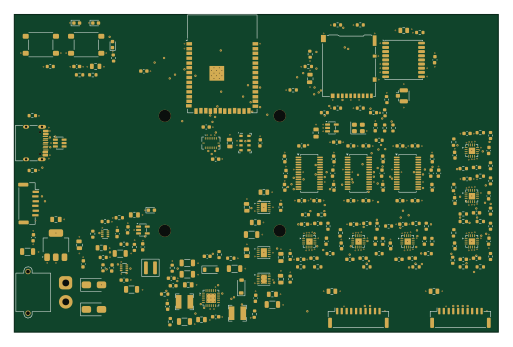 ESP32
ESP32DroneMagNav2.0
128 × 84 mm218 parts4LCustom license0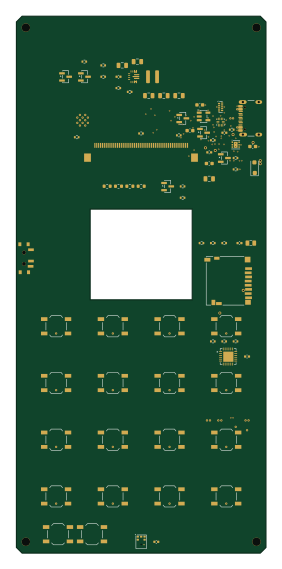 ESP32
ESP32Handset
JeremyLakeyJr
66 × 142 mm217 parts4LNo license0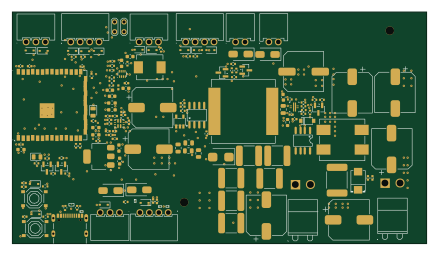 ESP32
ESP32ESP32-controlled peltier controller-CE-pre certified untested
manhoosbilli1
109.5 × 61.1 mm161 parts4LNo license0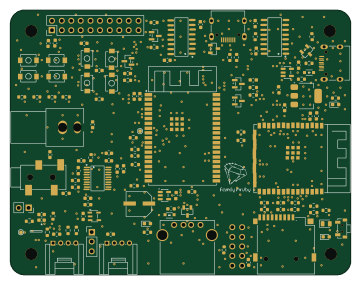 ESP32
ESP32Prod board
family-mruby
90 × 70 mm125 parts4LCERN-OHL-S-2.00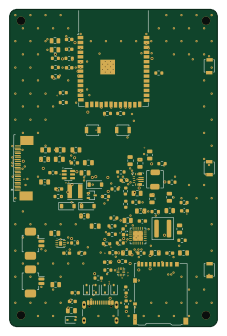 ESP32
ESP32ESP32-S3 GDEM102T91 Mainboard
ggkk0818
55 × 84 mm106 parts4LMIT0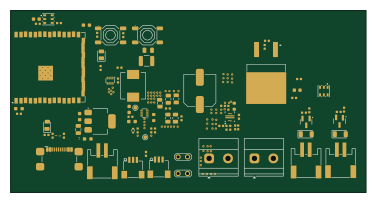 ESP32
ESP32Smart peltier driver esp32-v1
94 × 48.1 mm84 parts2LNo license0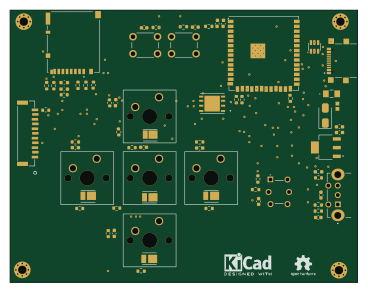 ESP32
ESP32OakBridge MkI
HighCarlSagan
91.9 × 72 mm78 parts2LCustom license0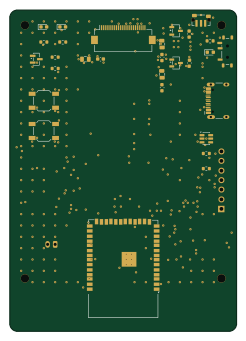 ESP32
ESP32ESP32-S3 Camera
LCQIANN
60 × 85 mm60 parts4LNo license0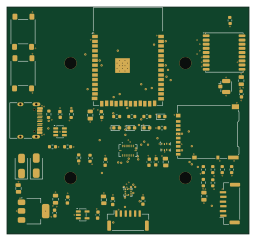 ESP32
ESP32Dronemagnav
Comrade-rn
64 × 60 mm56 parts4LCustom license0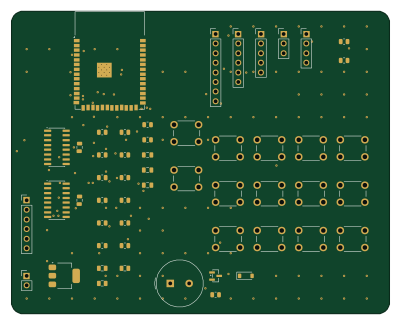 ESP32
ESP32InSomnia
kaorii-ako
100 × 80 mm53 parts2LNo license0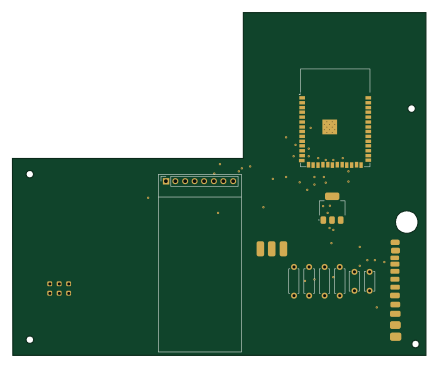 ESP32
ESP32Jay-Tab
Jay-Tai
109.3 × 90.7 mm12 parts2LMIT0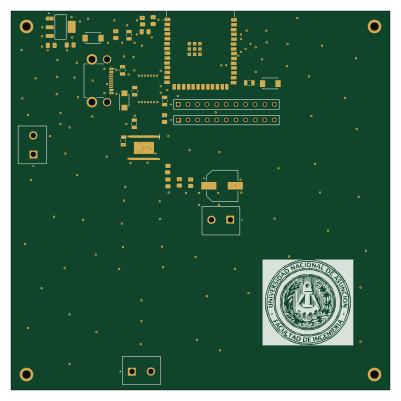 ESP32
ESP32Grupo15
SolFV
100 × 100 mm28 parts2LMIT1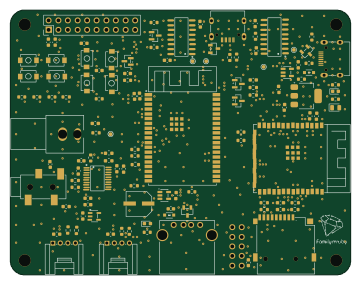 ESP32
ESP32Dev board r2
90 × 70 mm109 parts4LCERN-OHL-S-2.00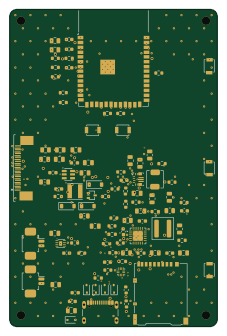 ESP32
ESP32ESP32-S3 GDEM102T91 Mainboard
55 × 84 mm106 parts4LMIT0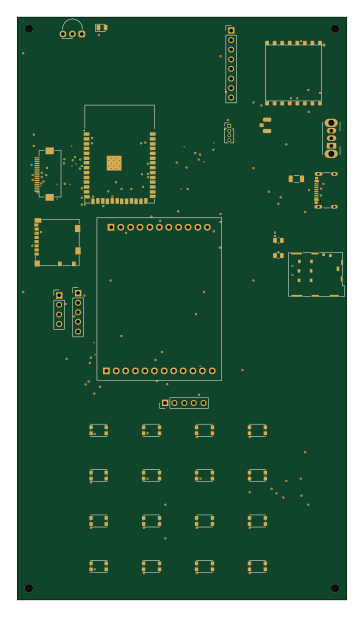 ESP32
ESP32Mesh phone
87 × 154 mm95 parts2LNo license0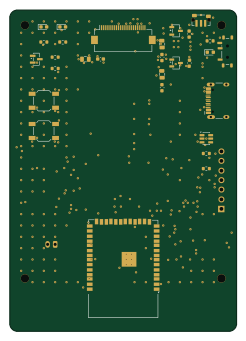 ESP32
ESP32ESP32-S3 Camera
60 × 85 mm60 parts4LNo license0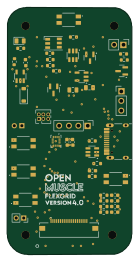 ESP32
ESP32OM-FlexGrid-Rigid
33 × 65.5 mm58 parts4LCERN-OHL-S-2.018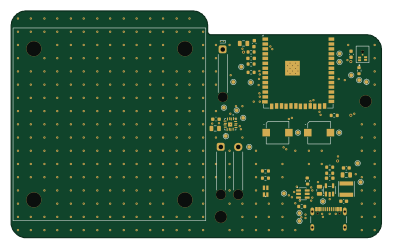 ESP32
ESP32ClearBell V0.2 Innen
98 × 60 mm33 parts4LMIT1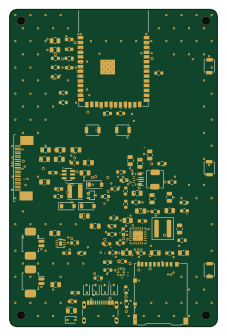 ESP32
ESP32ESP32-S3 GDEM102T91 Mainboard
55 × 84 mm106 parts4LMIT0
The ESP32-S3-WROOM-1-N16R8 in open source designs
The gallery holds 49 open source boards using the ESP32-S3-WROOM-1-N16R8 from 31 GitHub repositories; a typical one measures about 70 × 84 mm and carries around 106 components.
67% use four copper layers or more, and 57% carry an open source license.
The most starred is Silkscreen pcb by iandchasse.
Parts used alongside the ESP32-S3-WROOM-1-N16R8
Microcontrollers on boards using the ESP32-S3-WROOM-1-N16R8
What boards using the ESP32-S3-WROOM-1-N16R8 are built for
ESP32-S3-WROOM-1-N16R8: common questions
Where can I find a ESP32-S3-WROOM-1-N16R8 reference design?
Each of the 49 boards on this page is a real design using the ESP32-S3-WROOM-1-N16R8. Open one to see how it is wired up, with the full BOM, a render of the layout and links to its KiCad files.
What parts are used alongside the ESP32-S3-WROOM-1-N16R8?
The USBLC6-2SC6, AMS1117-3.3, MAX-M10S-00B, AP2112K-3.3TRG1 and BMI088 appear in the most repositories here.
Which microcontrollers do boards using the ESP32-S3-WROOM-1-N16R8 use?
Most are built on ESP32 (48) and RP2040/RP2350 (1).
How big is a typical board using the ESP32-S3-WROOM-1-N16R8?
The median is 70 × 84 mm, and 33% are two-layer designs.
What is the most popular open source board using the ESP32-S3-WROOM-1-N16R8?
By GitHub stars, Silkscreen pcb by iandchasse, with 554 stars.
Can I simulate one of these boards using the ESP32-S3-WROOM-1-N16R8 before building it?
Yes. HardLabs turns a board's netlist and BOM into a working simulation, so you can boot and test firmware against it with no hardware on your desk.