
12 open source boards using the XC6206P182MR
Real designs built with the XC6206P182MR, from public GitHub projects: a quick way to see how others power, decouple and connect it. Each board comes with its KiCad files, full parts list and a render — and you can simulate its firmware on HardLabs.
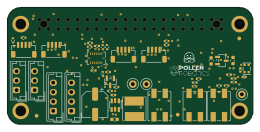
Elec RPI Robot HAT
pollen-robotics
65 × 30.9 mm122 parts4LApache-2.0108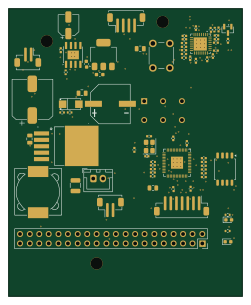 RP2040/RP2350
Digits
justinlindh
61.9 × 76.2 mm74 parts2LAGPL-3.04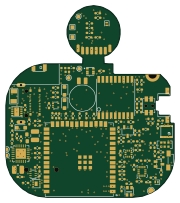 ESP32
Kompic Mk1b
porupski
44.5 × 50.6 mm121 parts4LGPL-3.03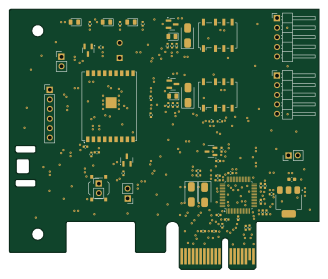 ESP32
Serialsentinel
gcormier
82 × 68.9 mm68 parts4LNo license3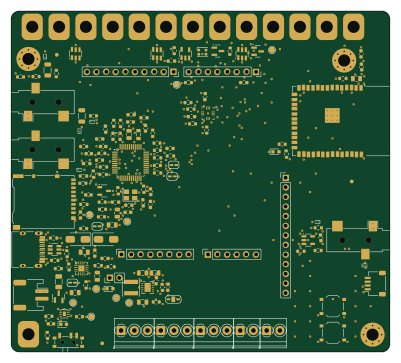 ESP32
Opentouch s3
JoeMighty
100 × 90 mm145 parts4LCustom license0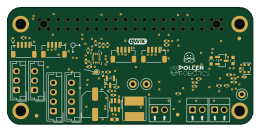
Indieduck
armature-ai-labs
65 × 30.9 mm125 parts4LApache-2.00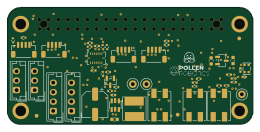
Microduck project
Ngalalalekhaaa
65 × 30.9 mm122 parts4LNo license0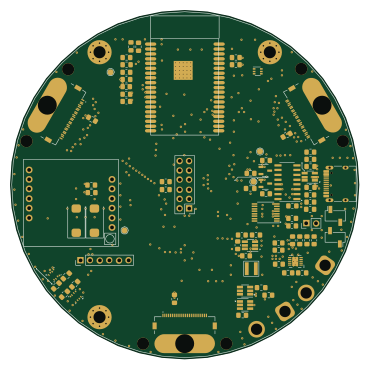 ESP32
Lacarriere station
pier-cbd
92 × 92 mm78 parts2LNo license0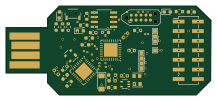 FPGA
Uart384
dpiegdon
54.1 × 23.5 mm41 parts2LNo license0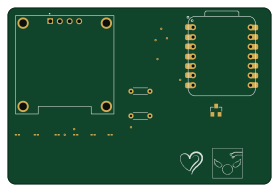 RP2040/RP2350
PCB2
Hasona57
69.5 × 46.5 mm12 parts2LNo license0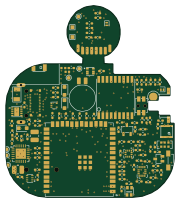 ESP32
Kompic Mk1
44.5 × 50.6 mm119 parts4LGPL-3.03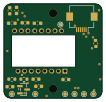
K0d3ball35 trackball sensor board (PMW3610)
konstantindenerz
26 × 25 mm15 parts2LMIT3
How designs wire the XC6206P182MR
Read from the KiCad layouts of 11 open source designs, one per repository: what each pin of the XC6206P182MR connects to, and the resistors, capacitors and other passives placed on it.
- The VO pin has a decoupling capacitor on 10 of 11 designs, most often 100 nF (then 10 µF).
- The VI pin has a decoupling capacitor on 10 of 11 designs, most often 100 nF (then 1 µF).
| Pin | Connected to | Parts on the pin |
|---|---|---|
| GNDpin 1 | Connected to: GND 100% | — |
| VOpin 2 | Connected to: 1.8V 82% · a signal 18% |
|
| VIpin 3 | Connected to: 3.3V 91% |
|
Connections count pins, parts count designs; values in brackets are how many parts had that value. Designs read include Elec RPI Robot HAT by pollen-robotics, Digits by justinlindh, Serialsentinel by gcormier and K0d3ball35 trackball sensor board (PMW3610) by konstantindenerz.
The XC6206P182MR in open source designs
The gallery holds 12 open source boards using the XC6206P182MR from 11 GitHub repositories; a typical one measures about 65 × 48.6 mm and carries around 99 components.
58% use four copper layers or more, and 50% carry an open source license.
The most starred is Elec RPI Robot HAT by pollen-robotics.
Parts used alongside the XC6206P182MR
Microcontrollers on boards using the XC6206P182MR
What boards using the XC6206P182MR are built for
XC6206P182MR: common questions
Where can I find a XC6206P182MR reference design?
Each of the 12 boards on this page is a real design using the XC6206P182MR. Open one to see how it is wired up, with the full BOM, a render of the layout and links to its KiCad files.
What decoupling capacitors do designs use on the XC6206P182MR VO pin?
The VO pin has a decoupling capacitor on 10 of 11 designs, most often 100 nF (then 10 µF). Counted from the KiCad layouts of 11 open source designs using the XC6206P182MR.
What decoupling capacitors do designs use on the XC6206P182MR VI pin?
The VI pin has a decoupling capacitor on 10 of 11 designs, most often 100 nF (then 1 µF). Counted from the KiCad layouts of 11 open source designs using the XC6206P182MR.
What parts are used alongside the XC6206P182MR?
The TLV320AIC3104IRHBR, 74LVC1G08, AP63205, DNP-CAT24C32HU4 and LM5050-1 appear in the most repositories here.
Which microcontrollers do boards using the XC6206P182MR use?
Most are built on ESP32 (5), RP2040/RP2350 (2) and FPGA (1).
How big is a typical board using the XC6206P182MR?
The median is 65 × 48.6 mm, and 42% are two-layer designs.
What is the most popular open source board using the XC6206P182MR?
By GitHub stars, Elec RPI Robot HAT by pollen-robotics, with 108 stars.
Can I simulate one of these boards using the XC6206P182MR before building it?
Yes. HardLabs turns a board's netlist and BOM into a working simulation, so you can boot and test firmware against it with no hardware on your desk.