
27 open source boards using the W5500
Real designs built with the W5500, from public GitHub projects: a quick way to see how others power, decouple and connect it. Each board comes with its KiCad files, full parts list and a render — and you can simulate its firmware on HardLabs.
 STM32
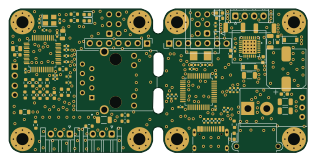
STM32Ethersweep
Neumi
79 × 38 mm97 parts2LMIT585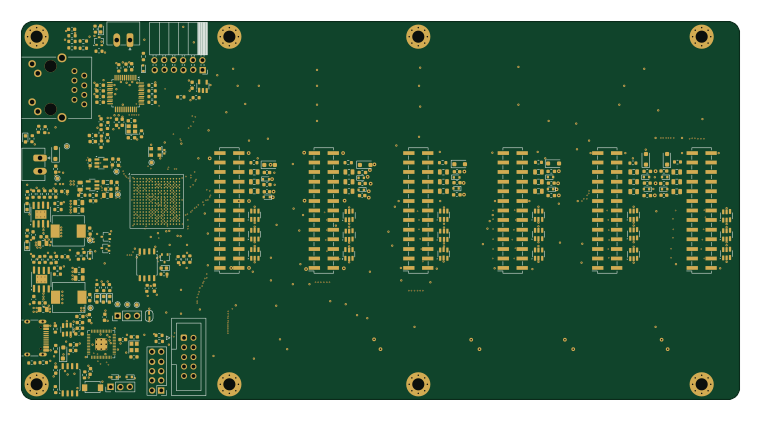 RP2040/RP2350
Rioctrl controller
festlv
190 × 100 mm260 parts4LCERN-OHL-S-2.016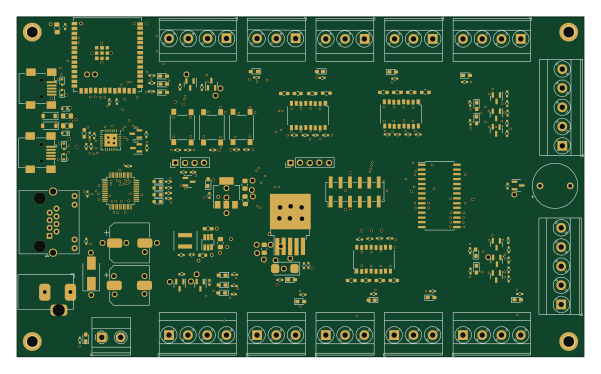 ESP32
ESP32Access controller
physiii
150 × 90 mm186 parts4LNo license13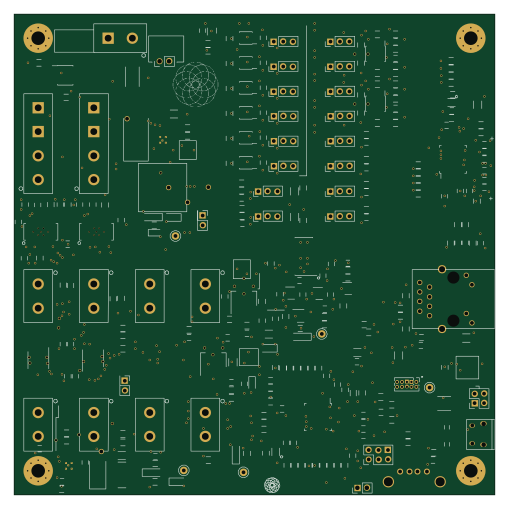 Microchip SAM
Node
ParadigmHyperloop
127 × 127 mm390 parts4LCustom license11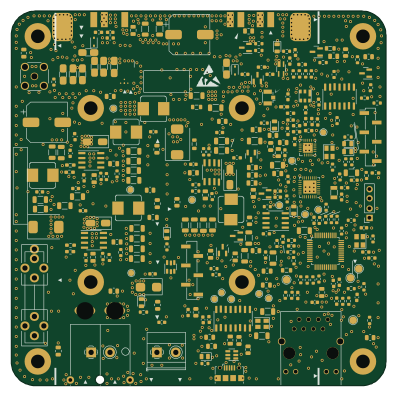 STM32
STM32Scoms tacnpr
partio-scout
99.1 × 99.1 mm279 parts4LTAPR-OHL-1.09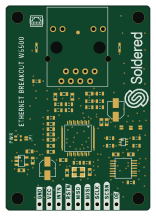
Ethernet breakout W5500
SolderedElectronics
38 × 54 mm59 parts2LTAPR-OHL-1.04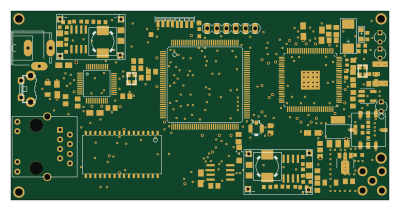
EasyDABv2
KaiBLI
99.8 × 49.8 mm171 parts2LGPL-2.02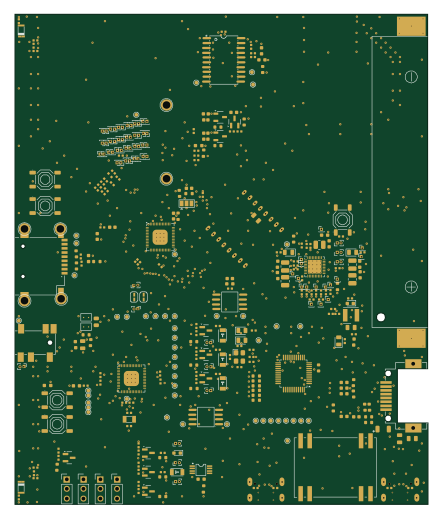 ESP32
ESP32ESP32S3 Audio Cam POE
jharvey
109.4 × 129.7 mm320 parts4LMIT1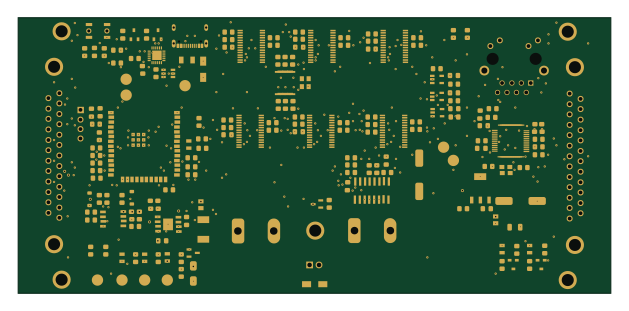 ESP32
ESP32HolyGrail
whbCool
157 × 73 mm195 parts6LNo license1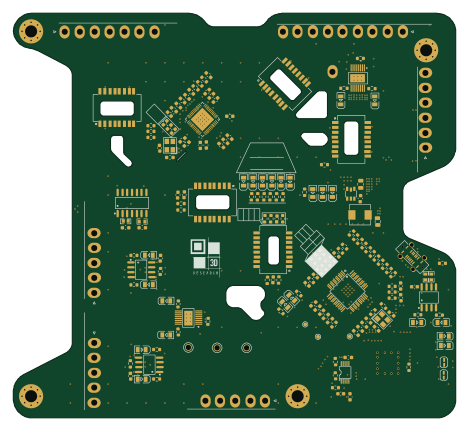 ESP32
ESP32MPE HUB
felixmanfredi
117 × 107 mm235 parts4LNo license0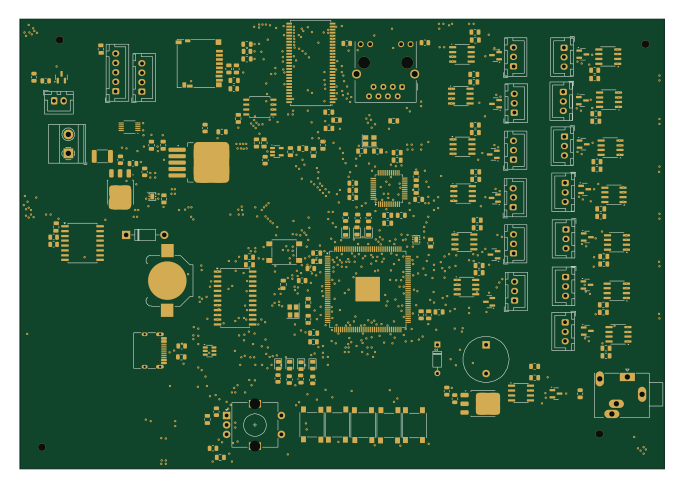
CoreLight
llextv
170.7 × 119 mm192 parts4LNo license0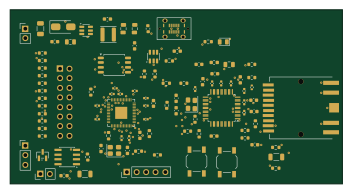 RP2040/RP2350
Before width normalization
beleata
88 × 46.1 mm103 parts2LNo license0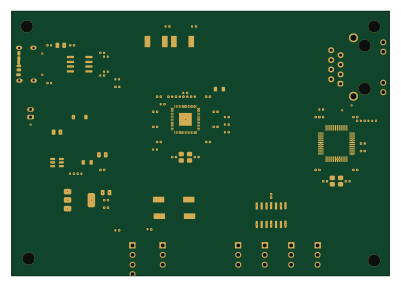
2040-artnode
dnewcome
100 × 70 mm80 parts4LNo license0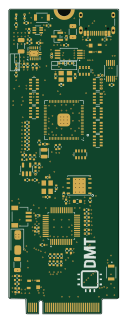
BladeCore-M54E
DvidMakesThings
29.1 × 80.6 mm148 parts6LAGPL-3.082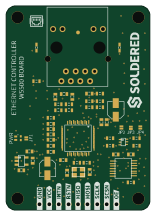
Ethernet controller W5500 board
38 × 54 mm59 parts2LTAPR-OHL-1.04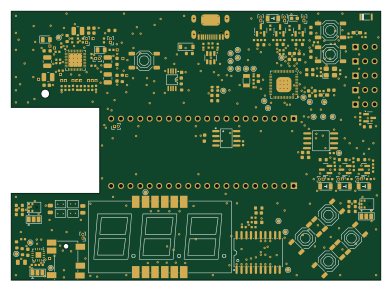 ESP32
ESP32ESP32S3 Audio Cam POE Medium
97.8 × 71.1 mm197 parts2LMIT1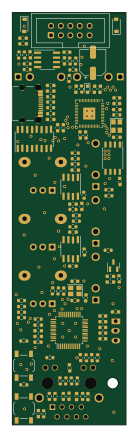 RP2040/RP2350
Laser controller
adeboni
30 × 109 mm124 parts2LGPL-3.01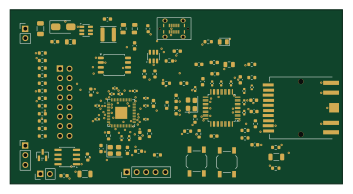 RP2040/RP2350
First pass
88 × 46.1 mm103 parts2LNo license0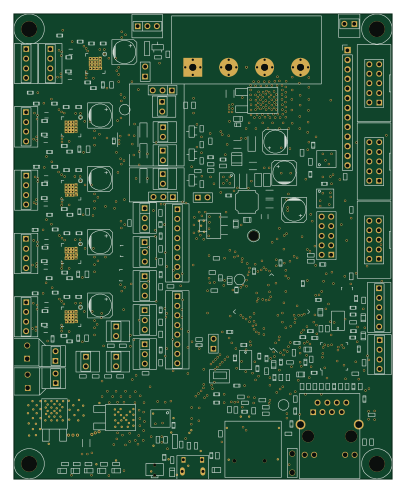 Microchip SAM
Duet 2 Maestro
Duet3D
100 × 123 mm336 partsCERN-OHL-1.2257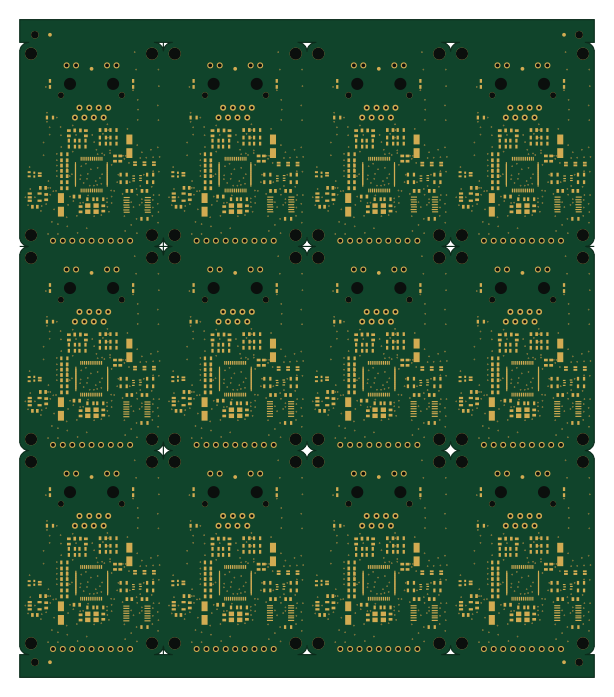
Ethernet controller W5500 board panel
152 × 174 mm59 parts2LTAPR-OHL-1.04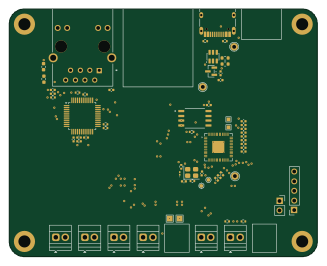 RP2040/RP2350
Core micro
zeerolux
81.5 × 65.5 mm55 parts2LNo license1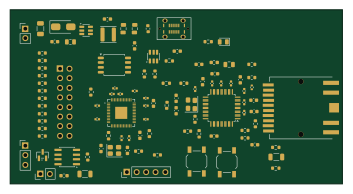 RP2040/RP2350
Pico panel
88 × 46.1 mm103 parts2LNo license0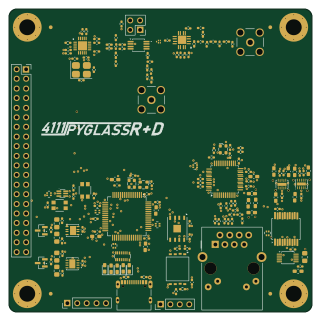 STM32
STM32OpenLST
MatthiasGeorgImhof
80 × 80 mm171 parts4LCC-BY-NC-4.00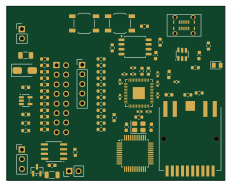 RP2040/RP2350
Ethernet fit plot
57.8 × 46.1 mm79 parts2LNo license0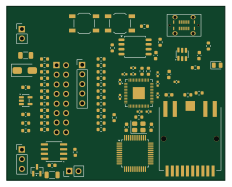 RP2040/RP2350
Ethernet mechanical
57.8 × 46.1 mm79 parts2LNo license0
Tutorial
40 parts2LCustom license11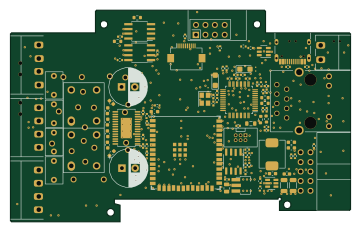 ESP32
ESP32SensactHsNano3
klaus-liebler
90 × 56 mm122 parts2LApache-2.04
The W5500 in open source designs
The gallery holds 27 open source boards using the W5500 from 19 GitHub repositories; a typical one measures about 93.9 × 72.1 mm and carries around 124 components.
58% are two-layer designs, the rest use four layers or more, and 48% carry an open source license.
The most starred is Ethersweep by Neumi.
Parts used alongside the W5500
Microcontrollers on boards using the W5500
What boards using the W5500 are built for
W5500: common questions
Where can I find a W5500 reference design?
Each of the 27 boards on this page is a real design using the W5500. Open one to see how it is wired up, with the full BOM, a render of the layout and links to its KiCad files.
What parts are used alongside the W5500?
The USBLC6-2SC6, RP2040, W25Q128JVS, AMS1117-3.3 and AP63203WU-7 appear in the most repositories here.
Which microcontrollers do boards using the W5500 use?
Most are built on RP2040/RP2350 (8), ESP32 (6), STM32 (3) and Microchip SAM (2).
How big is a typical board using the W5500?
The median is 93.9 × 72.1 mm, and 58% are two-layer designs.
What is the most popular open source board using the W5500?
By GitHub stars, Ethersweep by Neumi, with 585 stars.
Can I simulate one of these boards using the W5500 before building it?
Yes. HardLabs turns a board's netlist and BOM into a working simulation, so you can boot and test firmware against it with no hardware on your desk.