
20 open source boards using the TPS63031DSKR
Real designs built with the TPS63031DSKR, from public GitHub projects: a quick way to see how others power, decouple and connect it. Each board comes with its KiCad files, full parts list and a render — and you can simulate its firmware on HardLabs.
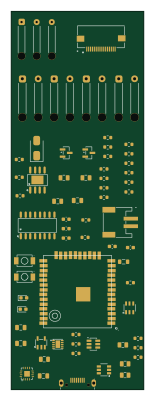 ESP32
WalkieTalkie
GuzziFlipFlops
35 × 100 mm66 parts2LMIT7- schematic only · 31 parts
Oreo
elixpo
31 partsCC-BY-4.07 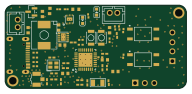 ESP32
Openrz67-trigger
openrz67
48 × 22 mm59 parts2LMIT3 ESP32
Unni smartification c6
lk-ek
46 × 32 mm71 parts4LGPL-3.02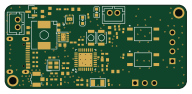 ESP32
OpenRZ67 camera trigger
48 × 22 mm59 parts2LMIT2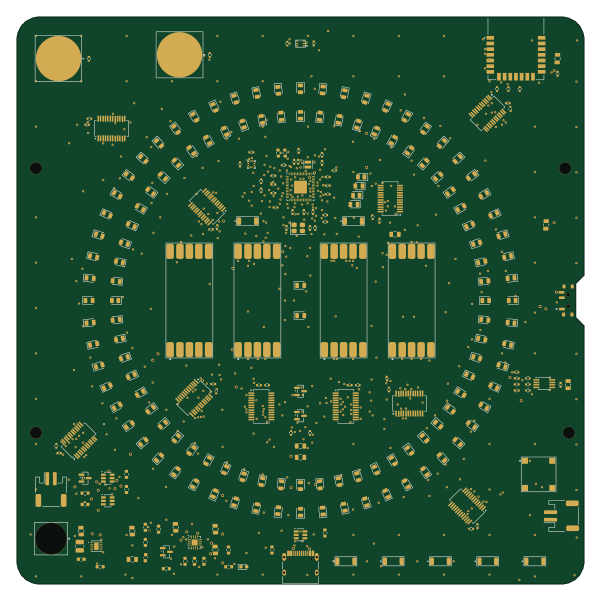 Raspberry Pi
Kids timer
jnd-cz
150 × 150 mm266 parts2LNo license0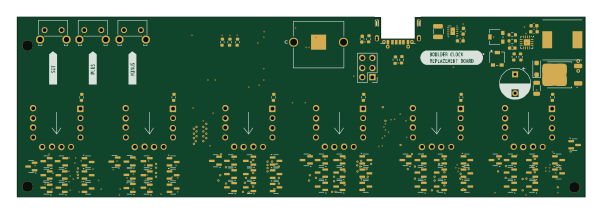 ESP8266
Boulder clock replacent bord
mickdassive
150.3 × 47.5 mm208 parts4LNo license0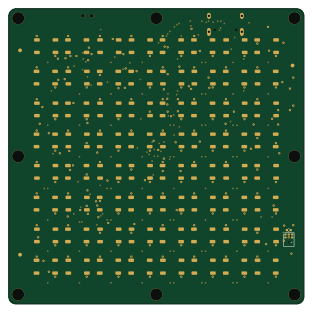 ESP32
TiltBox
Tom-Michiels
78 × 78 mm136 parts4LNo license0 ESP32
Smartwatch
CopperPilot
34 × 40 mm107 parts2LCERN-OHL-S-2.00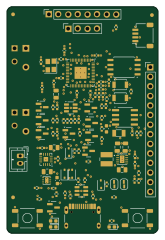 RP2040/RP2350
Trinketcore
alph4345
40 × 60 mm106 parts4LNo license0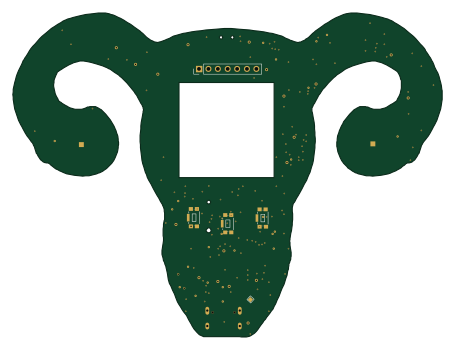 RP2040/RP2350
Clotty
bitshiftcrazy
113.7 × 85.8 mm87 parts2LNo license0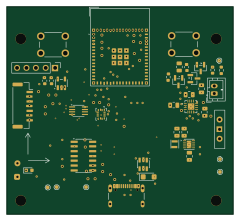 ESP32
BalancerREF
natehorst240-sketch
60 × 55.1 mm75 parts4LNo license0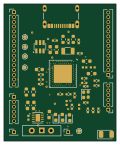 Nordic nRF
Keyboard
anhenaobe
29.5 × 36.1 mm67 parts4LGPL-3.00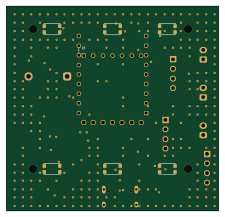 ESP32
Autofeedermod
wabolabs
56 × 54 mm39 parts4LCERN-OHL-W-2.00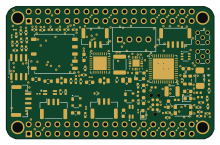
TACCO — Comms / Logging / Payload Cape
Stab-Rabbit-coding
55 × 35 mm108 parts6LCERN-OHL-W-2.01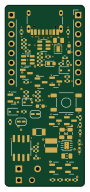
Capcore
21 × 48 mm65 parts4LNo license0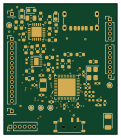 Nordic nRF
NRF52840 Modular Wireless SoM
30 × 34.6 mm52 parts4LGPL-3.00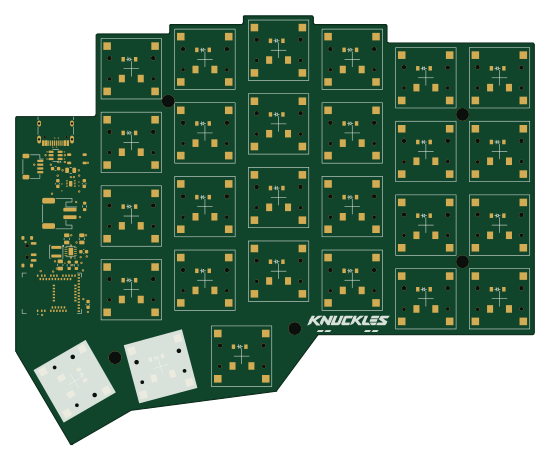 Nordic nRF
Knuckles integrated right
fcoury
137.3 × 113.5 mm100 parts4LMIT6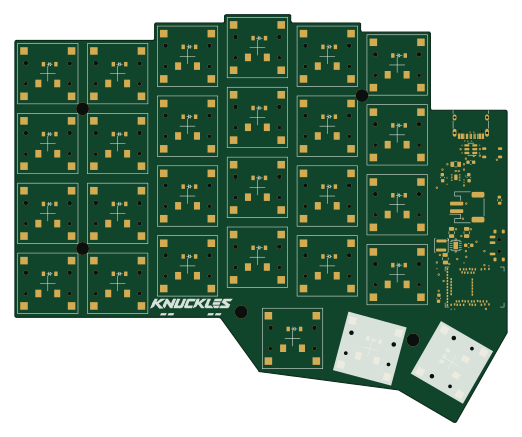 Nordic nRF
Knuckles integrated left
130.3 × 107.9 mm99 parts4LMIT6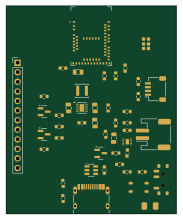 Nordic nRF
Knuckles controller
45 × 55 mm41 parts2LMIT6
How designs wire the TPS63031DSKR
Read from the KiCad layouts of 15 open source designs, one per repository: what each pin of the TPS63031DSKR connects to, and the resistors, capacitors and other passives placed on it.
- The L2_2 pin has a inductor on 14 of 15 designs, most often 1.5 µH (then 2.2 µH).
- The L1_4 pin has a inductor on 14 of 15 designs, most often 1.5 µH (then 2.2 µH).
- The VIN_5 pin has a decoupling capacitor on 14 of 15 designs, most often 100 nF (then 10 µF).
- The VINA_8 pin has a decoupling capacitor on 13 of 15 designs, most often 100 nF (then 10 µF).
| Pin | Connected to | Parts on the pin |
|---|---|---|
| VOUT_1pin 1 | Connected to: 3.3V 100% |
|
| L2_2pin 2 | Connected to: Signal 100% |
|
| PGND_3pin 3 | Connected to: GND 100% | — |
| L1_4pin 4 | Connected to: Signal 100% |
|
| VIN_5pin 5 | Connected to: VSYS 53% · a signal 47% |
|
| EN_6pin 6 | Connected to: Signal 53% · VSYS 47% |
|
| PS/SYNC_7pin 7 | Connected to: GND 80% | — |
| VINA_8pin 8 | Connected to: VSYS 53% · a signal 47% |
|
| GND_9pin 9 | Connected to: GND 100% | — |
| FB_10pin 10 | Connected to: 3.3V 100% | — |
| PGND_11pin 11 | Connected to: GND 93% | — |
Connections count pins, parts count designs; values in brackets are how many parts had that value. Designs read include WalkieTalkie by GuzziFlipFlops, Knuckles controller by fcoury, Openrz67-trigger by openrz67 and Unni smartification c6 by lk-ek.
The TPS63031DSKR in open source designs
The gallery holds 20 open source boards using the TPS63031DSKR from 16 GitHub repositories; a typical one measures about 48 × 54 mm and carries around 73 components.
63% use four copper layers or more, and 65% carry an open source license.
The most starred is WalkieTalkie by GuzziFlipFlops.
Parts used alongside the TPS63031DSKR
Microcontrollers on boards using the TPS63031DSKR
What boards using the TPS63031DSKR are built for
TPS63031DSKR: common questions
Where can I find a TPS63031DSKR reference design?
Each of the 20 boards on this page is a real design using the TPS63031DSKR. Open one to see how it is wired up, with the full BOM, a render of the layout and links to its KiCad files.
How is the TPS63031DSKR L2_2 pin connected?
The L2_2 pin has a inductor on 14 of 15 designs, most often 1.5 µH (then 2.2 µH). Counted from the KiCad layouts of 15 open source designs using the TPS63031DSKR.
How is the TPS63031DSKR L1_4 pin connected?
The L1_4 pin has a inductor on 14 of 15 designs, most often 1.5 µH (then 2.2 µH). Counted from the KiCad layouts of 15 open source designs using the TPS63031DSKR.
What decoupling capacitors do designs use on the TPS63031DSKR VIN_5 pin?
The VIN_5 pin has a decoupling capacitor on 14 of 15 designs, most often 100 nF (then 10 µF). Counted from the KiCad layouts of 15 open source designs using the TPS63031DSKR.
What parts are used alongside the TPS63031DSKR?
The USBLC6-2SC6, BQ25185DLHR, DW01A, C157925 and C88374 appear in the most repositories here.
Which microcontrollers do boards using the TPS63031DSKR use?
Most are built on ESP32 (8), Nordic nRF (5), RP2040/RP2350 (2) and ESP8266 (1).
How big is a typical board using the TPS63031DSKR?
The median is 48 × 54 mm, and 37% are two-layer designs.
What is the most popular open source board using the TPS63031DSKR?
By GitHub stars, WalkieTalkie by GuzziFlipFlops, with 7 stars.
Can I simulate one of these boards using the TPS63031DSKR before building it?
Yes. HardLabs turns a board's netlist and BOM into a working simulation, so you can boot and test firmware against it with no hardware on your desk.