
29 open source boards using the W25Q32JVSS
Real designs built with the W25Q32JVSS, from public GitHub projects: a quick way to see how others power, decouple and connect it. Each board comes with its KiCad files, full parts list and a render — and you can simulate its firmware on HardLabs.
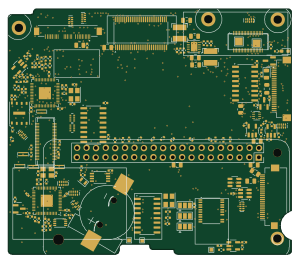 RP2040/RP2350
Vaio re
CRImier
75 × 65 mm274 parts4LGPL-3.0253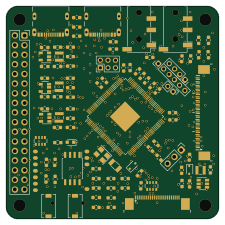
XassetteAsterisk
SdtElectronics
56 × 56 mm137 parts2LCERN-OHL-W-2.0229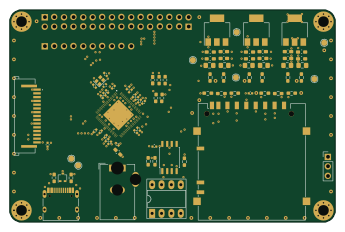
Teacup
HackerComputerCompany
86.2 × 56.2 mm76 parts4LGPL-2.031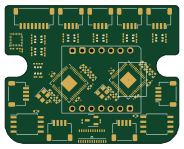 RP2040/RP2350
TundraIOExpansion
ras-marques
46 × 36.5 mm89 parts4LMIT29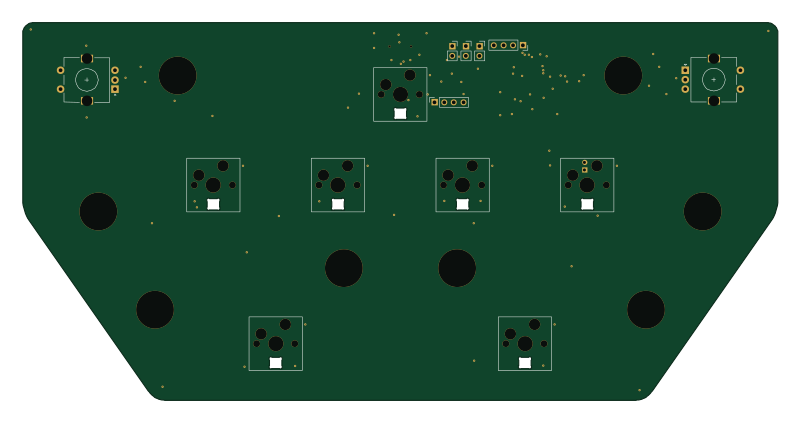 RP2040/RP2350
PH-AC
ph-design
200 × 100 mm59 parts2LCustom license7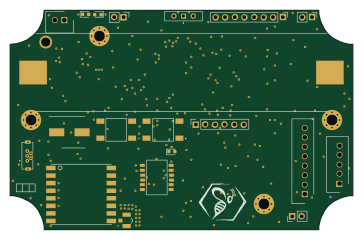 STM32
STM32EcoApi BeeHiveMonitoring
EcoApi
90.6 × 58 mm166 parts2LGPL-3.04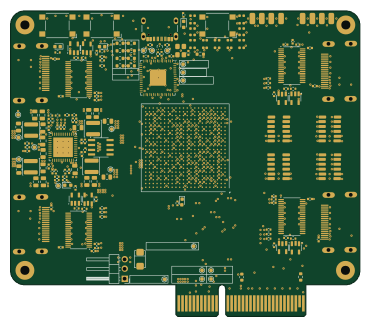 FPGA
FPGAArtixDevBoard
RasmusStagsted
92.5 × 80.9 mm300 parts4LNo license3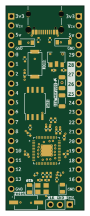 RP2040/RP2350
RP2040-Dev-Board
abhinav937
20.6 × 54 mm41 parts4LMIT3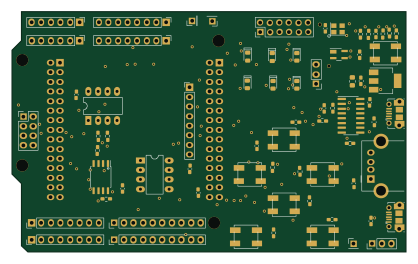
Riscduino Fpga Rev1.1
dineshannayya
104.3 × 63.6 mm101 parts2LNo license2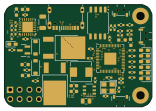 RP2040/RP2350
Raspberry pi power hub
tobycm
39 × 27 mm65 parts2LMIT2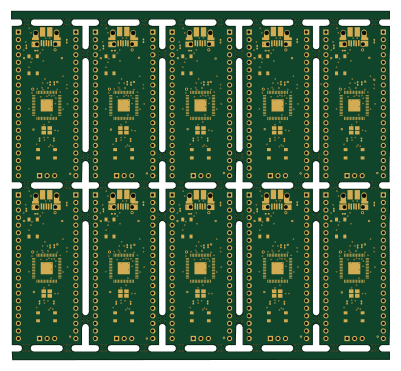 RP2040/RP2350
RP2040-Test-MassProduction
zeankundev
100 × 92.2 mm335 parts2LNo license1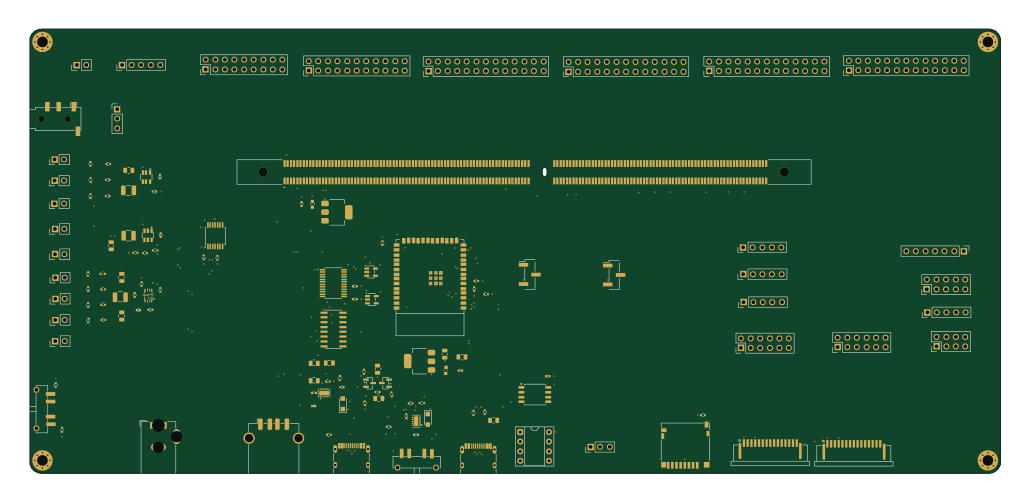 ESP32
ESP32Teacup carrier
thingino
257 × 117.5 mm133 parts4LGPL-3.01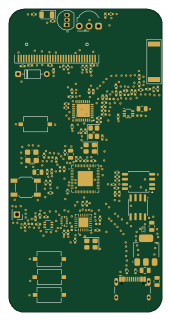 ESP32
ESP32Null
jadenvv
40.5 × 80.2 mm121 parts4LNo license1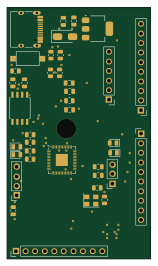 RP2040/RP2350
EMG-Mechanical-Arm
dominicmorris002
38 × 66.6 mm39 parts2LCC-BY-NC-4.01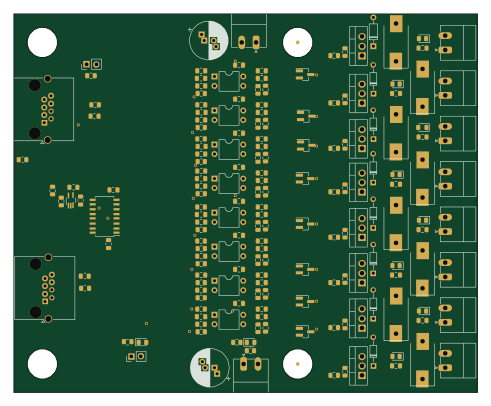 RP2040/RP2350
Piano solenoid controller
122.5 × 100 mm179 parts2LGPL-3.0253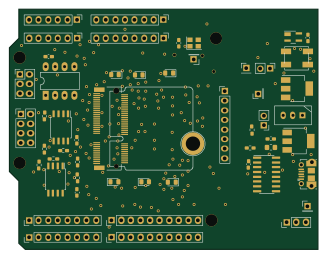
Riscduino Debug Rev1.4
81.7 × 63.6 mm95 parts2LNo license2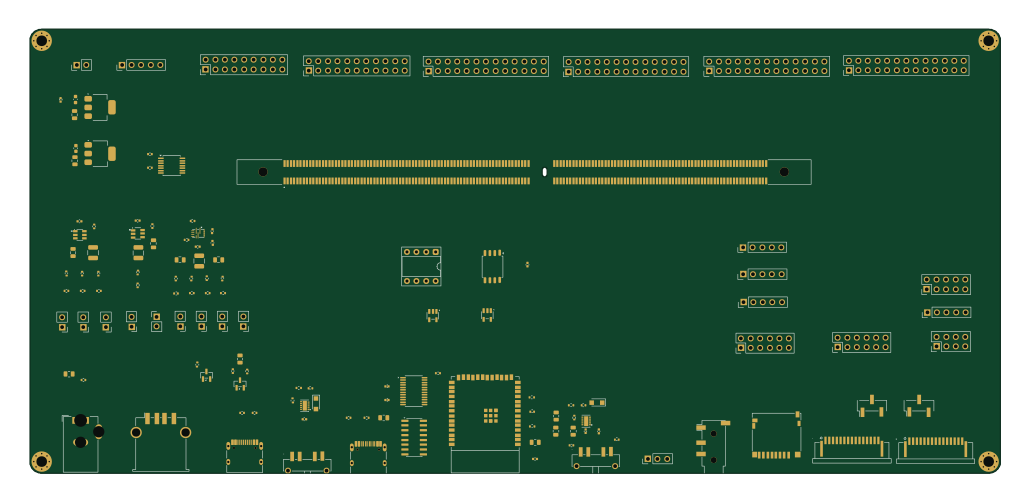 ESP32
ESP32Teacup carrier merge test
257 × 117.5 mm131 parts4LGPL-3.01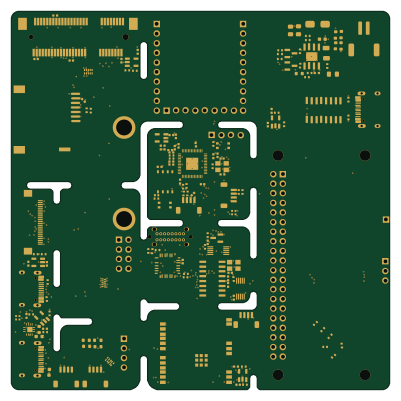 RP2040/RP2350
Zpn devboard
100 × 100 mm160 parts4LGPL-3.0253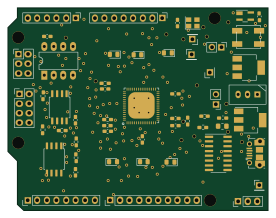
Riscduino Uno
68.8 × 53.6 mm90 parts2LNo license2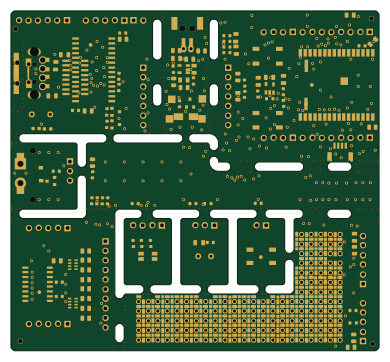 RP2040/RP2350
Protoesp
97.5 × 90 mm127 parts2LGPL-3.0253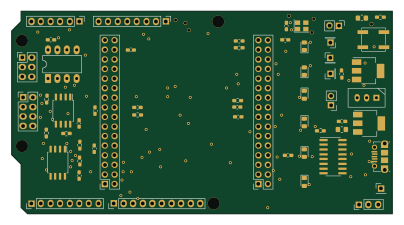
Riscduino Tester
100.8 × 53.6 mm88 parts2LNo license2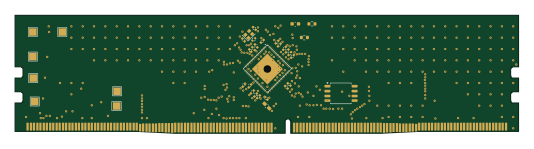
Teacup interposer
133.4 × 31.3 mm29 parts4LGPL-3.01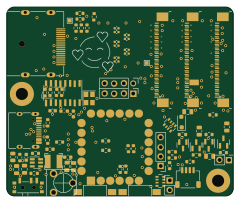
Friendp
60 × 50 mm79 parts4LGPL-3.0253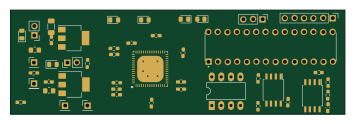 AVR/Arduino
Riscduino ATMEGA Adpater Rev1.0
88.7 × 27.6 mm70 parts2LNo license2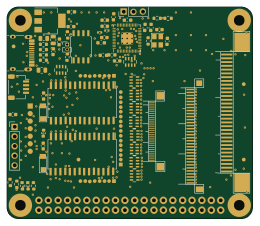 RP2040/RP2350
Keyboard whiz
65 × 56 mm74 parts2LGPL-3.0253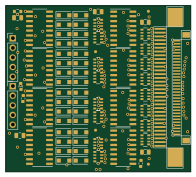 RP2040/RP2350
Simple keeb reuser
49 × 44 mm70 parts2LGPL-3.0253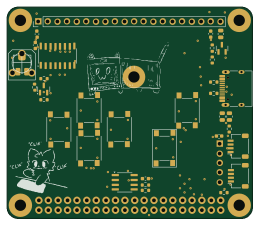 RP2040/RP2350
Zpui shld wg12864b
65 × 56 mm55 parts2LGPL-3.0253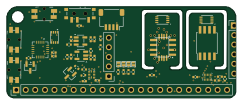 RP2040/RP2350
Blep hackerboard
60.6 × 24.1 mm54 parts2LGPL-3.0253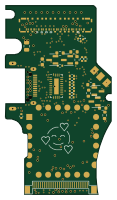
Framework mobo lefthalf
28 × 50 mm45 parts6LGPL-3.0253
The W25Q32JVSS in open source designs
The gallery holds 29 open source boards using the W25Q32JVSS from 14 GitHub repositories; a typical one measures about 81.7 × 56.2 mm and carries around 89 components.
59% are two-layer designs, the rest use four layers or more, and 66% carry an open source license.
The most starred is Vaio re by CRImier.
Parts used alongside the W25Q32JVSS
Microcontrollers on boards using the W25Q32JVSS
What boards using the W25Q32JVSS are built for
W25Q32JVSS: common questions
Where can I find a W25Q32JVSS reference design?
Each of the 29 boards on this page is a real design using the W25Q32JVSS. Open one to see how it is wired up, with the full BOM, a render of the layout and links to its KiCad files.
What parts are used alongside the W25Q32JVSS?
The RP2040, AP1117-33, T31ZX and XC6206PXXXMR appear in the most repositories here.
Which microcontrollers do boards using the W25Q32JVSS use?
Most are built on RP2040/RP2350 (14), ESP32 (3), AVR/Arduino (1) and FPGA (1).
How big is a typical board using the W25Q32JVSS?
The median is 81.7 × 56.2 mm, and 59% are two-layer designs.
What is the most popular open source board using the W25Q32JVSS?
By GitHub stars, Vaio re by CRImier, with 253 stars.
Can I simulate one of these boards using the W25Q32JVSS before building it?
Yes. HardLabs turns a board's netlist and BOM into a working simulation, so you can boot and test firmware against it with no hardware on your desk.