
23 open source boards using the ATMEGA328
Real designs built with the ATMEGA328, from public GitHub projects: a quick way to see how others power, decouple and connect it. Each board comes with its KiCad files, full parts list and a render — and you can simulate its firmware on HardLabs.
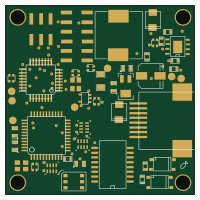 AVR/Arduino
Avrcraft poed
cnlohr
50 × 50 mm58 parts2LNo license472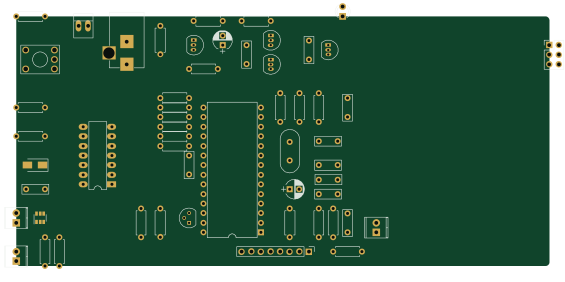 AVR/Arduino
AVR-Transistor-Tester
Upcycle-Electronics
141 × 66 mm55 parts2LNo license49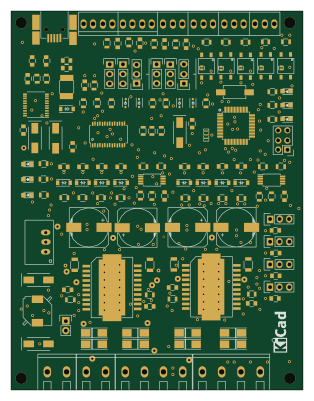 AVR/Arduino
ATMEGA328-Motor-Board
AntonioMR
77 × 100 mm171 parts2LNo license39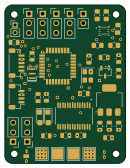 AVR/Arduino
NoahFC
zosko
32 × 42 mm41 parts2LGPL-3.012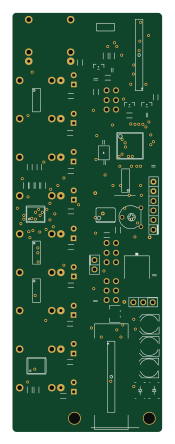 AVR/Arduino
Pcb-RCD-SCM-clocker
4ms
39.6 × 110.9 mm84 partsNo license9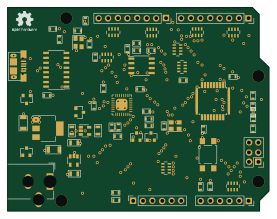 AVR/Arduino
Gelatino board
bru4bas
69 × 53.8 mm69 parts2LGPL-2.08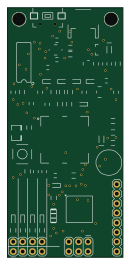 AVR/Arduino
GeoFence
sparkfunX
30.5 × 66 mm60 partsNo license8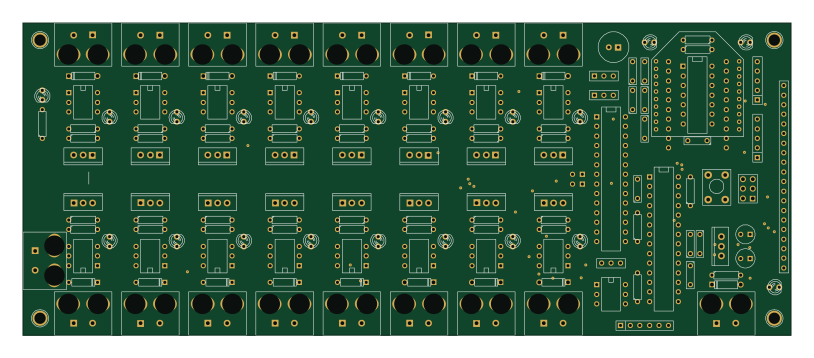 AVR/Arduino
Wifire16
propane-and-electrons
203.2 × 82.6 mm152 partsNo license6- schematic only · 16 partsAVR/Arduino
MCP
unmateria
16 partsCustom license3 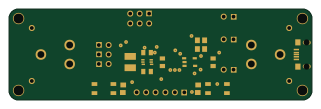 AVR/Arduino
Bebl v2
wyolum
80 × 24 mm72 parts2LNo license1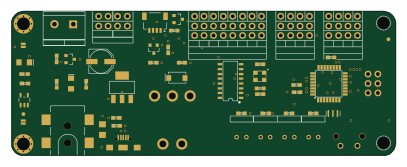 AVR/Arduino
RedBoard Edge
sparkfun
101.6 × 38.1 mm48 parts2LMIT1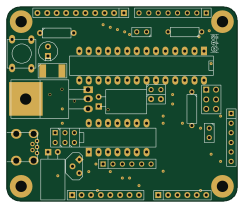 AVR/Arduino
PTLino
PostTenebrasLab
61 × 51.3 mm31 parts2LNo license0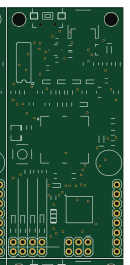 AVR/Arduino
GeoFence Panel
30.5 × 66 mm60 partsNo license8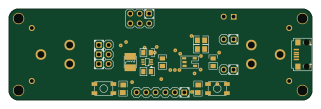 AVR/Arduino
Bebl v2 main
80 × 24 mm51 parts2LNo license1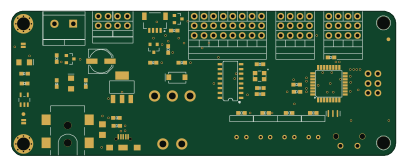 AVR/Arduino
13852-Redboard.Edge panel.v10
101.6 × 38.1 mm48 parts2LMIT1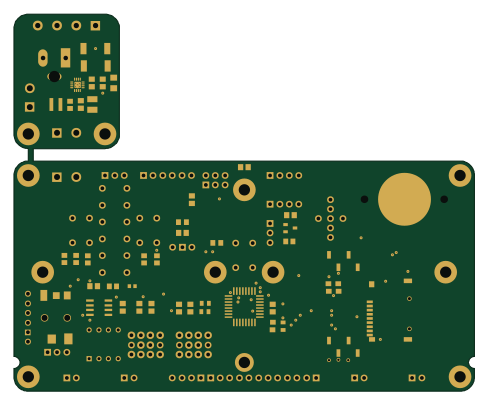 AVR/Arduino
TiNA
121.9 × 99.8 mm102 parts2LNo license0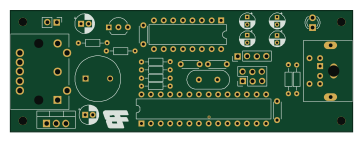 AVR/Arduino
TIMPS2Key
Board-Folk
90.6 × 32.2 mm30 parts2LNo license8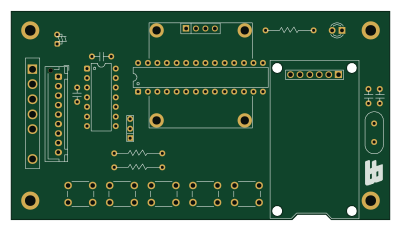 AVR/Arduino
MZ80MAX
100 × 55 mm22 parts2LNo license5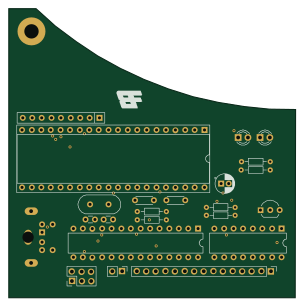 AVR/Arduino
Lynx-PS2
75.9 × 76.5 mm23 parts2LNo license4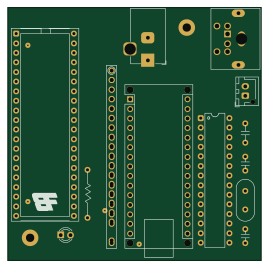 AVR/Arduino
MZ80PS2
67.1 × 67 mm12 parts2LNo license5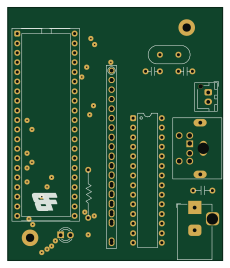 AVR/Arduino
MZ80PS2Mini
56.8 × 67 mm12 parts2LNo license5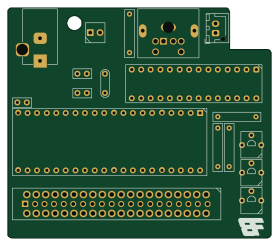 AVR/Arduino
EinsteinTC01PS2Mini
69.8 × 60.9 mm18 parts2LNo license4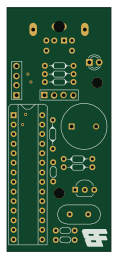 AVR/Arduino
TIMPS2KeyMini
27.5 × 64.6 mm17 parts2LNo license8
How designs wire the ATMEGA328
Read from the KiCad layouts of 16 open source designs, one per repository: what each pin of the ATMEGA328 connects to, and the resistors, capacitors and other passives placed on it.
- The PC4 pin has a pull-up to 3.3V on 9 of 16 designs, most often 10 kΩ (then 4.7 kΩ).
- The PC5 pin has a pull-up to 3.3V on 9 of 16 designs, most often 10 kΩ (then 4.7 kΩ).
- The VCC pin has a crystal on 8 of 16 designs, most often 16 MHz (then 20 MHz).
- The RESET/PC6_29 pin has a pull-up to 5V on 8 of 9 designs, most often 10 kΩ (then 1 kΩ).
| Pin | Connected to | Parts on the pin |
|---|---|---|
| PC6pin 1 | Connected to: A connector 50% |
|
| VCCpin 7 | Connected to: Signal 56% · 5V 44% |
|
| GNDpin 8, 22 | Connected to: Signal 50% · GND 44% |
|
| PB6pin 9 | Connected to: A connector 31% |
|
| PB7pin 10 | Connected to: A connector 31% |
|
| PB3pin 17 | Connected to: A connector 81% |
|
| AVCCpin 20 | Connected to: 5V 69% · a signal 25% |
|
| PC0pin 23 | Connected to: A connector 44% |
|
| PC2pin 25 | Connected to: A connector 38% · not connected 19% |
|
| PC4pin 27 | Connected to: A connector 44% |
|
| PC5pin 28 | Connected to: A connector 44% |
|
| RESET/PC6_29pin 29 | Connected to: A connector 78% |
|
| PD2_32pin 32 | Connected to: A connector 33% |
|
18 more pins vary from design to design. Connections count pins, parts count designs; values in brackets are how many parts had that value. Designs read include Avrcraft poed by cnlohr, AVR-Transistor-Tester by Upcycle-Electronics, ATMEGA328-Motor-Board by AntonioMR and NoahFC by zosko.
The ATMEGA328 in open source designs
The gallery holds 23 open source boards using the ATMEGA328 from 17 GitHub repositories; a typical one measures about 72.8 × 62.7 mm and carries around 48 components.
100% are two-layer designs, the rest use four layers or more, and 17% carry an open source license.
The most starred is Avrcraft poed by cnlohr.
Parts used alongside the ATMEGA328
Microcontrollers on boards using the ATMEGA328
What boards using the ATMEGA328 are built for
ATMEGA328: common questions
Where can I find a ATMEGA328 reference design?
Each of the 23 boards on this page is a real design using the ATMEGA328. Open one to see how it is wired up, with the full BOM, a render of the layout and links to its KiCad files.
What pull-up resistor is used on the ATMEGA328 PC4 pin?
The PC4 pin has a pull-up to 3.3V on 9 of 16 designs, most often 10 kΩ (then 4.7 kΩ). Counted from the KiCad layouts of 16 open source designs using the ATMEGA328.
What pull-up resistor is used on the ATMEGA328 PC5 pin?
The PC5 pin has a pull-up to 3.3V on 9 of 16 designs, most often 10 kΩ (then 4.7 kΩ). Counted from the KiCad layouts of 16 open source designs using the ATMEGA328.
How is the ATMEGA328 VCC pin connected?
The VCC pin has a crystal on 8 of 16 designs, most often 16 MHz (then 20 MHz). Counted from the KiCad layouts of 16 open source designs using the ATMEGA328.
What parts are used alongside the ATMEGA328?
The LM7805, MT8816, CH340G and MCP73831 appear in the most repositories here.
Which microcontrollers do boards using the ATMEGA328 use?
Most are built on AVR/Arduino (23).
How big is a typical board using the ATMEGA328?
The median is 72.8 × 62.7 mm, and 100% are two-layer designs.
What is the most popular open source board using the ATMEGA328?
By GitHub stars, Avrcraft poed by cnlohr, with 472 stars.
Can I simulate one of these boards using the ATMEGA328 before building it?
Yes. HardLabs turns a board's netlist and BOM into a working simulation, so you can boot and test firmware against it with no hardware on your desk.