
33 open source boards using the STM32G474RETX
Real designs built with the STM32G474RETX, from public GitHub projects: a quick way to see how others power, decouple and connect it. Each board comes with its KiCad files, full parts list and a render — and you can simulate its firmware on HardLabs.
 STM32
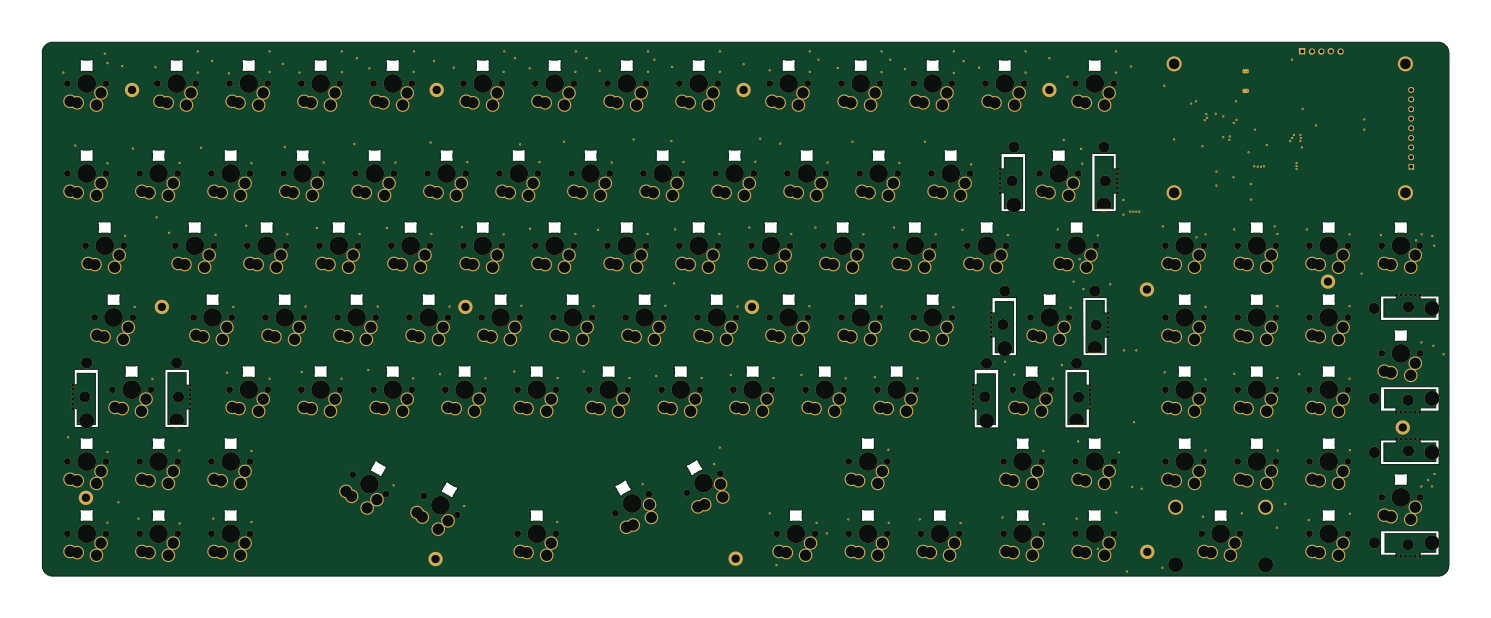
Mist
modern-hobbyist
372.1 × 141.2 mm445 parts2LMIT27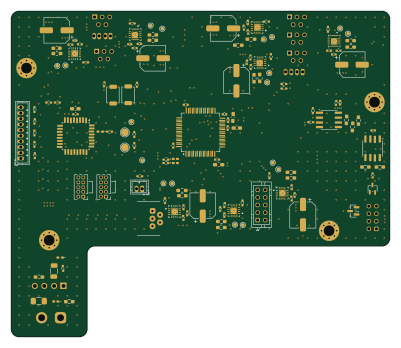 STM32
BananaHand
bananaHand-project
100 × 86 mm126 parts4LNo license22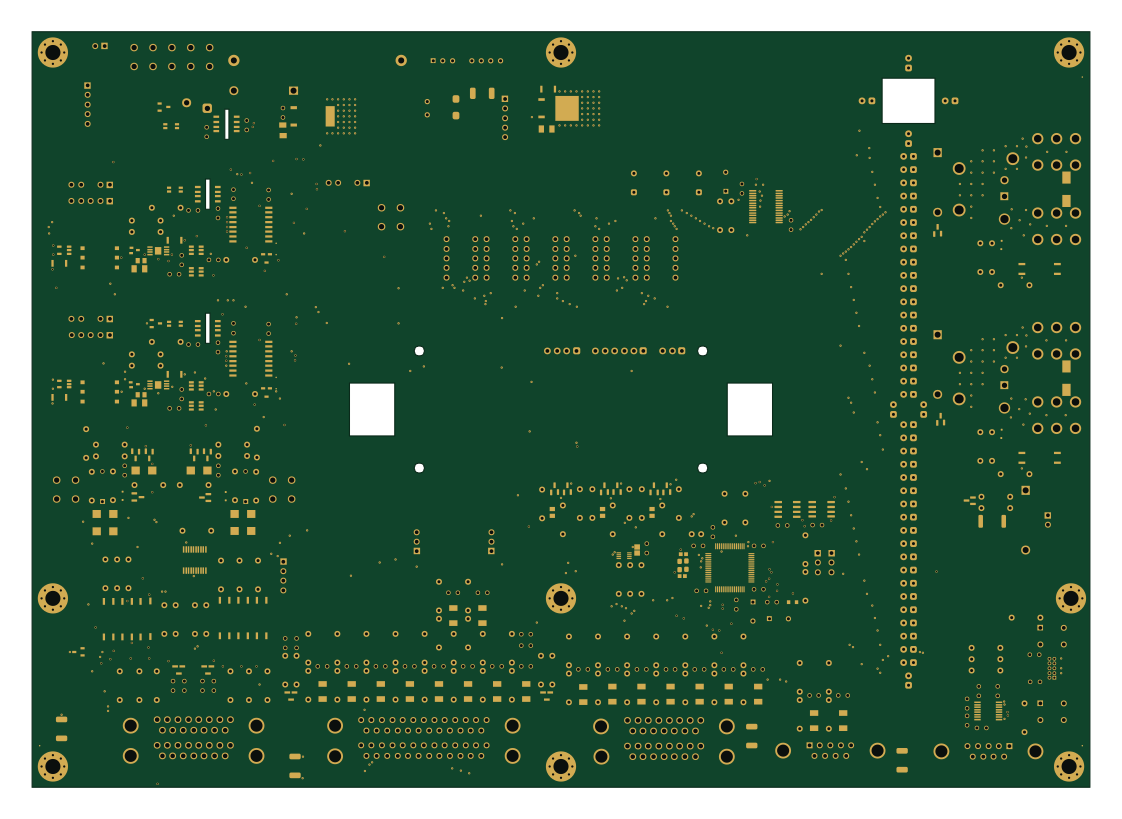 STM32
Muirgen Main Control Unit
Tuskar-Marine
280 × 200 mm381 parts4LNo license6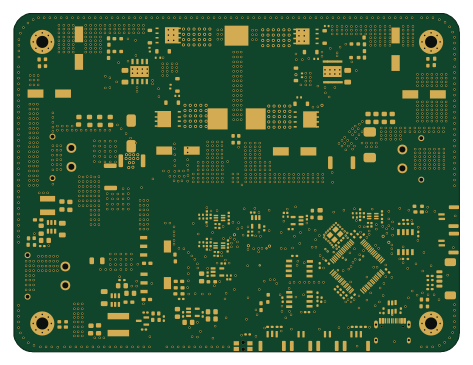 STM32
Avalon HW
YassineBakkali
118 × 89.6 mm215 parts4LMIT2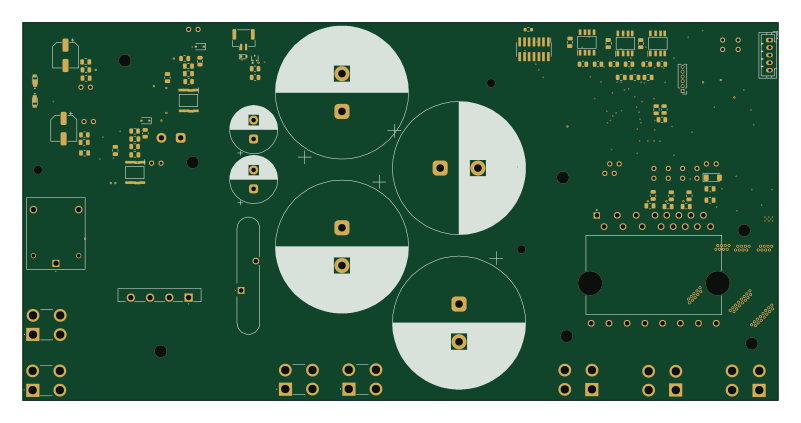 STM32
Projekt Mechatronik DC-AC
DriveLink-HM
200 × 100 mm177 parts4LGPL-3.02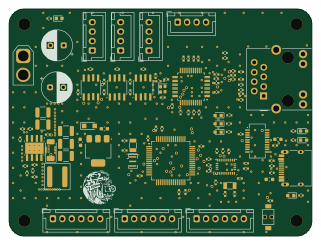 STM32
GN10Mainboard
ararobo
80 × 60 mm124 parts4LNo license2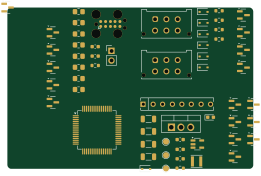 STM32
Board gpio
kt-21
65.1 × 42.7 mm57 parts2LNo license1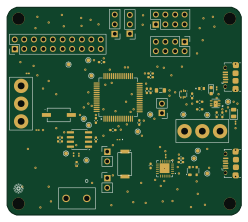 STM32
Control Board POC
ParadigmEngineering
62 × 55 mm53 parts4LNo license1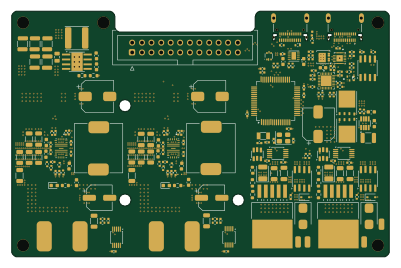 STM32
Ampere
LtBrain
100 × 65 mm208 parts4LMIT0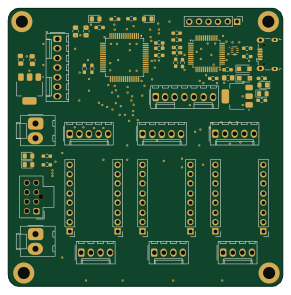 STM32
Carte moteur
Pokibot-org
72.6 × 73.7 mm119 parts2LApache-2.00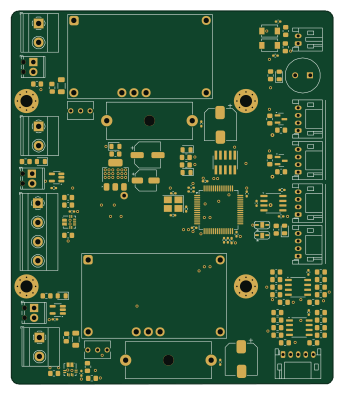 STM32
MasterAlimCAN
ARIG-Robotique
85 × 98.5 mm113 parts4LNo license0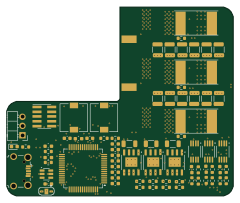 STM32
Mdrv
hanneskiene
60 × 50 mm112 parts4LMIT0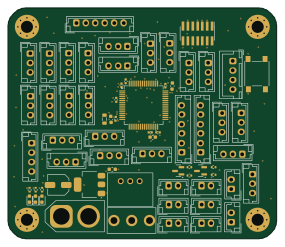 STM32
PCB Aquarium2
FernandesVincent
71 × 61 mm100 parts4LNo license0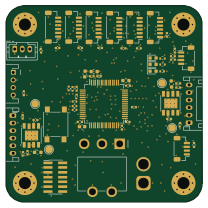 STM32
PCB Projet ESE v2
52 × 52 mm86 parts4LNo license0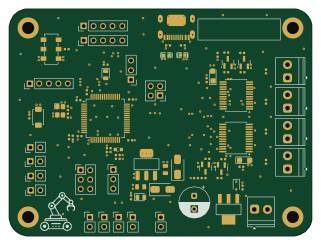 STM32
Mecanum robot board
adammat02
80 × 60 mm83 parts2LNo license0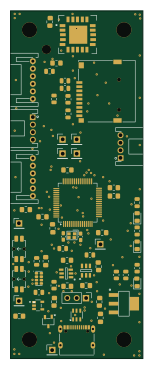 STM32
STM32 CO2 LowPowerSensor
awicek
35 × 92 mm67 parts2LNo license0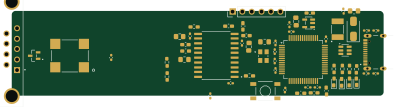 STM32
CAN
cshieldsce
98.7 × 22.5 mm60 parts2LNo license0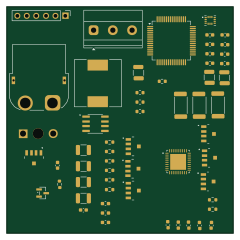 STM32
Power-Reference-Board
jhuang0701
60 × 60 mm58 parts4LNo license0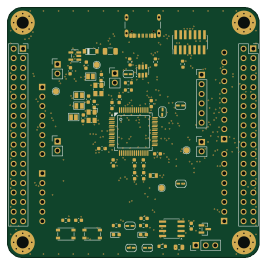 STM32
Stm32g474-dev board
Rennaafi
66.7 × 66.2 mm58 parts4LNo license0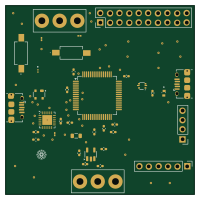 STM32
STM32 POC Board
50 × 50 mm36 parts4LNo license1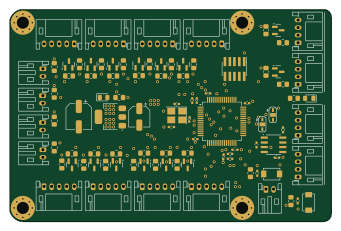 STM32
ControlleursAsserv
85 × 56 mm95 parts4LNo license0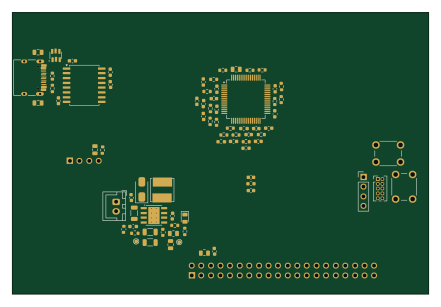 STM32
USB-C PD bench supply - control board
GarryBGoode
110 × 74.5 mm78 parts4LNo license0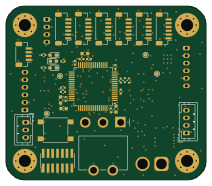 STM32
PCB projet ESE
53 × 46 mm72 parts4LNo license0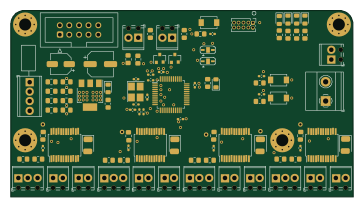 STM32
ControleursPompes
90.8 × 49.5 mm94 parts4LNo license0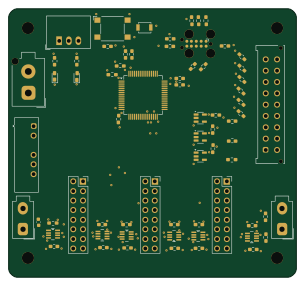 STM32
Analog Controller
kyledenobel
76.2 × 71.1 mm72 parts4LNo license0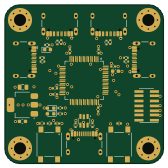 STM32
PCB COM
MOAalpha
42 × 42 mm40 parts4LNo license0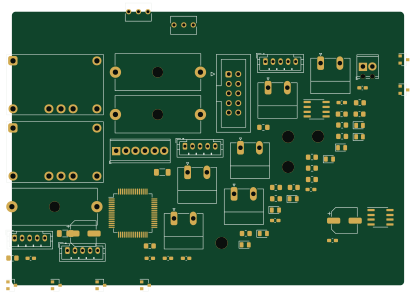 STM32
MasterAlimSTM32
103.8 × 72.4 mm65 parts2LNo license0 STM32
Led interposer
Mouse-GYM
6.4 × 6 mm3 parts4LNo license0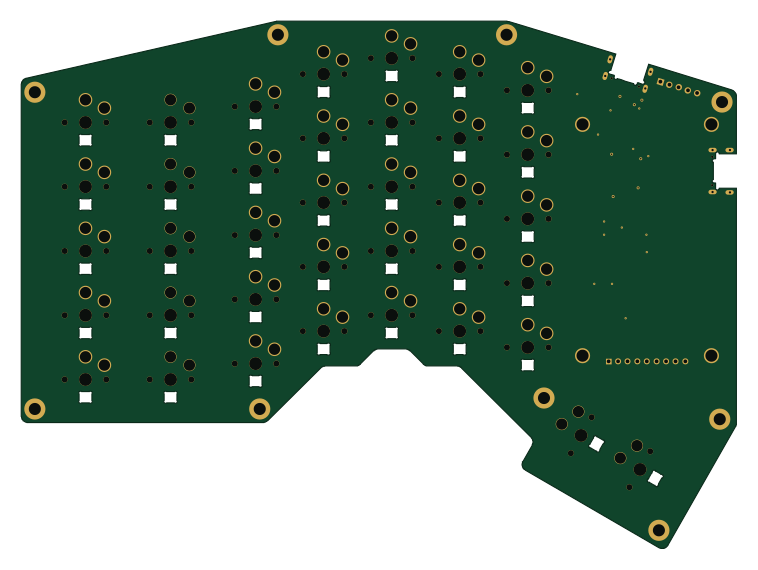 STM32
Hermod
189.2 × 139.5 mm177 parts2LMIT27 STM32
Paste
3.6 × 3.3 mm72 parts2LMIT27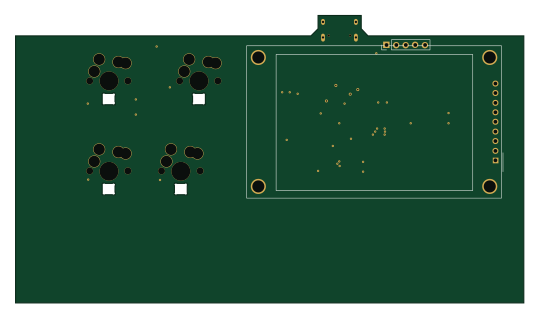 STM32
Stm32G474RETx template
134.5 × 76 mm46 parts2LMIT27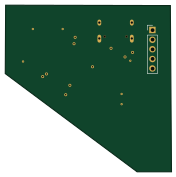 STM32
Modern keyboard template
44 × 44.1 mm25 parts2LMIT27- schematic only · 49 partsSTM32
00 BaseCanSTM32Board
49 parts4LNo license0
How designs wire the STM32G474RETX
Read from the KiCad layouts of 23 open source designs, one per repository: what each pin of the STM32G474RETX connects to, and the resistors, capacitors and other passives placed on it.
- The VDD pins have a decoupling capacitor on 20 of 22 designs, most often 100 nF (then 4.7 µF).
- The VBAT pin has a decoupling capacitor on 18 of 23 designs, most often 100 nF (then 4.7 µF).
- The VDDA pin has a decoupling capacitor on 18 of 21 designs, most often 100 nF (then 1 µF).
- The PG10 pin has a capacitor to GND on 17 of 22 designs, most often 100 nF.
| Pin | Connected to | Parts on the pin |
|---|---|---|
| VBATpin 1 | Connected to: 3.3V 87% |
|
| PC15pin 4 | Connected to: Not connected 61% · a signal 39% | — |
| PF0pin 5 | Connected to: Signal 57% · not connected 39% |
|
| PF1pin 6 | Connected to: Signal 52% · not connected 43% |
|
| PG10pin 7 | Connected to: A connector 64% |
|
| PA1pin 13 | Connected to: A connector 32% · not connected 23% |
|
| VSSpin 15, 31, 47, 63 | Connected to: GND 96% | — |
| VDDpin 16, 32, 48, 64 | Connected to: 3.3V 92% |
|
| VSSApin 27 | Connected to: GND 91% | — |
| VREF+pin 28 | Connected to: 3.3V 55% · a signal 36% |
|
| VDDApin 29 | Connected to: 3.3V 86% |
|
| PB8pin 61 | Connected to: Signal 75% · not connected 20% |
|
46 more pins vary from design to design. Connections count pins, parts count designs; values in brackets are how many parts had that value. Designs read include Hermod by modern-hobbyist, BananaHand by bananaHand-project, Muirgen Main Control Unit by Tuskar-Marine and GN10Mainboard by ararobo.
The STM32G474RETX in open source designs
The gallery holds 33 open source boards using the STM32G474RETX from 23 GitHub repositories; a typical one measures about 78.1 × 60.5 mm and carries around 78 components.
67% use four copper layers or more, and 30% carry an open source license.
The most starred is Mist by modern-hobbyist.
Parts used alongside the STM32G474RETX
Microcontrollers on boards using the STM32G474RETX
What boards using the STM32G474RETX are built for
STM32G474RETX: common questions
Where can I find a STM32G474RETX reference design?
Each of the 33 boards on this page is a real design using the STM32G474RETX. Open one to see how it is wired up, with the full BOM, a render of the layout and links to its KiCad files.
What decoupling capacitors do designs use on the STM32G474RETX VDD pin?
The VDD pins have a decoupling capacitor on 20 of 22 designs, most often 100 nF (then 4.7 µF). Counted from the KiCad layouts of 23 open source designs using the STM32G474RETX.
What decoupling capacitors do designs use on the STM32G474RETX VBAT pin?
The VBAT pin has a decoupling capacitor on 18 of 23 designs, most often 100 nF (then 4.7 µF). Counted from the KiCad layouts of 23 open source designs using the STM32G474RETX.
What decoupling capacitors do designs use on the STM32G474RETX VDDA pin?
The VDDA pin has a decoupling capacitor on 18 of 21 designs, most often 100 nF (then 1 µF). Counted from the KiCad layouts of 23 open source designs using the STM32G474RETX.
What parts are used alongside the STM32G474RETX?
The USBLC6-2SC6, AP63200WU, AZ1117CH2-3.3TRG1 and USBLC6-2P6 appear in the most repositories here.
Which microcontrollers do boards using the STM32G474RETX use?
Most are built on STM32 (33).
How big is a typical board using the STM32G474RETX?
The median is 78.1 × 60.5 mm, and 33% are two-layer designs.
What is the most popular open source board using the STM32G474RETX?
By GitHub stars, Mist by modern-hobbyist, with 27 stars.
Can I simulate one of these boards using the STM32G474RETX before building it?
Yes. HardLabs turns a board's netlist and BOM into a working simulation, so you can boot and test firmware against it with no hardware on your desk.