
21 open source boards using the MPU-6000
Real designs built with the MPU-6000, from public GitHub projects: a quick way to see how others power, decouple and connect it. Each board comes with its KiCad files, full parts list and a render — and you can simulate its firmware on HardLabs.
 STM32
TinyFISH
fishpepper
20 × 20 mm88 parts2LCERN-OHL-1.241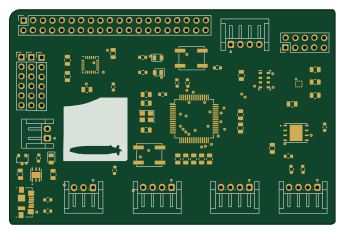 STM32
Harpia FC
gabs911
86 × 56.7 mm62 parts2LNo license5- schematic only · 170 parts
Yatagarasu red
DCoJA
170 partsCC-BY-SA-4.05 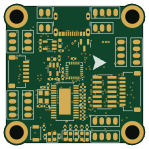 STM32
BareDrones-FC-V1
jpwolfe9912
37.1 × 37.2 mm127 parts6LNo license4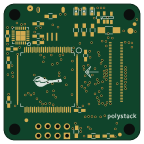 STM32
F3fc
chickadee-tech
36 × 36 mm49 parts4LCC-BY-4.04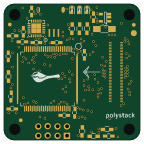 STM32
F4fc
36 × 36 mm49 parts4LCC-BY-4.03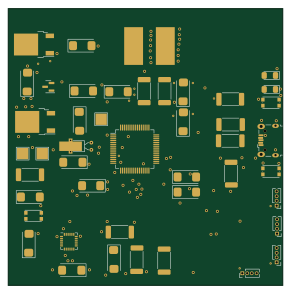 STM32
Graduation Project
hamzaaldabe
72.7 × 73.3 mm41 parts4LNo license2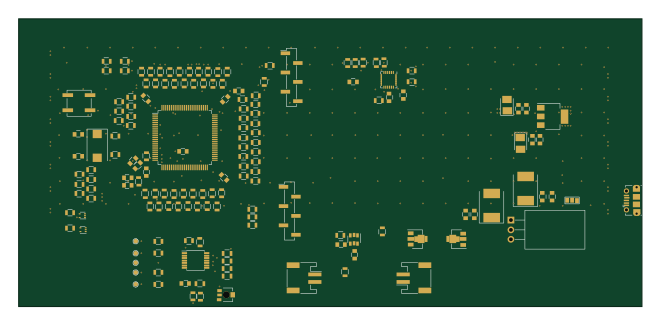 STM32
LED Badge
mjbella
165.1 × 76.2 mm400 parts4LNo license1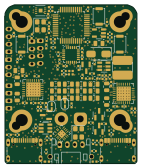 STM32
Astrouniboard
xlazam01
35 × 42 mm119 parts2LNo license1 ESP32
DroneHardware
GiovanniRaseraF
19.5 × 23.5 mm49 parts4LGPL-3.01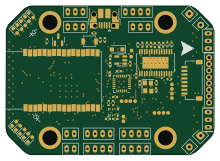 STM32
Autodrone V2
54.8 × 39.2 mm141 parts6LNo license0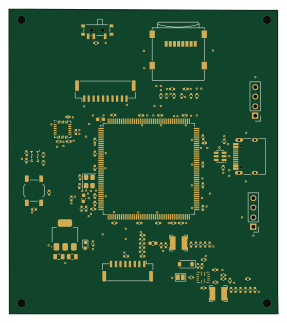 STM32
Flight controller
SurajShivakumar
71.2 × 80.6 mm103 parts4LNo license0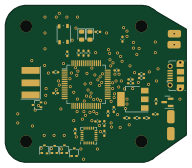 STM32
Flight controller
ahmet140
47.9 × 41.5 mm93 parts2LNo license0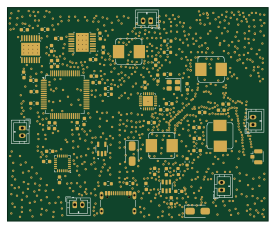 STM32
Drone controller project
MohamadAminGhanoum
69 × 56.5 mm70 parts4LNo license0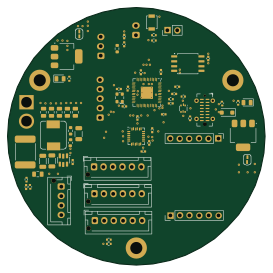 RP2040/RP2350
Kicad carte lidar
Les-opossums
68 × 68 mm66 parts4LNo license0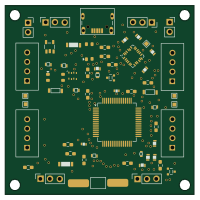 STM32
Drone
eshazen
50 × 50 mm56 parts4LNo license0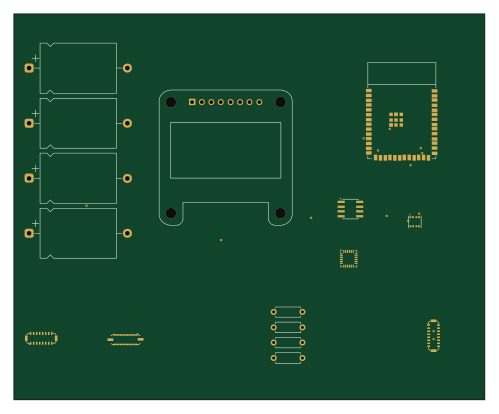 ESP32
BuddyBoard
shasheebhandari
124.5 × 102 mm16 parts2LNo license0- schematic only · 148 partsSTM32
F722-2020-fc
ABHISHEK22415
148 partsNo license0 - schematic only · 87 partsESP32
Crabsy
ZVV2
87 partsCERN-OHL-P-2.00 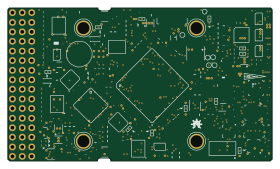 STM32
PX4FMUv2.4
lachlanA
70 × 40.5 mm351 partsGPL-2.0429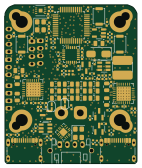 STM32
Astrouniboard.kicad pcb bck
35 × 42 mm119 parts2LNo license1
How designs wire the MPU-6000
Read from the KiCad layouts of 17 open source designs, one per repository: what each pin of the MPU-6000 connects to, and the resistors, capacitors and other passives placed on it.
- The REGOUT pin has a capacitor to GND on 16 of 17 designs, most often 100 nF (then 2.2 µF).
- The CPOUT pin has a capacitor to GND on 16 of 17 designs, most often 2.2 nF (then 10 nF).
- Pin 2 is left unconnected on 17 of 17 designs.
- Pin 3 is left unconnected on 17 of 17 designs.
| Pin | Connected to | Parts on the pin |
|---|---|---|
| CLKINpin 1 | Connected to: GND 88% | — |
| Pin 2 | Connected to: Not connected 100% | — |
| Pin 3 | Connected to: Not connected 100% | — |
| Pin 4 | Connected to: Not connected 100% | — |
| Pin 5 | Connected to: Not connected 100% | — |
| AUX_DApin 6 | Connected to: Not connected 88% | — |
| AUX_CLpin 7 | Connected to: Not connected 88% | — |
| CSpin 8 | Connected to: The microcontroller 82% |
|
| REGOUTpin 10 | Connected to: Signal 94% |
|
| FSYNCpin 11 | Connected to: GND 88% | — |
| VDDpin 13 | Connected to: 3.3V 88% |
|
| Pin 14 | Connected to: Not connected 100% | — |
| Pin 15 | Connected to: Not connected 100% | — |
| Pin 16 | Connected to: Not connected 100% | — |
| Pin 17 | Connected to: Not connected 100% | — |
| GNDpin 18 | Connected to: GND 94% | — |
| Pin 19 | Connected to: Not connected 100% | — |
| CPOUTpin 20 | Connected to: Signal 94% |
|
| Pin 21 | Connected to: Not connected 100% | — |
| Pin 22 | Connected to: Not connected 100% | — |
4 more pins vary from design to design. Connections count pins, parts count designs; values in brackets are how many parts had that value. Designs read include PX4FMUv2.4 by lachlanA, TinyFISH by fishpepper, Harpia FC by gabs911 and F3fc by chickadee-tech.
The MPU-6000 in open source designs
The gallery holds 21 open source boards using the MPU-6000 from 20 GitHub repositories; a typical one measures about 52.4 × 42 mm and carries around 88 components.
65% use four copper layers or more, and 33% carry an open source license.
The most starred is PX4FMUv2.4 by lachlanA.
Parts used alongside the MPU-6000
Microcontrollers on boards using the MPU-6000
What boards using the MPU-6000 are built for
MPU-6000: common questions
Where can I find a MPU-6000 reference design?
Each of the 21 boards on this page is a real design using the MPU-6000. Open one to see how it is wired up, with the full BOM, a render of the layout and links to its KiCad files.
How is the MPU-6000 REGOUT pin connected?
The REGOUT pin has a capacitor to GND on 16 of 17 designs, most often 100 nF (then 2.2 µF). Counted from the KiCad layouts of 17 open source designs using the MPU-6000.
How is the MPU-6000 CPOUT pin connected?
The CPOUT pin has a capacitor to GND on 16 of 17 designs, most often 2.2 nF (then 10 nF). Counted from the KiCad layouts of 17 open source designs using the MPU-6000.
How is the MPU-6000 pin 2 connected?
Pin 2 is left unconnected on 17 of 17 designs. Counted from the KiCad layouts of 17 open source designs using the MPU-6000.
What parts are used alongside the MPU-6000?
The BMP280, STM32F405RGTx, USBLC6-2SC6, ESP32-WROOM-32 and LP2985-3.3 appear in the most repositories here.
Which microcontrollers do boards using the MPU-6000 use?
Most are built on STM32 (16), ESP32 (3) and RP2040/RP2350 (1).
How big is a typical board using the MPU-6000?
The median is 52.4 × 42 mm, and 35% are two-layer designs.
What is the most popular open source board using the MPU-6000?
By GitHub stars, PX4FMUv2.4 by lachlanA, with 429 stars.
Can I simulate one of these boards using the MPU-6000 before building it?
Yes. HardLabs turns a board's netlist and BOM into a working simulation, so you can boot and test firmware against it with no hardware on your desk.