
28 open source boards using the STM32H743VITx
Real designs built with the STM32H743VITx, from public GitHub projects: a quick way to see how others power, decouple and connect it. Each board comes with its KiCad files, full parts list and a render — and you can simulate its firmware on HardLabs.
 STM32
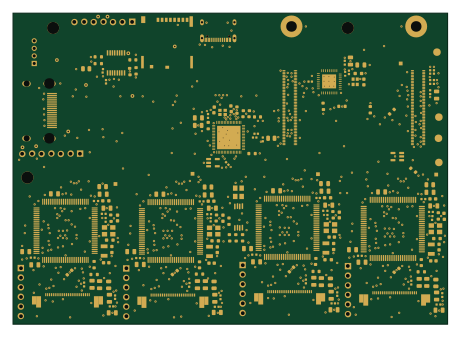
Main
HelloAlex4
115 × 82.3 mm249 parts4LCC-BY-NC-4.010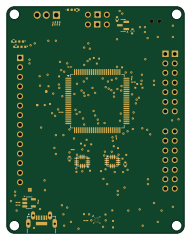 STM32
FlightController H743
nikipoatgit
47 × 60 mm56 parts2LGPL-3.05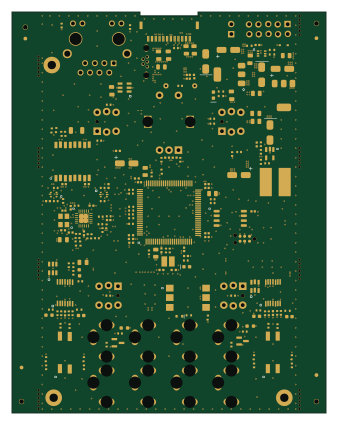 STM32
Asynth2Osc
everedero
83 × 106 mm204 parts4LGPL-3.04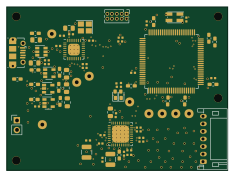 STM32
Open DPOAE Interface
bnahill
58.4 × 43.2 mm78 parts4LGPL-3.03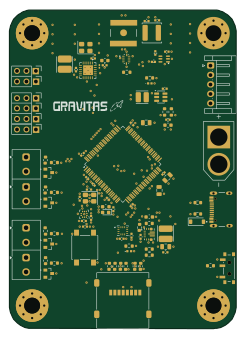 STM32
GRAVITAS
GoTouchGra55
60 × 84.3 mm111 parts4LMIT1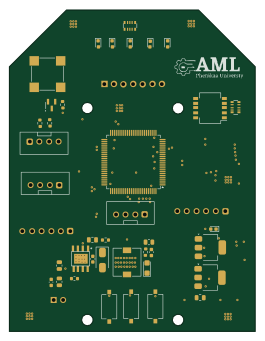 STM32
AML Micromouse 24 2
Oopsan204
65 × 85 mm72 parts2LNo license1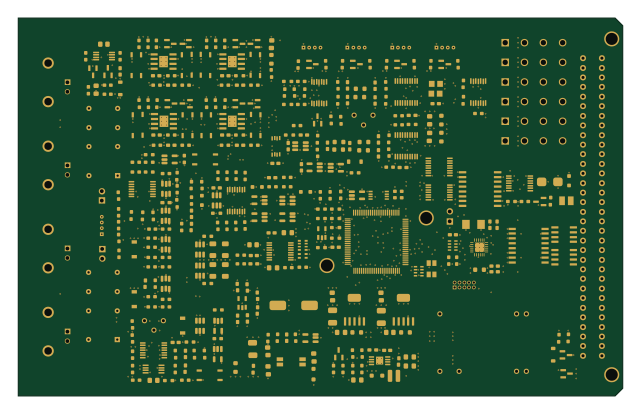 STM32
ETH1LCR3
BehrensG
160 × 100 mm532 parts6LNo license0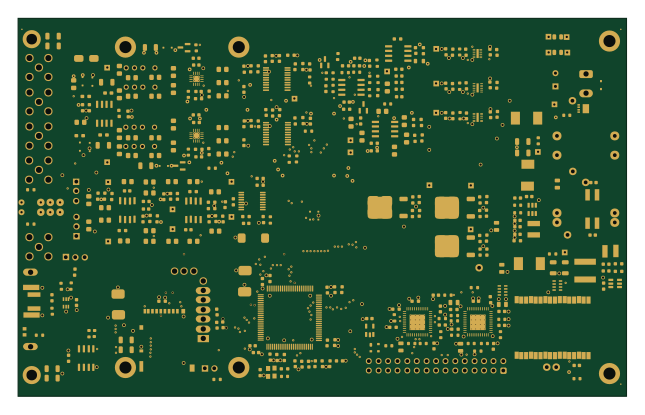 STM32
Relock Artiq
KLFAMO
161 × 100 mm375 parts4LNo license0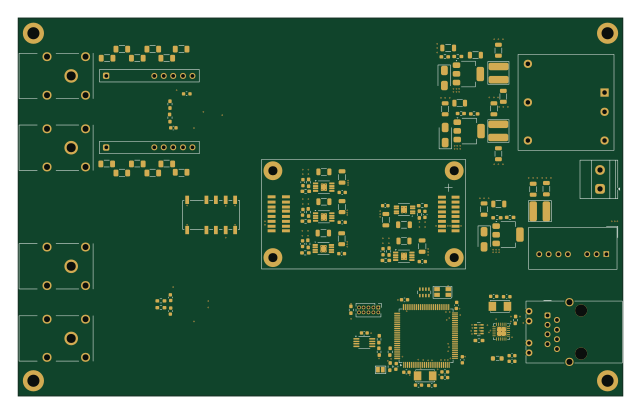 STM32
ADC7177B1
160 × 100 mm233 parts4LNo license0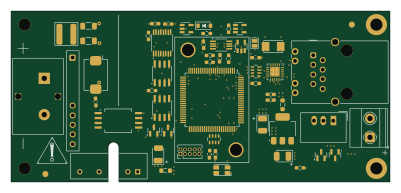 STM32
ETH1ISO224
100 × 45 mm137 parts4LNo license0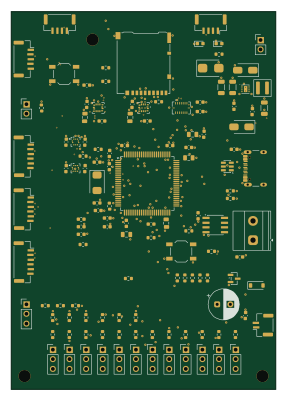 STM32
Flightcontroller
ukinori
70 × 100 mm129 parts4LNo license0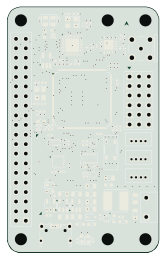 STM32
CC M7
OzanE1
40 × 65 mm126 parts4LLGPL-2.10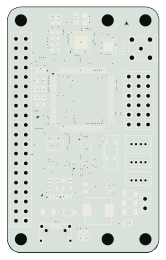 STM32
CC M7
40 × 65 mm123 parts4LLGPL-2.10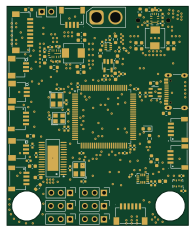 STM32
SPAR
HazzerTheGreat
48 × 58 mm104 parts6LNo license0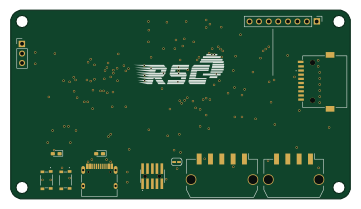 STM32
RSC-LV3-Dash
cyfinfaza
90 × 50 mm93 parts2LNo license0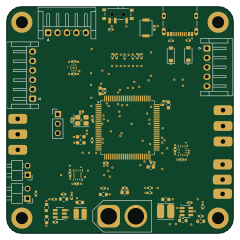 STM32
HoG
60 × 60 mm92 parts6LMIT0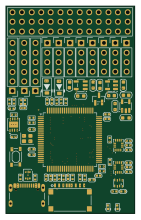 STM32
H7-Beast
FBIopeningUPP
34 × 54.9 mm84 parts8LNo license0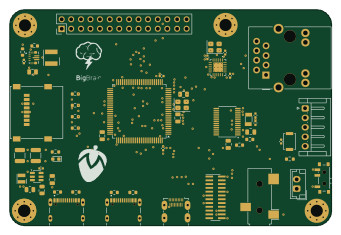 STM32
Strawberry-Pi
85 × 57 mm83 parts4LNo license0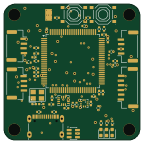 STM32
SATVIK-26
SavvySatvikCodes
36 × 36 mm76 parts4LNo license0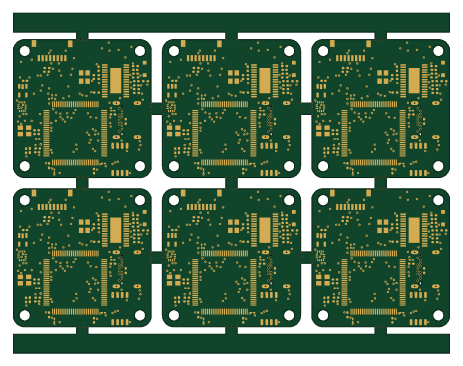 STM32
KiKit Output
k4i70
115.5 × 90 mm67 parts4LNo license0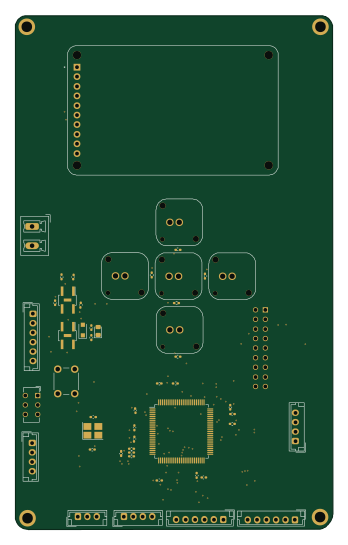 STM32
STM32-Camera driver
AchrafSai
84.1 × 136.1 mm60 parts2LNo license0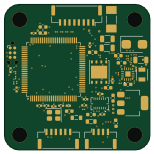 STM32
HW STM32H743 board WFL
wojtron2
38.5 × 38.5 mm59 parts4LNo license0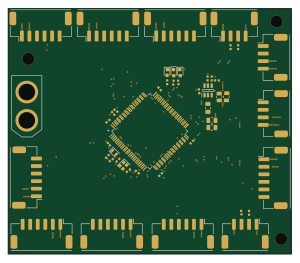 STM32
SmallKatMotherboard
SmallKatMQP
75 × 65 mm49 parts4LNo license0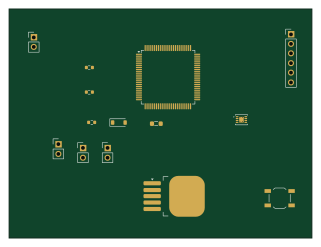 STM32
STM32H7
tejaswininagalingam
80 × 60.5 mm14 parts2LNo license0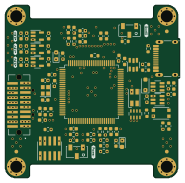 STM32
Cameraboard
AFS-pt
46.1 × 45.6 mm77 parts4LNo license15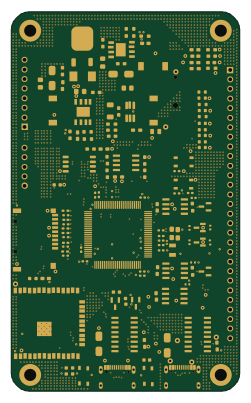 ESP32
VCU
matatma23-gento
60.5 × 100.5 mm160 parts4LNo license0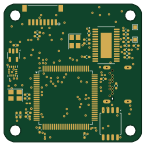 STM32
RPi Car
36.5 × 36.5 mm67 parts4LNo license0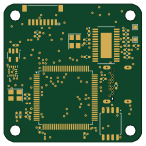 STM32
RPi Car.recovered.2026-05-17 124818
36.5 × 36.5 mm67 parts4LNo license0
How designs wire the STM32H743VITx
Read from the KiCad layouts of 26 open source designs, one per repository: what each pin of the STM32H743VITx connects to, and the resistors, capacitors and other passives placed on it.
- The VDD pins have a decoupling capacitor on 23 of 26 designs, most often 100 nF (then 2.2 µF).
- The VCAP pins have a capacitor to GND on 23 of 26 designs, most often 2.2 µF (then 10 µF).
- The VBAT pin has a decoupling capacitor on 20 of 26 designs, most often 100 nF (then 2.2 µF).
- The PH0 pin has a crystal on 20 of 26 designs, most often 25 MHz (then 32 MHz).
| Pin | Connected to | Parts on the pin |
|---|---|---|
| PE3pin 2 | Connected to: Not connected 65% · a signal 35% | — |
| VBATpin 6 | Connected to: 3.3V 81% |
|
| PC13pin 7 | Connected to: Not connected 77% · a signal 23% | — |
| PC14pin 8 | Connected to: Not connected 73% · a signal 27% | — |
| PC15pin 9 | Connected to: Not connected 65% · a signal 35% | — |
| VSSpin 10, 26, 49, 74, 99 | Connected to: GND 92% | — |
| VDDpin 11, 27, 50, 75, 100 | Connected to: 3.3V 88% |
|
| PH0pin 12 | Connected to: Signal 88% |
|
| PH1pin 13 | Connected to: Signal 81% · not connected 19% |
|
| NRSTpin 14 | Connected to: A connector 54% · not connected 15% |
|
| PC3_Cpin 18 | Connected to: Not connected 73% · a signal 27% | — |
| VSSApin 19 | Connected to: GND 92% | — |
| VREF+pin 20 | Connected to: 3.3V 62% · a signal 27% |
|
| VDDApin 21 | Connected to: 3.3V 81% · a signal 19% |
|
| PB2pin 36 | Connected to: Not connected 69% · a signal 31% | — |
| PE7pin 37 | Connected to: Not connected 69% · a signal 31% | — |
| PE8pin 38 | Connected to: Not connected 77% · a signal 23% | — |
| PE9pin 39 | Connected to: Not connected 65% · a signal 35% | — |
| PE10pin 40 | Connected to: Not connected 65% · a signal 35% | — |
| PE12pin 42 | Connected to: Not connected 73% · a signal 27% | — |
| PE15pin 45 | Connected to: Not connected 77% · a signal 23% | — |
| VCAPpin 48, 73 | Connected to: Signal 90% |
|
| PD8pin 55 | Connected to: Not connected 65% · a signal 35% | — |
| PD10pin 57 | Connected to: Not connected 85% · a signal 15% | — |
| PD11pin 58 | Connected to: Not connected 81% · a signal 19% | — |
| PD15pin 62 | Connected to: Not connected 62% · a signal 38% | — |
| PC8pin 65 | Connected to: A connector 50% · not connected 15% |
|
| PC9pin 66 | Connected to: A connector 50% · not connected 19% |
|
| PA15pin 77 | Connected to: Not connected 65% · a signal 35% | — |
| PC10pin 78 | Connected to: A connector 42% · not connected 35% |
|
| PC11pin 79 | Connected to: A connector 46% · not connected 35% |
|
| PD1pin 82 | Connected to: Not connected 62% · a signal 38% | — |
| PD2pin 83 | Connected to: Not connected 50% · a signal 50% |
|
| PD3pin 84 | Connected to: Not connected 62% · a signal 38% | — |
| PD4pin 85 | Connected to: Not connected 81% · a signal 19% | — |
| PD5pin 86 | Connected to: Not connected 62% · a signal 38% | — |
| PD7pin 88 | Connected to: Not connected 65% · a signal 35% | — |
| PB6pin 92 | Connected to: A connector 31% · not connected 19% |
|
| PB7pin 93 | Connected to: A connector 27% · not connected 27% |
|
| BOOT0pin 94 | Connected to: Signal 96% |
|
51 more pins vary from design to design. Connections count pins, parts count designs; values in brackets are how many parts had that value. Designs read include Cameraboard by AFS-pt, MainPCB by HelloAlex4, FlightController H743 by nikipoatgit and Asynth2Osc by everedero.
The STM32H743VITx in open source designs
The gallery holds 28 open source boards using the STM32H743VITx from 26 GitHub repositories; a typical one measures about 62.7 × 62.8 mm and carries around 88 components.
82% use four copper layers or more, and 25% carry an open source license.
The most starred is Cameraboard by AFS-pt.
Parts used alongside the STM32H743VITx
What boards using the STM32H743VITx are built for
STM32H743VITx: common questions
Where can I find a STM32H743VITx reference design?
Each of the 28 boards on this page is a real design using the STM32H743VITx. Open one to see how it is wired up, with the full BOM, a render of the layout and links to its KiCad files.
What decoupling capacitors do designs use on the STM32H743VITx VDD pin?
The VDD pins have a decoupling capacitor on 23 of 26 designs, most often 100 nF (then 2.2 µF). Counted from the KiCad layouts of 26 open source designs using the STM32H743VITx.
How is the STM32H743VITx VCAP pin connected?
The VCAP pins have a capacitor to GND on 23 of 26 designs, most often 2.2 µF (then 10 µF). Counted from the KiCad layouts of 26 open source designs using the STM32H743VITx.
What decoupling capacitors do designs use on the STM32H743VITx VBAT pin?
The VBAT pin has a decoupling capacitor on 20 of 26 designs, most often 100 nF (then 2.2 µF). Counted from the KiCad layouts of 26 open source designs using the STM32H743VITx.
What parts are used alongside the STM32H743VITx?
The ICM-42688-P, LAN8742A, BMI088, USBLC6-2SC6 and 24LC08B-E/MS appear in the most repositories here.
Which microcontrollers do boards using the STM32H743VITx use?
Most are built on STM32 (27) and ESP32 (1).
How big is a typical board using the STM32H743VITx?
The median is 62.7 × 62.8 mm, and 18% are two-layer designs.
What is the most popular open source board using the STM32H743VITx?
By GitHub stars, Cameraboard by AFS-pt, with 15 stars.
Can I simulate one of these boards using the STM32H743VITx before building it?
Yes. HardLabs turns a board's netlist and BOM into a working simulation, so you can boot and test firmware against it with no hardware on your desk.