
42 open source boards using the Arduino_Nano_Every
Real designs built with the Arduino_Nano_Every, from public GitHub projects: a quick way to see how others power, decouple and connect it. Each board comes with its KiCad files, full parts list and a render — and you can simulate its firmware on HardLabs.
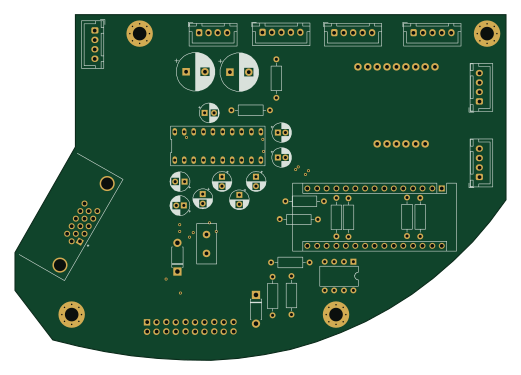 AVR/Arduino
MiSTer-G3
wickerwaka
130 × 91.5 mm31 parts2LLGPL-3.034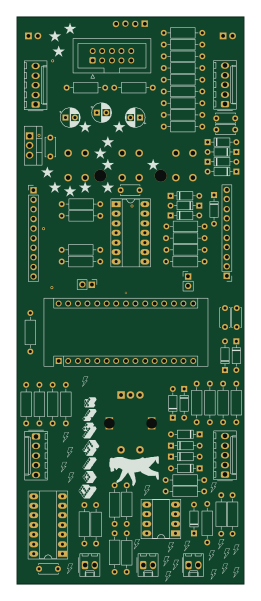 AVR/Arduino
Polykit Kosmo Multitool
polykit
60 × 150 mm90 parts2LCC-BY-NC-4.031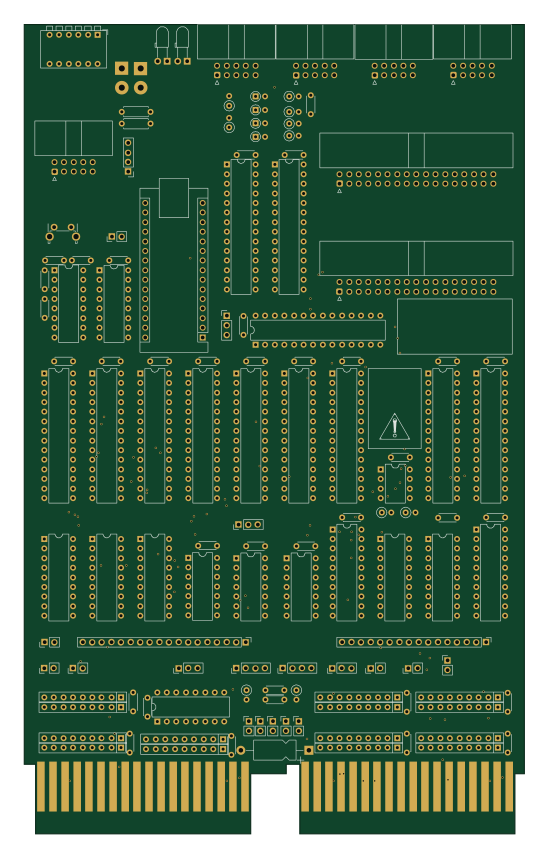 AVR/Arduino
Utracer11
j-hoppe
132.3 × 214.1 mm128 parts4LBSD-3-Clause2 AVR/Arduino
Weather station
z0b1
37.3 × 36.5 mm11 parts4LNo license2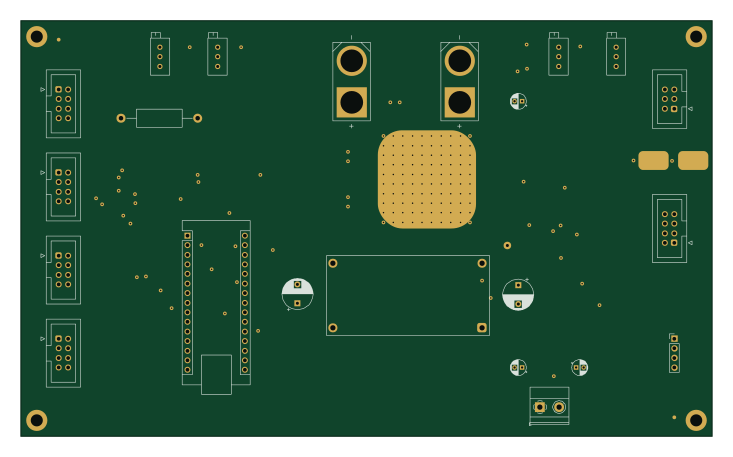 AVR/Arduino
Kicad lin ctrl
s59mz
183 × 110 mm94 parts2LGPL-3.01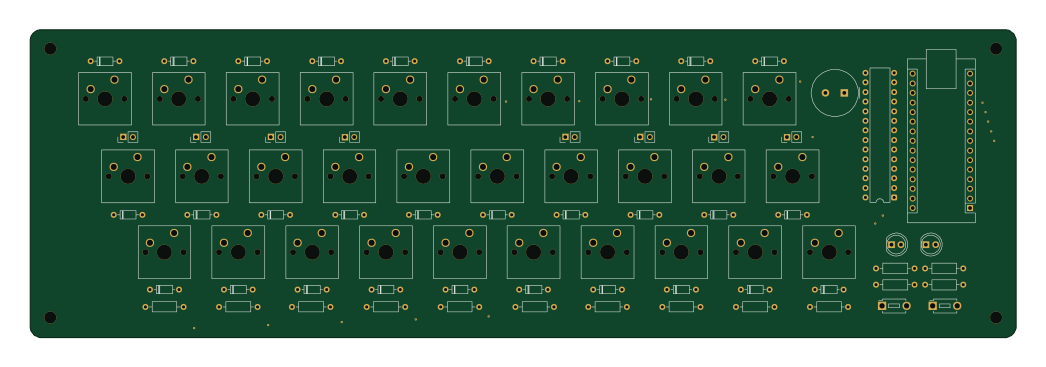 AVR/Arduino
TYPING TRAINER v5
cuprice
261.1 × 81.5 mm89 parts2LMIT1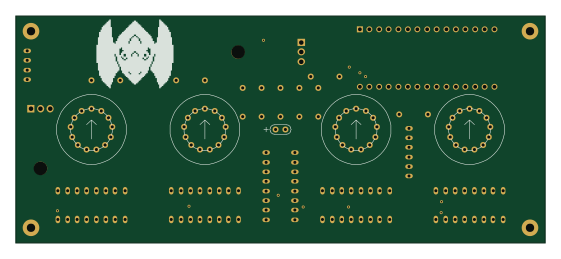 AVR/Arduino
Nixie Clock
haXoru5
140 × 60 mm34 parts2LNo license1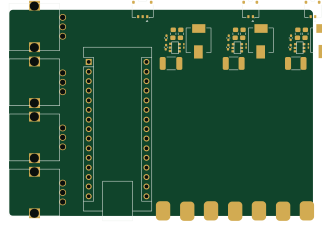 AVR/Arduino
ArmLEDsPrototype
Brelee2222
80.5 × 54.6 mm33 parts2LNo license1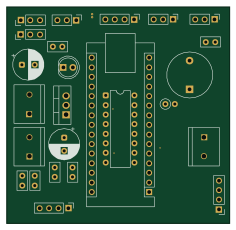 AVR/Arduino
Arduino nano compatible shield
Aryan-git-byte
59 × 57.3 mm25 parts2LNo license1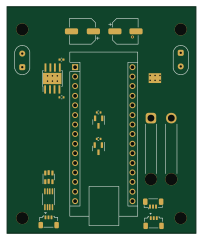 AVR/Arduino
Senior design
alaza252
50 × 60 mm24 parts2LNo license1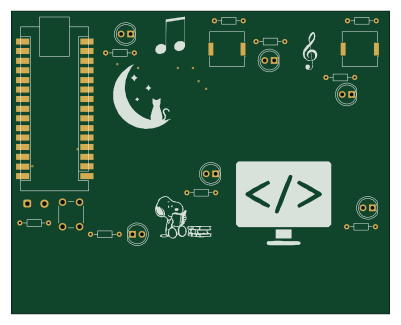 AVR/Arduino
Decorative-PCB-Amaia
CrimsonFire1
100 × 80 mm20 parts2LNo license1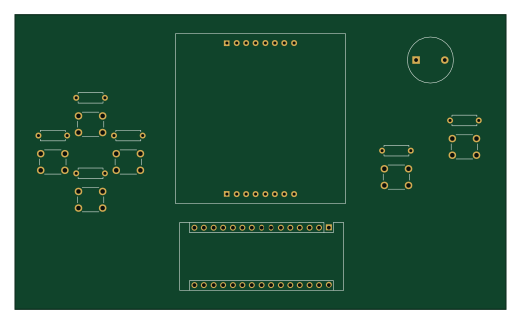 AVR/Arduino
Diypgs
1r3n33
130 × 78 mm14 parts2LNo license1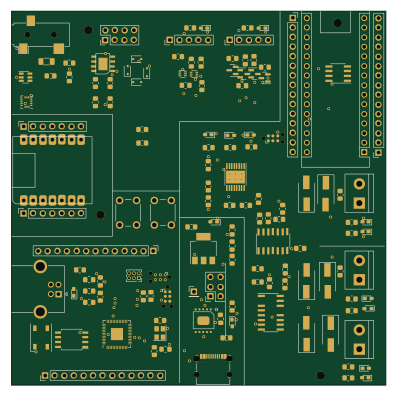 RP2040/RP2350
XDuinoRail-Debug
chatelao
99.1 × 99 mm147 parts2LAGPL-3.00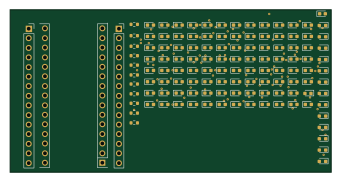 AVR/Arduino
Electronics projects
mirmisbahali
85 × 43.1 mm124 parts2LNo license0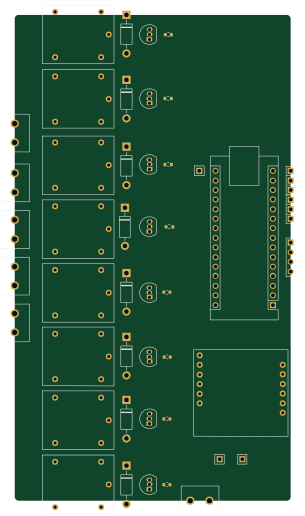 AVR/Arduino
Displace pf correction
kanzalhaqa
73.1 × 128.7 mm50 parts2LNo license0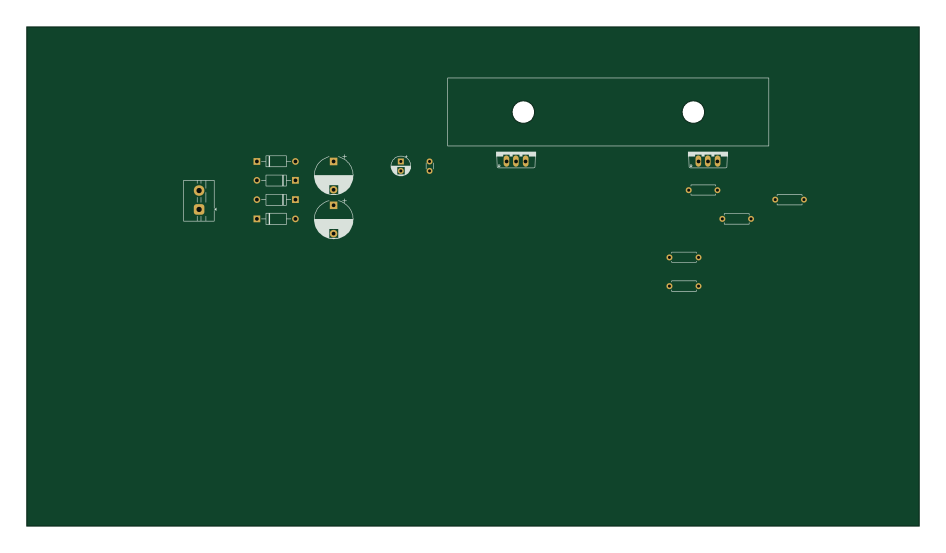 AVR/Arduino
Digitally-Controlled-Mixed-Signal-Power-Supply-
shubham7547
236.2 × 132.1 mm50 parts2LNo license0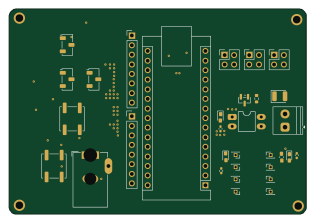 AVR/Arduino
101 test
Dechatorn200x
78.7 × 54.4 mm35 parts4LNo license0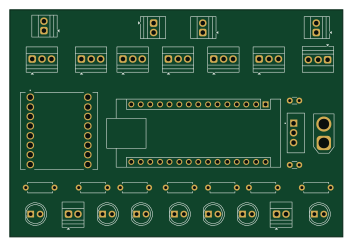 AVR/Arduino
SumoBot v1
choicebuilds
88 × 60 mm33 parts4LNo license0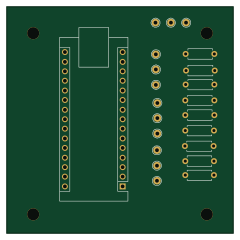 AVR/Arduino
Clone hero arduino
jaakkolilja
60 × 60 mm22 parts2LNo license0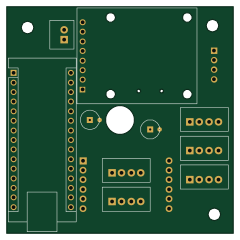 AVR/Arduino
UA AIAA Payload 2026
buttonbugs
60 × 60 mm12 parts2LNo license0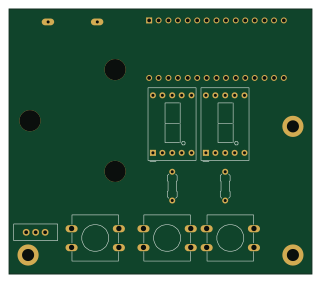 AVR/Arduino
14segment score counter
RaZerTeC
80 × 70 mm10 parts2LGPL-3.00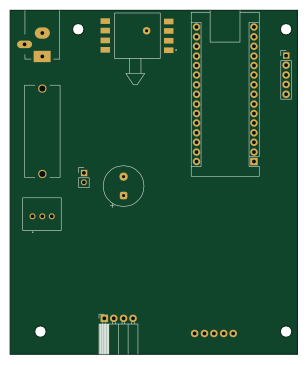 AVR/Arduino
Meniscus controller
EdSmithe
76 × 91 mm10 parts2LNo license0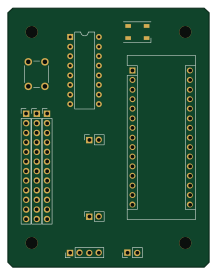 AVR/Arduino
Board eng
egoraura
53.3 × 68.6 mm9 parts2LNo license0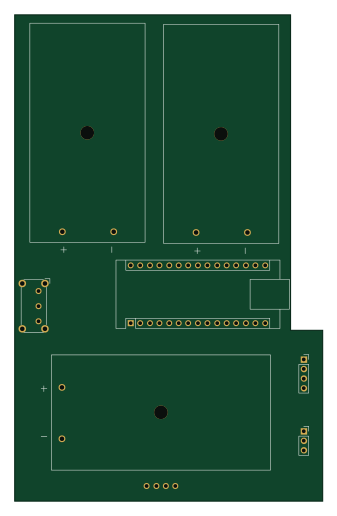 AVR/Arduino
Toilet monitoring system
alepnabil
81.5 × 128.8 mm8 parts2LNo license0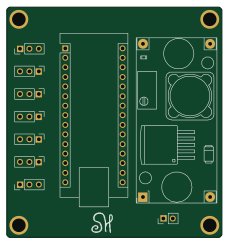 AVR/Arduino
EWU-ASME-SDC-2026-Robot
SethHibpshman
57 × 61 mm7 parts2LGPL-3.00- schematic only · 141 partsAVR/Arduino
Cw transceiver
Green-Avocado
141 partsNo license0 - schematic only · 69 partsAVR/Arduino
Cv light
centrevillage
69 partsNo license0 - schematic only · 13 partsAVR/Arduino
Plotter
alisha-develops
13 partsNo license0 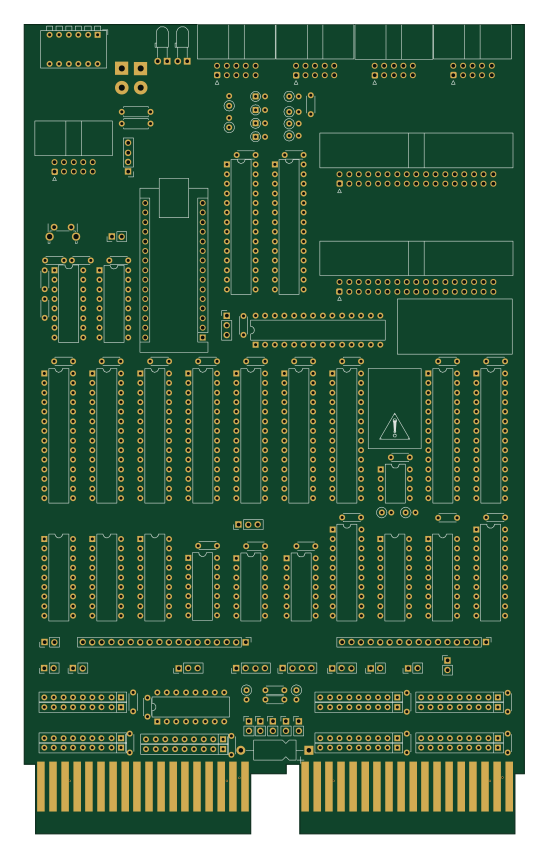 AVR/Arduino
Utracer11.unrouted
132.3 × 214.1 mm128 parts4LBSD-3-Clause2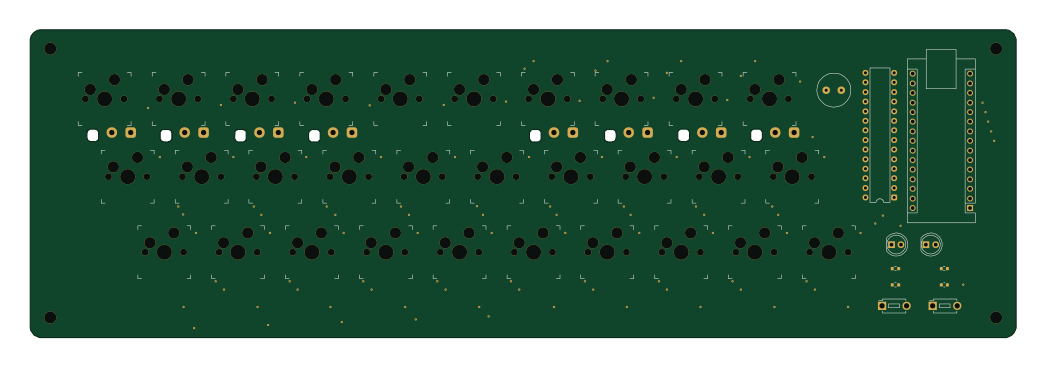 AVR/Arduino
TYPING TRAINER V5 SMD
261.1 × 81.5 mm89 parts2LMIT1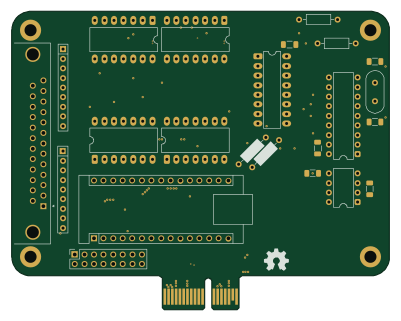 AVR/Arduino
BREAD slice v2
OSHE-Github
100 × 79 mm28 parts2LNo license1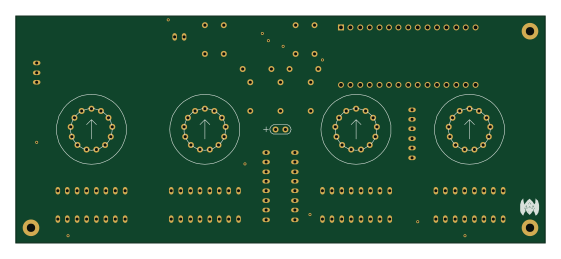 AVR/Arduino
Nixie Clock 1 0
140 × 60 mm22 parts2LNo license1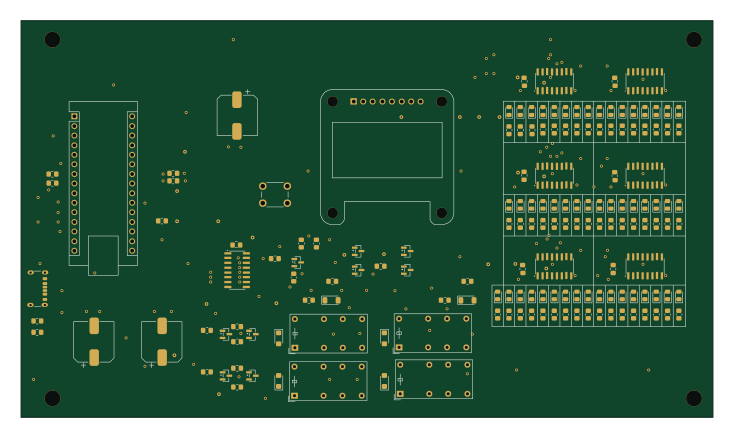 AVR/Arduino
RelaisAdderII
apxco
183.3 × 105 mm160 parts2LNo license0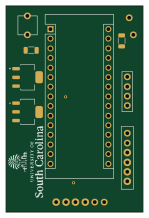 AVR/Arduino
Rain Gauge v0.6.2
ARTS-Laboratory
36.1 × 54.3 mm11 parts2LCC-BY-SA-4.00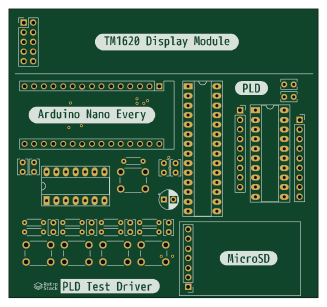 AVR/Arduino
Pld test
gcoonrod
81.5 × 76.2 mm33 parts2LApache-2.00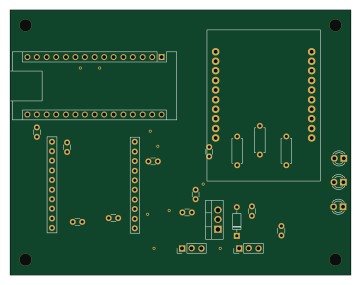 STM32
運び屋用
makizusi
90 × 70 mm24 parts2LNo license0
How designs wire the Arduino_Nano_Every
Read from the KiCad layouts of 35 open source designs, one per repository: what each pin of the Arduino_Nano_Every connects to, and the resistors, capacitors and other passives placed on it.
- The AREF pin is left unconnected on 32 of 35 designs (a signal on 2).
- The RESET pins is left unconnected on 83% of them (a signal on 12).
- The TX1 pin is left unconnected on 24 of 35 designs (a signal on 11).
- The RX1 pin is left unconnected on 22 of 35 designs (a signal on 13).
| Pin | Connected to | Parts on the pin |
|---|---|---|
| TX1pin 1 | Connected to: Not connected 69% · a signal 31% | — |
| RX1pin 2 | Connected to: Not connected 63% · a signal 37% | — |
| RESETpin 3, 28 | Connected to: Not connected 83% · a signal 17% | — |
| GNDpin 4, 29 | Connected to: GND 97% | — |
| AREFpin 18 | Connected to: Not connected 91% | — |
23 more pins vary from design to design. Connections count pins, parts count designs; values in brackets are how many parts had that value. Designs read include MiSTer-G3 by wickerwaka, Polykit Kosmo Multitool by polykit, Sensor Spike by ARTS-Laboratory and Utracer11 by j-hoppe.
The Arduino_Nano_Every in open source designs
The gallery holds 42 open source boards using the Arduino_Nano_Every from 38 GitHub repositories; a typical one measures about 81.5 × 70 mm and carries around 27 components.
87% are two-layer designs, the rest use four layers or more, and 33% carry an open source license.
The most starred is MiSTer-G3 by wickerwaka.
Microcontrollers on boards using the Arduino_Nano_Every
What boards using the Arduino_Nano_Every are built for
Arduino_Nano_Every: common questions
Where can I find a Arduino_Nano_Every reference design?
Each of the 42 boards on this page is a real design using the Arduino_Nano_Every. Open one to see how it is wired up, with the full BOM, a render of the layout and links to its KiCad files.
How is the Arduino_Nano_Every AREF pin connected?
The AREF pin is left unconnected on 32 of 35 designs (a signal on 2). Counted from the KiCad layouts of 35 open source designs using the Arduino_Nano_Every.
How is the Arduino_Nano_Every RESET pin connected?
The RESET pins is left unconnected on 83% of them (a signal on 12). Counted from the KiCad layouts of 35 open source designs using the Arduino_Nano_Every.
How is the Arduino_Nano_Every TX1 pin connected?
The TX1 pin is left unconnected on 24 of 35 designs (a signal on 11). Counted from the KiCad layouts of 35 open source designs using the Arduino_Nano_Every.
What parts are used alongside the Arduino_Nano_Every?
The BME280, L293D and ULN2003 appear in the most repositories here.
Which microcontrollers do boards using the Arduino_Nano_Every use?
Most are built on AVR/Arduino (40), RP2040/RP2350 (1) and STM32 (1).
How big is a typical board using the Arduino_Nano_Every?
The median is 81.5 × 70 mm, and 87% are two-layer designs.
What is the most popular open source board using the Arduino_Nano_Every?
By GitHub stars, MiSTer-G3 by wickerwaka, with 34 stars.
Can I simulate one of these boards using the Arduino_Nano_Every before building it?
Yes. HardLabs turns a board's netlist and BOM into a working simulation, so you can boot and test firmware against it with no hardware on your desk.