
64 open source boards using the AP63205WU
Real designs built with the AP63205WU, from public GitHub projects: a quick way to see how others power, decouple and connect it. Each board comes with its KiCad files, full parts list and a render — and you can simulate its firmware on HardLabs.
 STM32
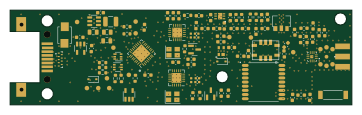
Transponder-12.0.1
peterantypas
90.4 × 25 mm115 parts4LGPL-3.0446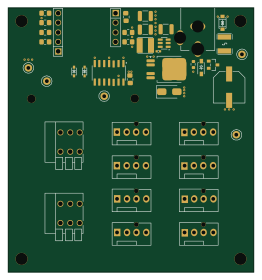
Openradfan
andrekuehne
65 × 70 mm43 parts2LMIT26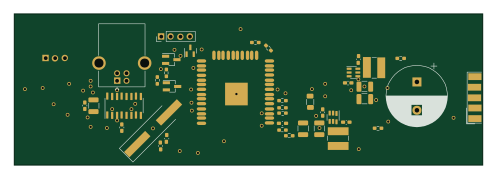 ESP32
A3 8p redFIS
tothpetiszilard
124 × 40 mm77 parts2LAGPL-3.015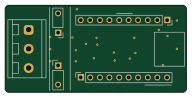
BaSHi-SM-1
kiu
48 × 23 mm22 parts2LCC-BY-NC-4.013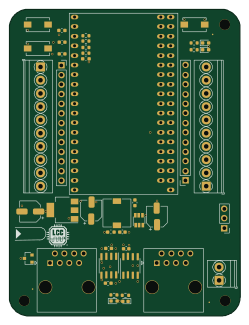 ESP32
ESP32 OpenLCB IO Board
atanisoft
61 × 81 mm43 parts4LNo license12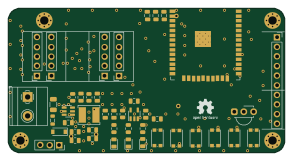 ESP32
KbxLEDController-16ch
kbx81
73 × 38.1 mm71 parts2LNo license10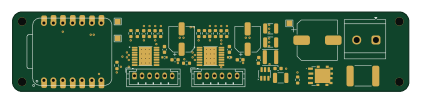 ESP32
HOPPVALS-MRF-01
evanpurkhiser
105 × 21 mm39 parts2LNo license8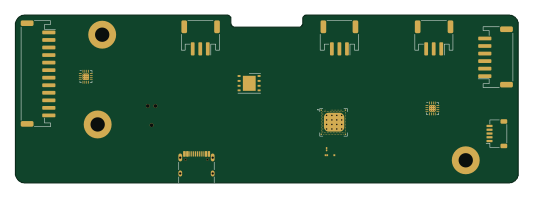 Nordic nRF
Locust
hlord2000
133.4 × 44.5 mm33 parts2LCERN-OHL-P-2.07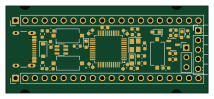 STM32
Stm32c5-bluepill
thomashamain
53.3 × 22.9 mm63 parts2LCC-BY-SA-4.05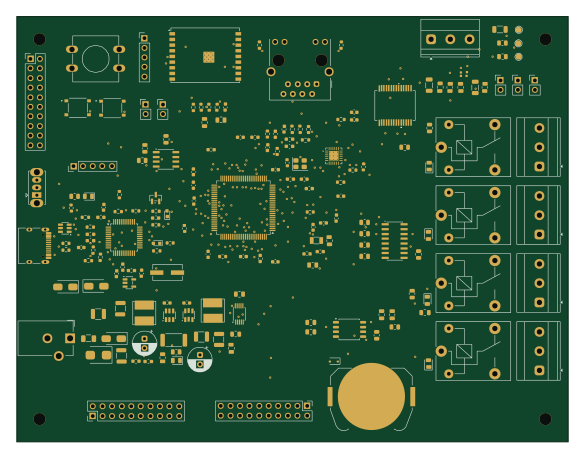 ESP32
IoT Gateway STM32F407VGTx
minhtenlado
146.1 × 112.6 mm184 parts6LNo license2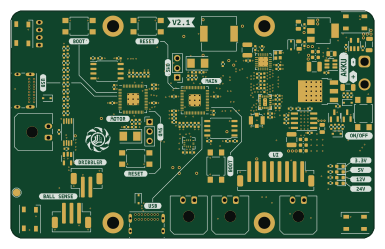 RP2040/RP2350
Mainboard
luhbots
96 × 60 mm175 parts4LNo license2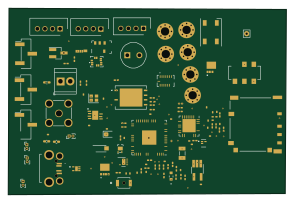 Microchip SAM
Mini rocket flight controller
AmitBarman99
73.7 × 49.3 mm108 parts4LNo license2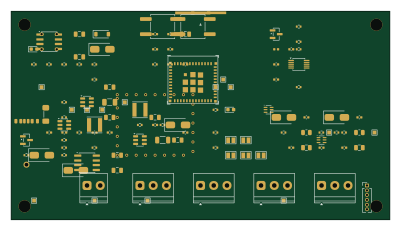 ESP32
WellD
kinggh0stee
100 × 55 mm99 parts2LMIT2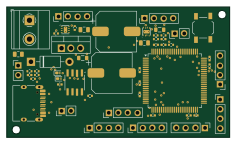 STM32
Pump controller
nfranzwa
59 × 34.5 mm53 parts4LApache-2.02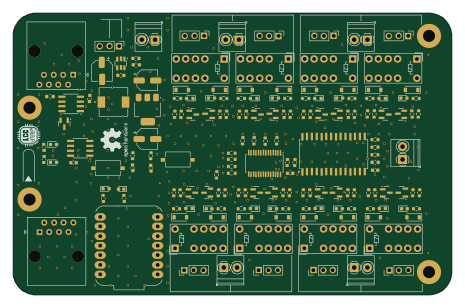 ESP32
LCCTurnoutController
vsi5004
116 × 74.5 mm170 parts2LNo license1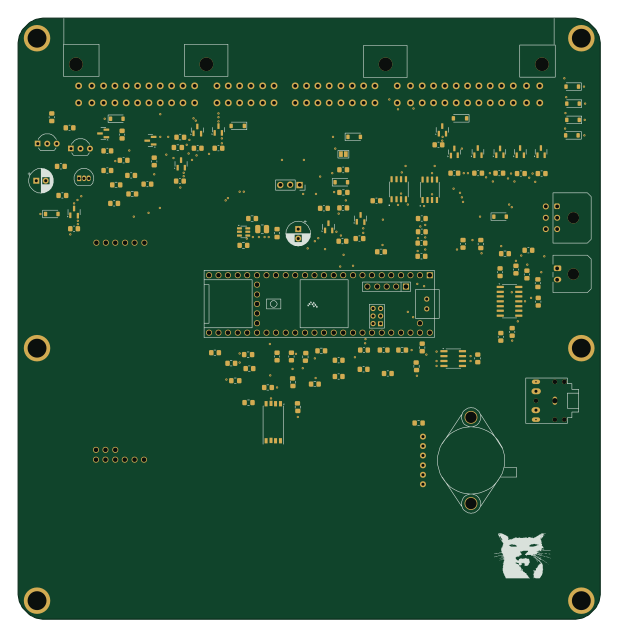
Nb1ecu
swagprincess
154 × 159 mm119 parts4LGPL-3.01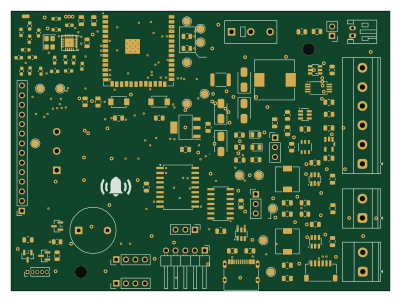 ESP32
Security-Alarm-Panel
Matyas604
100 × 73.9 mm113 parts2LGPL-3.01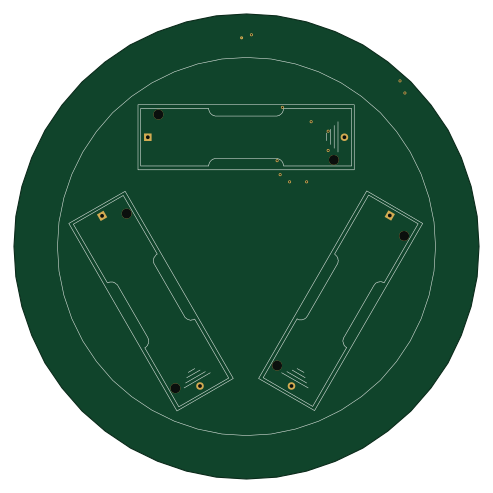
Spinner
kangasp
123 × 123 mm83 parts2LNo license1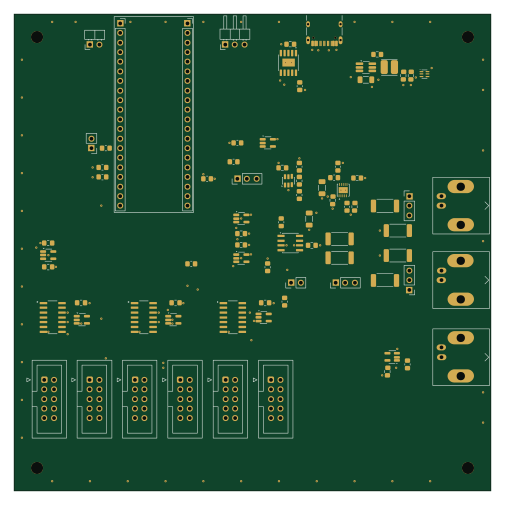 RP2040/RP2350
PiEBV
Low-Boom
126 × 126 mm82 parts4LGPL-3.01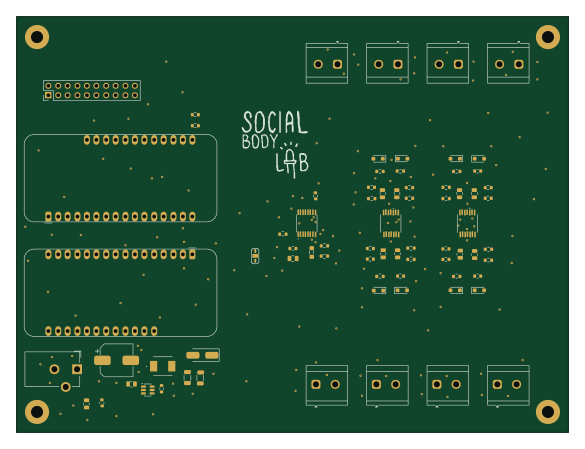
Drop-Ceiling-Controller
npuckett
146 × 110 mm74 parts2LNo license1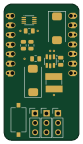 ESP32
TRX4M-Lightkit
elchue
19.8 × 36.1 mm15 parts2LNo license1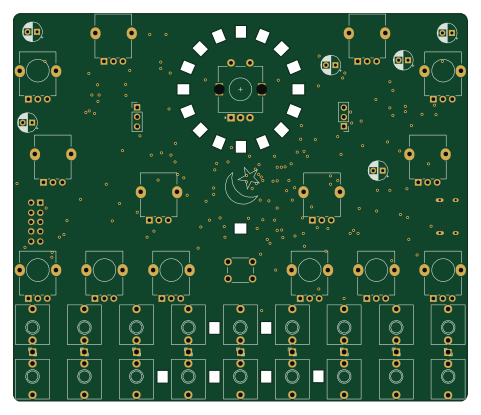 RP2040/RP2350
Spelltwister
LucasLHenry
120 × 102.5 mm251 parts2LMIT0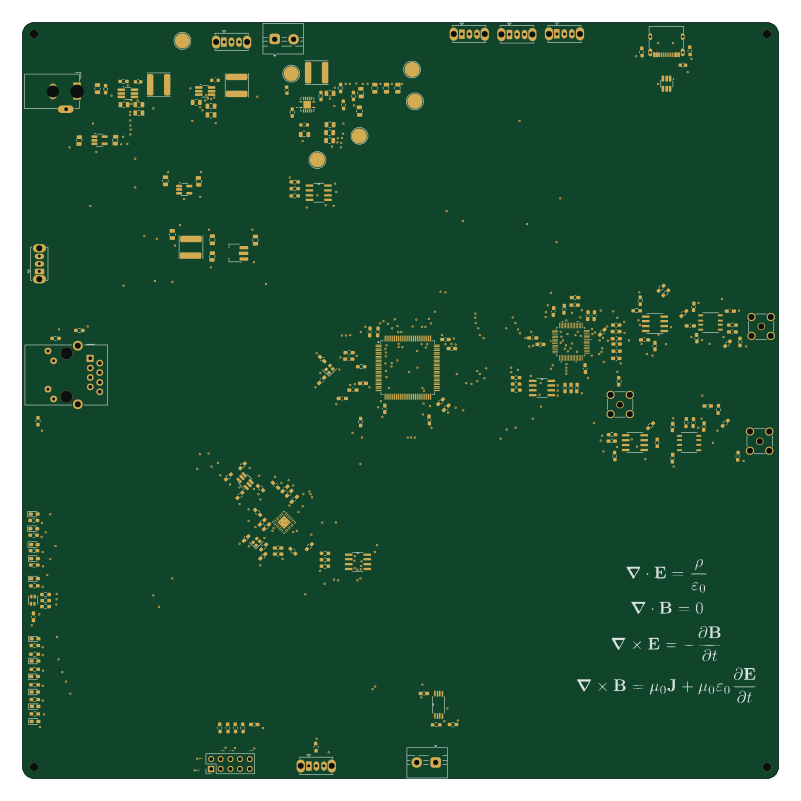 STM32
VNA Project
fdreshaj
200 × 200 mm220 parts6LNo license0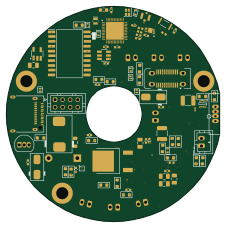 Nordic nRF
CLABSI
Nick-Trigger
56.5 × 57 mm151 parts6LNo license0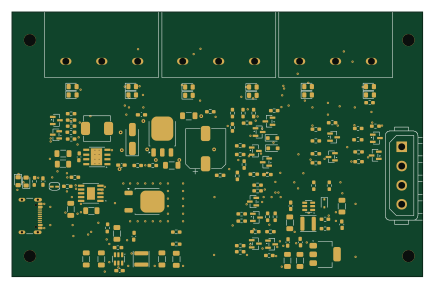
Usbpd adapter
fachat
108.5 × 69.9 mm128 parts2LNo license0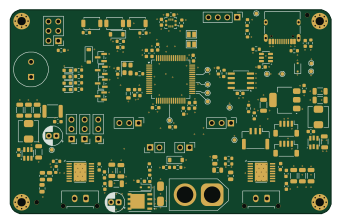 STM32
Integrated motor controller
kgieselman
85 × 54 mm107 parts4LCERN-OHL-S-2.00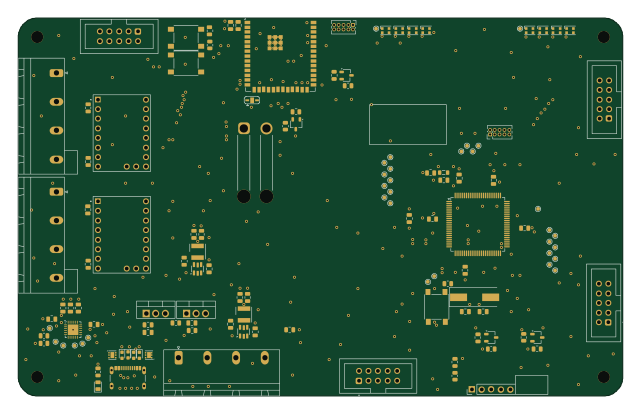 ESP32
Prototyp
Huruvarshan
160 × 100 mm98 parts4LMIT0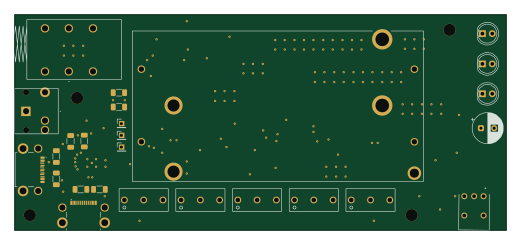
Miniamp
wafaffles
130 × 57 mm92 parts6LNo license0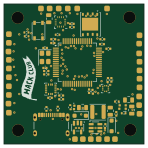 STM32
NSSFC
Keyaan-07
37 × 37 mm88 parts4LNo license0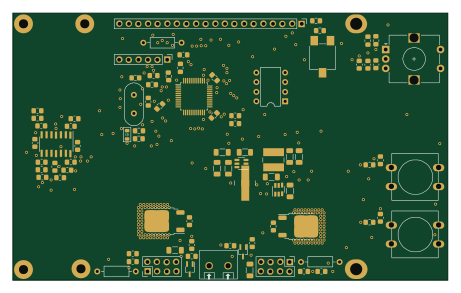 STM32
Sem forrasztos
adam-jkb
115 × 70.6 mm84 parts2LNo license0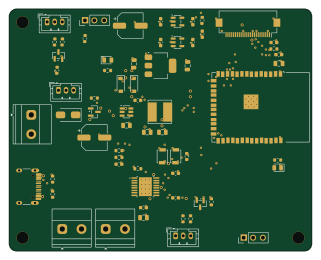 ESP32
RC-Car
GIANT-Zera
80 × 64 mm66 parts2LMIT0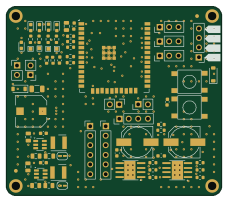 ESP32
CDFR2026-PAMIs-2-DESIGN
robotronik
57 × 50 mm64 parts4LNo license0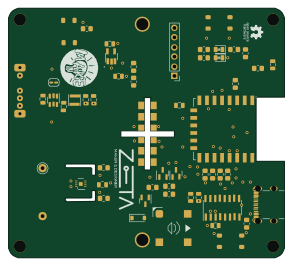 ESP8266
Arbolito
ZhengLinLei
73 × 66 mm64 parts2LCC-BY-NC-4.00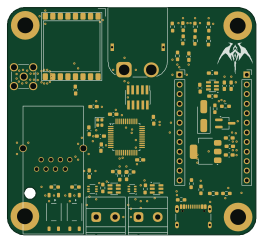 STM32
Rocket2-trs hardware
UCI-Rocket-Project
65.8 × 60.2 mm62 parts2LNo license0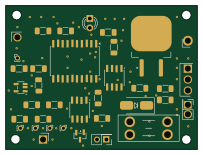 AVR/Arduino
Engine monitor
alexanderenrique
50.8 × 38.1 mm60 parts2LNo license0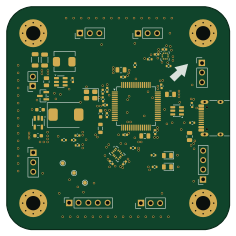 STM32
Stm32-flight controller
bachaaymene
59 × 59 mm58 parts4LNo license0
How designs wire the AP63205WU
Read from the KiCad layouts of 55 open source designs, one per repository: what each pin of the AP63205WU connects to, and the resistors, capacitors and other passives placed on it.
- The SW pin has a series capacitor on 53 of 55 designs, most often 100 nF (then 10 µF).
- The BST pin has a series capacitor on 52 of 55 designs, most often 100 nF (then 10 µF).
- The SW pin has a inductor on 51 of 55 designs, most often 4.7 µH (then 6.8 µH).
- The IN pin is tied to 12V on 42 of 55 designs (a signal on 13).
| Pin | Connected to | Parts on the pin |
|---|---|---|
| FBpin 1 | Connected to: 5V 75% · a signal 24% |
|
| ENpin 2 | Connected to: 12V 69% · a signal 31% | — |
| INpin 3 | Connected to: 12V 76% · a signal 24% | — |
| GNDpin 4 | Connected to: GND 96% | — |
| SWpin 5 | Connected to: Signal 96% |
|
| BSTpin 6 | Connected to: Signal 96% |
|
Connections count pins, parts count designs; values in brackets are how many parts had that value. Designs read include Transponder-12.0.1 by peterantypas, Openradfan by andrekuehne, A3 8p redFIS by tothpetiszilard and BaSHi-SM-1 by kiu.
The AP63205WU in open source designs
The gallery holds 64 open source boards using the AP63205WU from 57 GitHub repositories; a typical one measures about 73.4 × 57 mm and carries around 64 components.
64% are two-layer designs, the rest use four layers or more, and 31% carry an open source license.
The most starred is Transponder-12.0.1 by peterantypas.
Parts used alongside the AP63205WU
Microcontrollers on boards using the AP63205WU
What boards using the AP63205WU are built for
AP63205WU: common questions
Where can I find a AP63205WU reference design?
Each of the 64 boards on this page is a real design using the AP63205WU. Open one to see how it is wired up, with the full BOM, a render of the layout and links to its KiCad files.
How is the AP63205WU SW pin connected?
The SW pin has a series capacitor on 53 of 55 designs, most often 100 nF (then 10 µF). Counted from the KiCad layouts of 55 open source designs using the AP63205WU.
How is the AP63205WU BST pin connected?
The BST pin has a series capacitor on 52 of 55 designs, most often 100 nF (then 10 µF). Counted from the KiCad layouts of 55 open source designs using the AP63205WU.
How is the AP63205WU IN pin connected?
The IN pin is tied to 12V on 42 of 55 designs (a signal on 13). Counted from the KiCad layouts of 55 open source designs using the AP63205WU.
What parts are used alongside the AP63205WU?
The AP63203WU, USBLC6-2SC6, AMS1117-3.3, W25Q128JVS and AP2112K-3.3 appear in the most repositories here.
Which microcontrollers do boards using the AP63205WU use?
Most are built on ESP32 (19), STM32 (12), RP2040/RP2350 (5) and AVR/Arduino (4).
How big is a typical board using the AP63205WU?
The median is 73.4 × 57 mm, and 64% are two-layer designs.
What is the most popular open source board using the AP63205WU?
By GitHub stars, Transponder-12.0.1 by peterantypas, with 446 stars.
Can I simulate one of these boards using the AP63205WU before building it?
Yes. HardLabs turns a board's netlist and BOM into a working simulation, so you can boot and test firmware against it with no hardware on your desk.