
63 open source boards using the INA219AxD
Real designs built with the INA219AxD, from public GitHub projects: a quick way to see how others power, decouple and connect it. Each board comes with its KiCad files, full parts list and a render — and you can simulate its firmware on HardLabs.
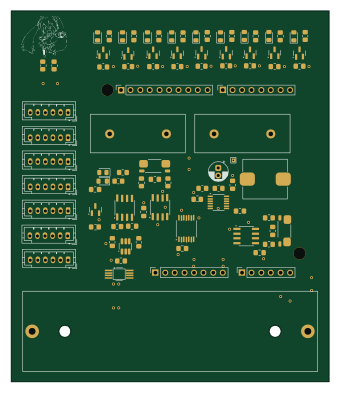
Joule Chief
fishPointer
84 × 98 mm90 parts2LMIT25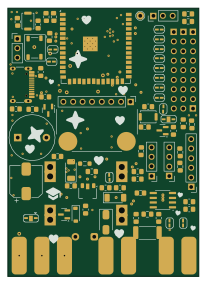 ESP32
Open-ESPilot
Tomas-Kuchta-FPV
50.6 × 71.1 mm98 parts2LCERN-OHL-W-2.018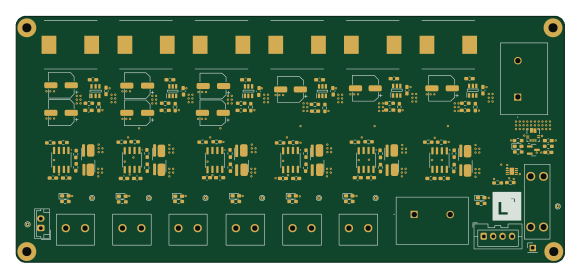
AI.R-Autonomous Robot
Lapland-Robotics
145 × 65 mm144 parts6LMIT16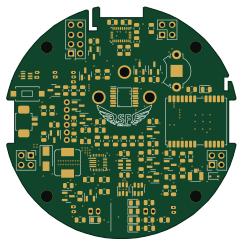
Power Unit - CanSat 2023
Project-SkyFall
60.7 × 61.3 mm153 parts4LNo license6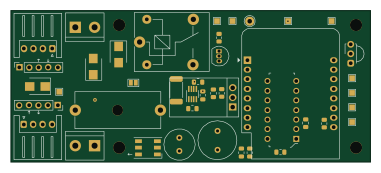 ESP8266
WLED PCB V2
jhns-de
95 × 40 mm32 parts2LGPL-3.04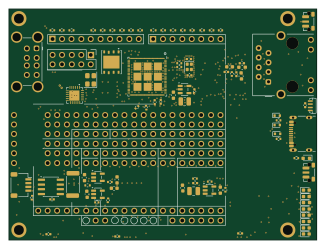 ESP32
P4hil
tannewt
81.3 × 61 mm206 parts4LNo license2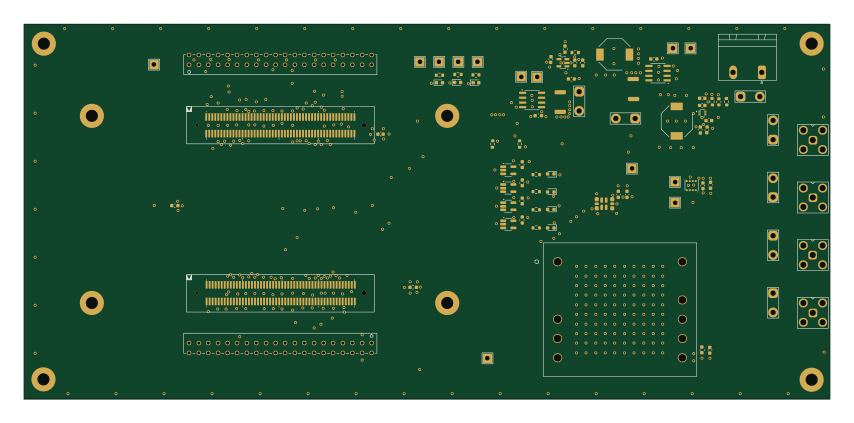
22257 DevBoard
les4675
213.1 × 99.1 mm87 parts6LMIT2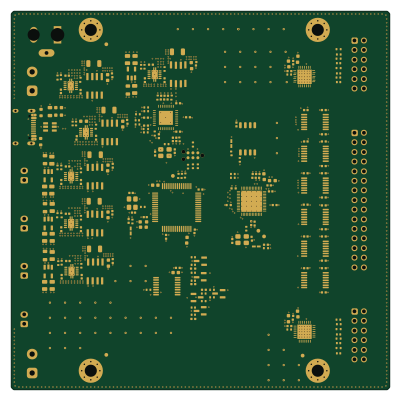 RP2040/RP2350
LabNode-Nexus
aleko-khomasuridze
100 × 100 mm252 parts4LNo license1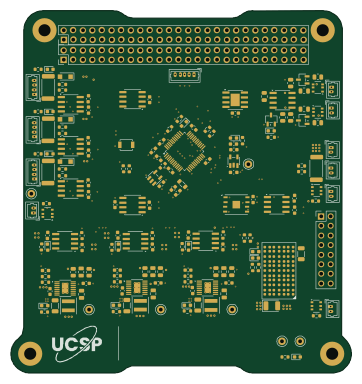 STM32
PowerDistribution
UChicago-Space-Program
90.2 × 96 mm183 parts4LNo license1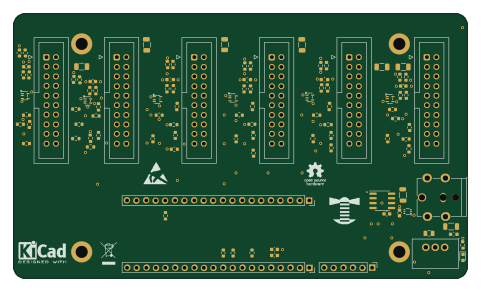
Pico power board
ProjectLighthouseCAU
120 × 70 mm105 parts2LCERN-OHL-S-2.01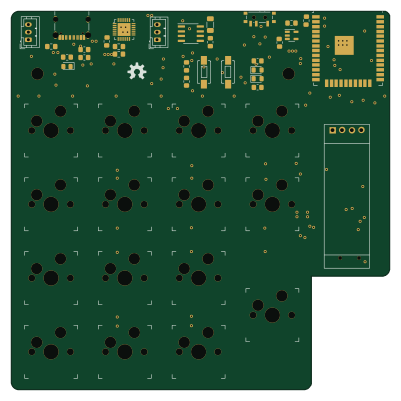 ESP32
Ble numpad pathfinder
c04022004
100 × 100 mm69 parts2LNo license1- schematic only · 49 partsESP32
ATX-24-Pin-Inline-Power-Monitoring-Board
KazmirFahrier
49 partsMIT1 - schematic only · 38 parts
Epicura spec
manasXP
38 partsNo license1 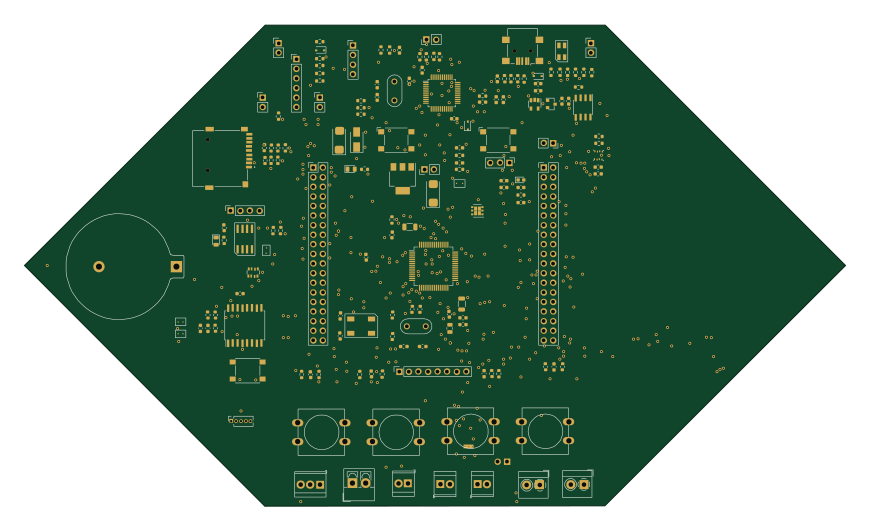 STM32
PCB ApiaryWaterDispensingSystem
Mateuszworo97
217.3 × 127.3 mm182 parts2LNo license0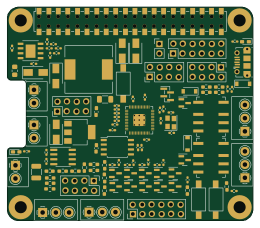 RP2040/RP2350
Gp ctrl
RunLit
65 × 56.5 mm124 parts2LGPL-3.00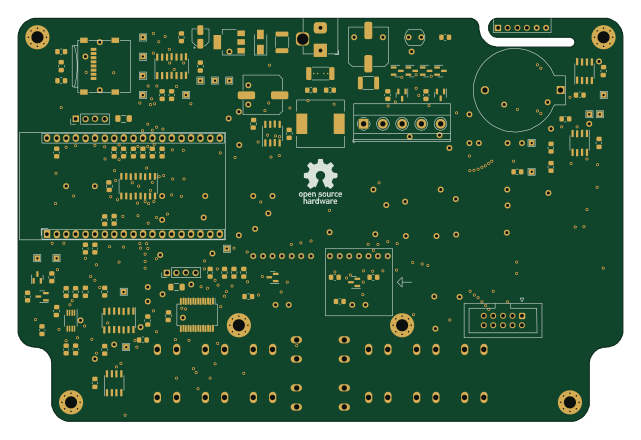 ESP32
Sunrise clock main board
atoomnetmarc
160 × 106.7 mm124 parts2LApache-2.00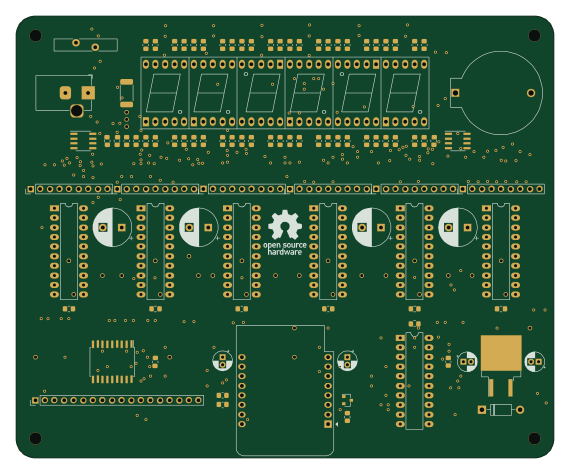 ESP8266
LED-Strip clock
142.2 × 116.8 mm104 parts2LApache-2.00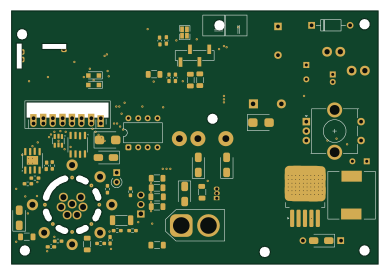 RP2040/RP2350
DIY T12 iron
anshchawla521
97 × 67 mm90 parts2LNo license0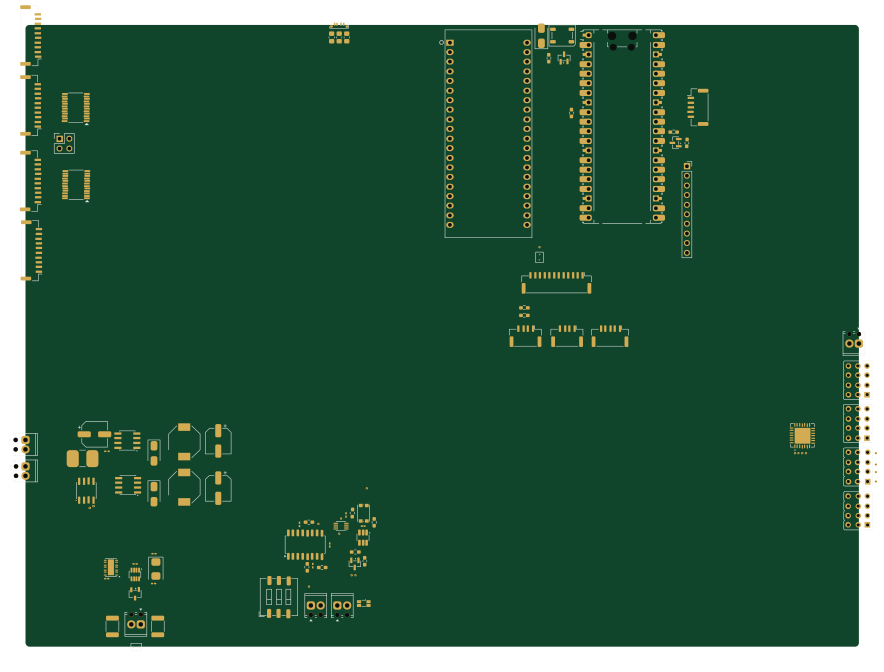 RP2040/RP2350
Titanrio
ggarciabaez
220.5 × 164.5 mm81 parts4LNo license0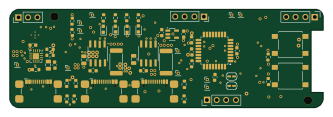 ESP8266
Smartpowerbank2026
MAIK97MAX
83 × 26 mm71 parts4LNo license0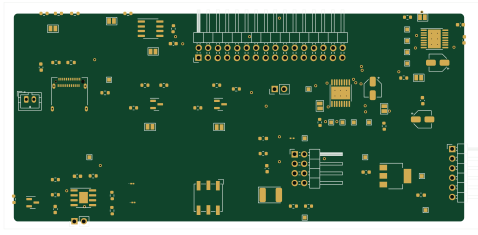
EEE3088 Power-Subsystem 2025
miruokami
119.2 × 55 mm70 parts2LNo license0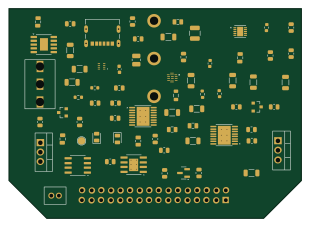
EEE3088F Project 2025
Rasekoai
77.3 × 55.5 mm68 parts2LNo license0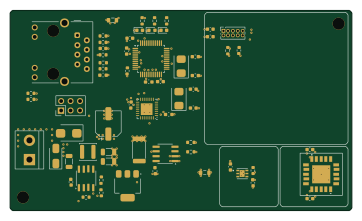 AVR/Arduino
NH-AirQuality
NottingHack
90.5 × 53 mm65 parts4LNo license0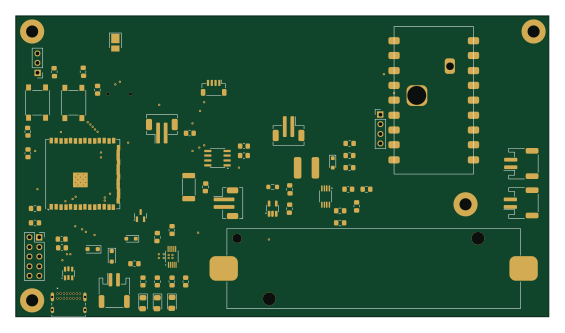 ESP32
TheRubyNode
yetanothercarbot
141 × 79.5 mm64 parts2LNo license0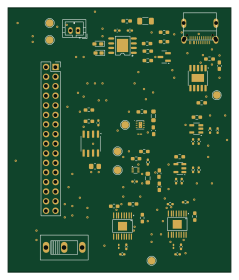
EEE3088F-Project-2025-Group-37
AnnaLukose
59 × 70 mm63 parts2LNo license0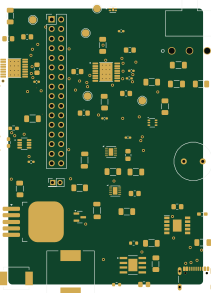
MM-Project
0geder
51.6 × 73.1 mm60 parts2LNo license0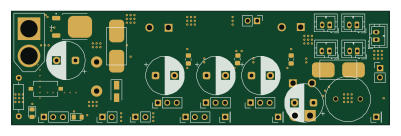
Revo main
ratmuds
100 × 30 mm58 parts4LMIT0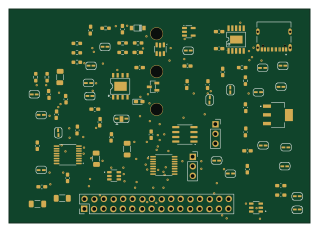
Micromouse-Project
M595-DOT
79.5 × 56.5 mm58 parts2LNo license0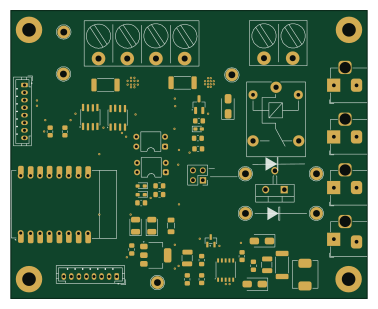 ESP32
Backup power switch-12v-Module
abel-msk
94.3 × 76.2 mm57 parts2LNo license0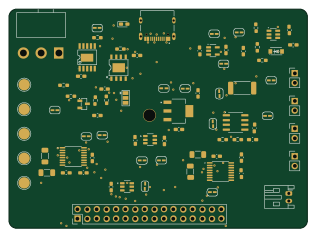
EEE3088F-Power-Subsystem
Athenkosi-Khonzani
79 × 58 mm53 parts2LNo license0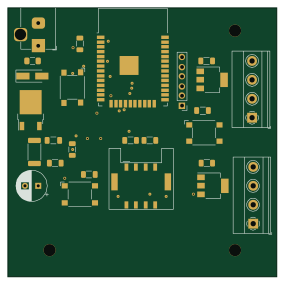 ESP32
Led controller v2
Roman3349
71 × 71 mm50 parts2LApache-2.00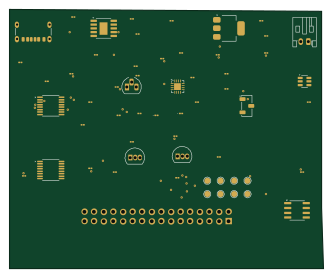
EEE3088F Power Subsystem Group61
Sipho-Junior
83 × 68.5 mm48 parts2LNo license0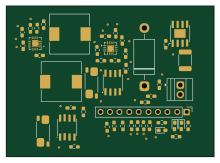
PCB
MarianAbebe
54.9 × 39.8 mm47 parts4LNo license0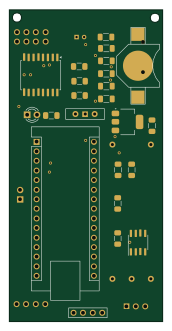 AVR/Arduino
Main board
ARTS-Laboratory
40.6 × 82.6 mm32 parts2LCC-BY-SA-4.00 ESP32
Bussysteme und-Sensorik-ESP32-Projekt
SFMonsun
111.7 × 63.8 mm32 parts4LNo license0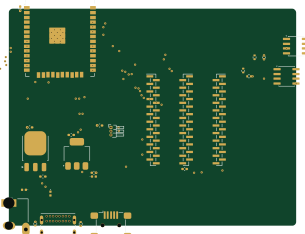 ESP32
Electrical-Status-Notification-System
dentenplay5555
76 × 57.4 mm28 parts2LMIT0
How designs wire the INA219AxD
Read from the KiCad layouts of 49 open source designs, one per repository: what each pin of the INA219AxD connects to, and the resistors, capacitors and other passives placed on it.
- The SDA pin has a pull-up to 3.3V on 30 of 49 designs, most often 4.7 kΩ (then 10 kΩ).
- The SCL pin has a pull-up to 3.3V on 30 of 49 designs, most often 4.7 kΩ (then 10 kΩ).
- The VS pin has a decoupling capacitor on 29 of 49 designs, most often 100 nF (then 10 µF).
- The A0 pin is tied to GND on 31 of 49 designs (not connected on 3, 3.3V on 7, a signal on 8).
| Pin | Connected to | Parts on the pin |
|---|---|---|
| A0pin 2 | Connected to: GND 63% · a signal 16% | — |
| SDApin 3 | Connected to: A connector 53%, the microcontroller 43% |
|
| SCLpin 4 | Connected to: A connector 53%, the microcontroller 45% |
|
| VSpin 5 | Connected to: 3.3V 80% · a signal 18% |
|
| GNDpin 6 | Connected to: GND 92% | — |
| IN-pin 7 | Connected to: Signal 67% · 5V 24% |
|
| IN+pin 8 | Connected to: A connector 27% · 5V 20% |
|
1 more pin varies from design to design. Connections count pins, parts count designs; values in brackets are how many parts had that value. Designs read include X1p-003 by jwise, Joule Thief by fishPointer, BesteLampe! ABL Controller Module by lenaschimmel and Open-ESPilot by Tomas-Kuchta-FPV.
The INA219AxD in open source designs
The gallery holds 63 open source boards using the INA219AxD from 55 GitHub repositories; a typical one measures about 90 × 67 mm and carries around 63 components.
65% are two-layer designs, the rest use four layers or more, and 35% carry an open source license.
The most starred is X1p-003 by jwise.
Parts used alongside the INA219AxD
Microcontrollers on boards using the INA219AxD
What boards using the INA219AxD are built for
INA219AxD: common questions
Where can I find a INA219AxD reference design?
Each of the 63 boards on this page is a real design using the INA219AxD. Open one to see how it is wired up, with the full BOM, a render of the layout and links to its KiCad files.
What pull-up resistor is used on the INA219AxD SDA pin?
The SDA pin has a pull-up to 3.3V on 30 of 49 designs, most often 4.7 kΩ (then 10 kΩ). Counted from the KiCad layouts of 49 open source designs using the INA219AxD.
What pull-up resistor is used on the INA219AxD SCL pin?
The SCL pin has a pull-up to 3.3V on 30 of 49 designs, most often 4.7 kΩ (then 10 kΩ). Counted from the KiCad layouts of 49 open source designs using the INA219AxD.
What decoupling capacitors do designs use on the INA219AxD VS pin?
The VS pin has a decoupling capacitor on 29 of 49 designs, most often 100 nF (then 10 µF). Counted from the KiCad layouts of 49 open source designs using the INA219AxD.
What parts are used alongside the INA219AxD?
The CH224K, AMS1117-3.3, MT3608, TP4056 and AP2112K-3.3 appear in the most repositories here.
Which microcontrollers do boards using the INA219AxD use?
Most are built on ESP32 (16), AVR/Arduino (8), RP2040/RP2350 (4) and ESP8266 (3).
How big is a typical board using the INA219AxD?
The median is 90 × 67 mm, and 65% are two-layer designs.
What is the most popular open source board using the INA219AxD?
By GitHub stars, X1p-003 by jwise, with 50 stars.
Can I simulate one of these boards using the INA219AxD before building it?
Yes. HardLabs turns a board's netlist and BOM into a working simulation, so you can boot and test firmware against it with no hardware on your desk.