
27 open source boards using the MOUDLE-SEEEDUINO-XIAO
Real designs built with the MOUDLE-SEEEDUINO-XIAO, from public GitHub projects: a quick way to see how others power, decouple and connect it. Each board comes with its KiCad files, full parts list and a render — and you can simulate its firmware on HardLabs.
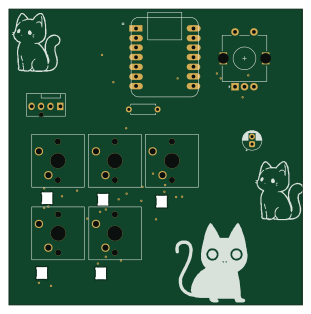
Lumushackpad
Araadh3111
77.7 × 78.3 mm20 parts2LNo license3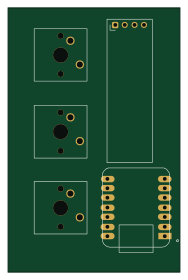
Corepad
albertphu07
45.5 × 70 mm5 parts2LNo license3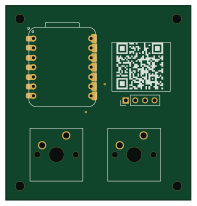 RP2040/RP2350
Verifypad
Broseph9972
49 × 51.5 mm5 parts2LGPL-3.02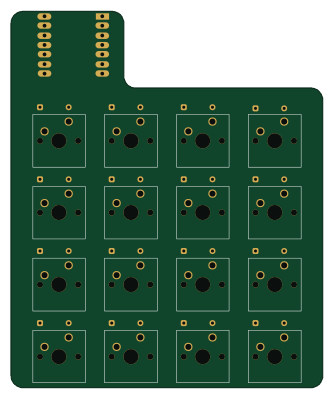
StreamPad
Pixeleyesd
82.6 × 99.7 mm33 parts2LGPL-3.01
Shady Pad
samdoes-stuff
3.6 × 3.3 mm28 parts2LNo license1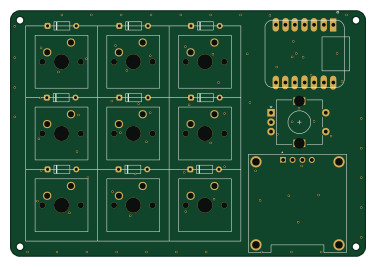
HackroPadX
SunritHazra
94 × 65 mm21 parts2LNo license1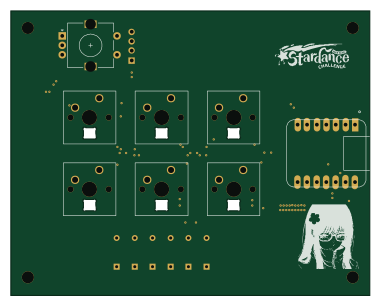
NokirasHackpad
n0kira
95 × 75.4 mm21 parts2LNo license1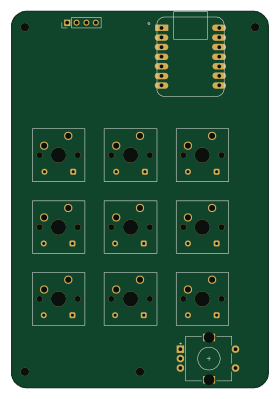
Hackpad
Sacul518
68 × 99.7 mm21 parts2LMIT1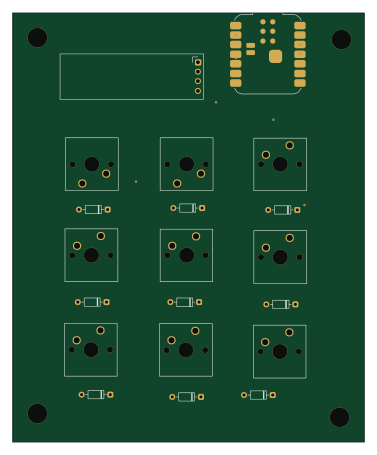
Hackpad
ohhjazzv
93 × 113.5 mm20 parts2LNo license1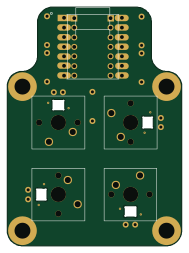
Pathfinder Fidget RGB Macropad
LeoMos10
46.1 × 63.1 mm20 parts2LNo license1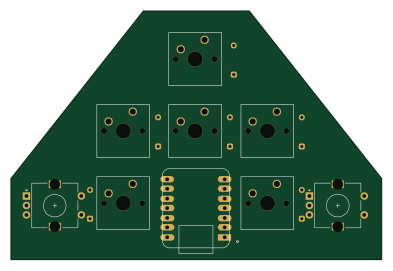
SpacePad
MasterClassmate3004
98 × 65.7 mm15 parts2LNo license1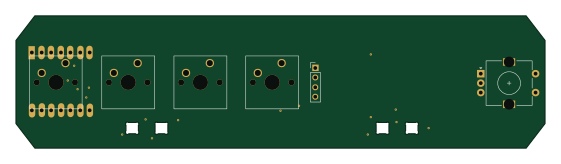
Xeon-Horizon
ayaskant007
140 × 35 mm11 parts2LNo license1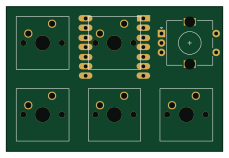
Cosmic key
phantom-ascii
57.3 × 38.3 mm7 parts2LNo license1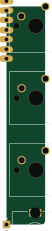
Hackpad v1
s-ajay-2010
10.3 × 57.6 mm5 parts2LNo license1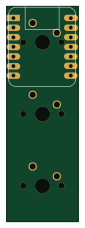
Hackpad
elia-pia
19 × 57 mm4 parts2LNo license1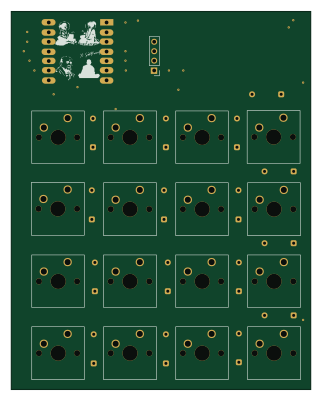
Calc123
Magnu-Shaak
79.2 × 100 mm34 parts2LMIT0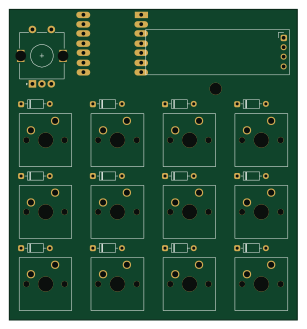
Hackpad
kira-iovenko
76.2 × 82.2 mm27 parts2LNo license0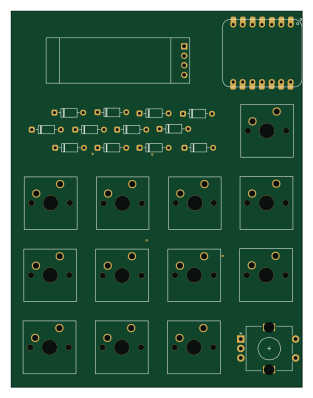 RP2040/RP2350
Stardance-Hackpad
Anycircle11139s
76.9 × 99.3 mm27 parts2LMIT0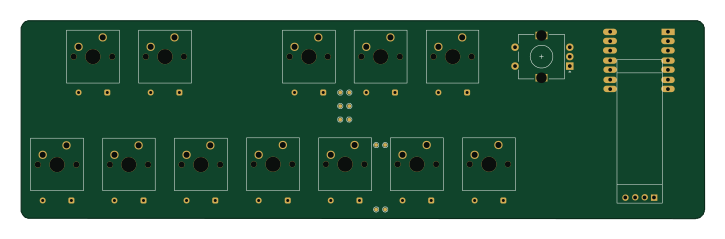
After soldering
Alex-SJuice
181 × 52.4 mm27 parts2LNo license0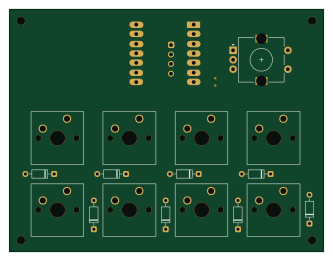
SonoPad
B-Leadr
83 × 64 mm19 parts2LNo license0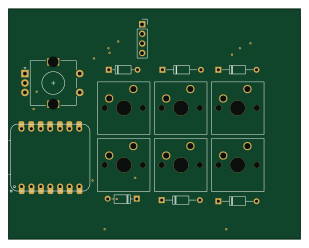 Microchip SAM
HackPad
Dreamer-Cloud-blip
77.2 × 60.9 mm19 parts2LNo license0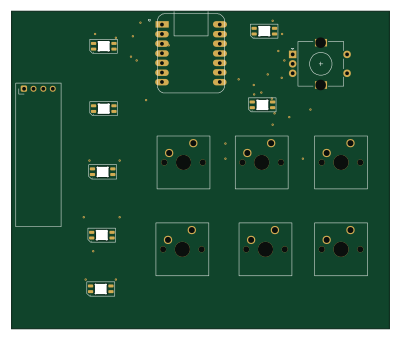
TaskNode
davitkhlghatyan2010-afk
100 × 84 mm16 parts2LNo license0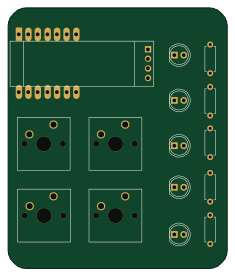
Stardance pathfinder
58 × 69 mm16 parts2LMIT0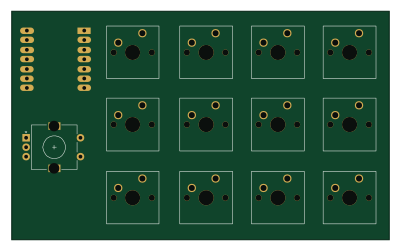
Simhub
dogman1214
100 × 60.5 mm14 parts2LMIT0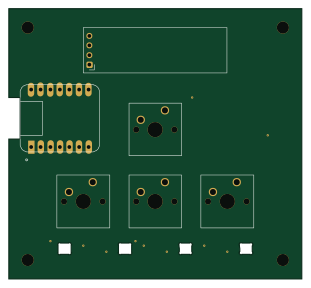
BrawlStarsGamePadSubmit
arnavaggarwal-dev
77.5 × 71.5 mm10 parts2LNo license0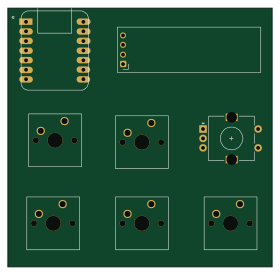
EZpad
Amerax
70 × 68.5 mm8 parts2LNo license0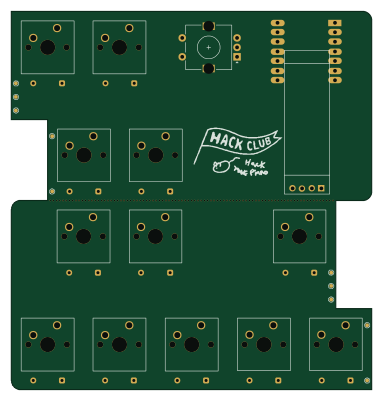
Hackpiano
95.3 × 100 mm27 parts2LNo license0
The MOUDLE-SEEEDUINO-XIAO in open source designs
The gallery holds 27 open source boards using the MOUDLE-SEEEDUINO-XIAO from 26 GitHub repositories; a typical one measures about 77.5 × 68.5 mm and carries around 19 components.
100% are two-layer designs, the rest use four layers or more, and 26% carry an open source license.
The most starred is Lumushackpad by Araadh3111.
Parts used alongside the MOUDLE-SEEEDUINO-XIAO
Microcontrollers on boards using the MOUDLE-SEEEDUINO-XIAO
What boards using the MOUDLE-SEEEDUINO-XIAO are built for
MOUDLE-SEEEDUINO-XIAO: common questions
Where can I find a MOUDLE-SEEEDUINO-XIAO reference design?
Each of the 27 boards on this page is a real design using the MOUDLE-SEEEDUINO-XIAO. Open one to see how it is wired up, with the full BOM, a render of the layout and links to its KiCad files.
Which microcontrollers do boards using the MOUDLE-SEEEDUINO-XIAO use?
Most are built on RP2040/RP2350 (2) and Microchip SAM (1).
How big is a typical board using the MOUDLE-SEEEDUINO-XIAO?
The median is 77.5 × 68.5 mm, and 100% are two-layer designs.
What is the most popular open source board using the MOUDLE-SEEEDUINO-XIAO?
By GitHub stars, Lumushackpad by Araadh3111, with 3 stars.
Can I simulate one of these boards using the MOUDLE-SEEEDUINO-XIAO before building it?
Yes. HardLabs turns a board's netlist and BOM into a working simulation, so you can boot and test firmware against it with no hardware on your desk.