
193 open source boards using the STM32F103C8Tx
Real designs built with the STM32F103C8Tx, from public GitHub projects: a quick way to see how others power, decouple and connect it. Each board comes with its KiCad files, full parts list and a render — and you can simulate its firmware on HardLabs.
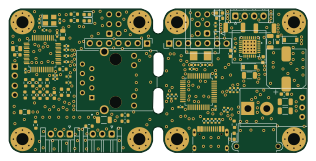 STM32
Ethersweep
Neumi
79 × 38 mm97 parts2LMIT587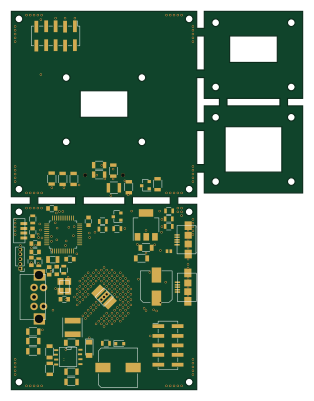 STM32
Diy projector clock
shufps
77 × 100 mm63 parts2LNo license168- schematic only · 70 partsSTM32
Canbox
smartgauges
70 partsNo license128 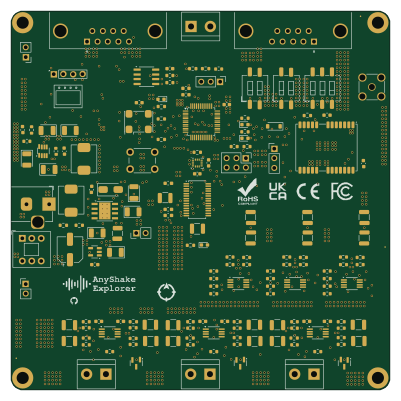 STM32
Explorer
anyshake
100 × 100 mm244 parts2LCustom license98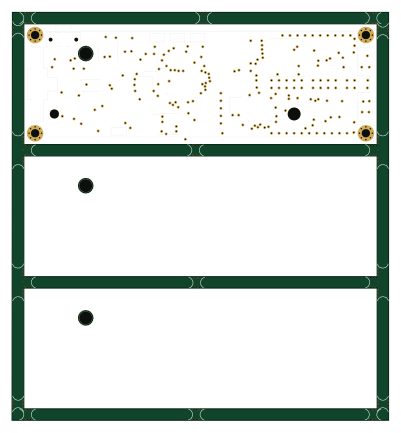 STM32
Panel
embeddedalpha
99.7 × 108 mm94 partsMIT75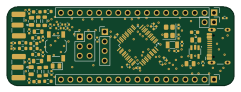 STM32
PhaseLatchMini
AndersBNielsen
60.2 × 20.8 mm63 parts4LNo license72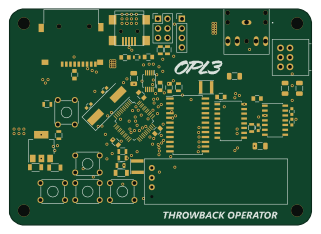 STM32
Throwback Operator
AidanHockey5
80 × 57.2 mm54 parts2LNo license71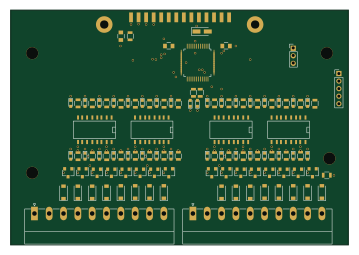 STM32
Module do
andreili
89.5 × 62.2 mm133 parts2LGPL-3.066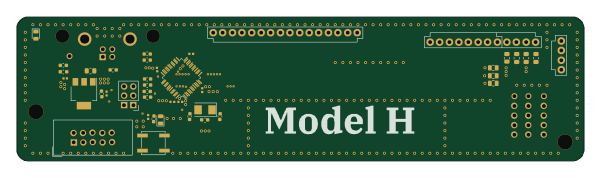 STM32
Modelh
jhawthorn
150 × 38 mm45 parts2LNo license52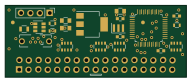 STM32
Usb floppy adapter
roybaer
48 × 19 mm26 parts2LNo license44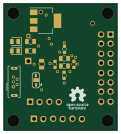 STM32
HP34401a-OLED-HW
openscopeproject
30 × 33.5 mm25 parts2LCERN-OHL-1.231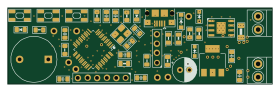 STM32
Solder-Paste-Dispenser with-DCMotor
Jarins
70 × 20.1 mm48 parts2LGPL-3.029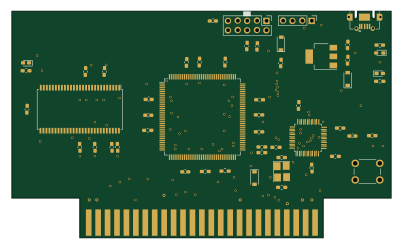 STM32
El-Barato-64
Hazematman
100.5 × 60 mm55 parts2LNo license24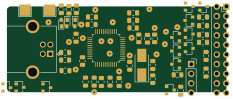 STM32
Stlinkv2
dltech
58.1 × 22.7 mm59 parts2LNo license23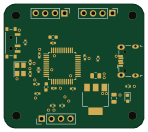 STM32
Stm32-devboard
devnithw
37 × 32.8 mm28 parts2LNo license18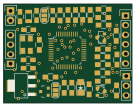 STM32
Audi concert1 chorus1 volume fix v3
tomaskovacik
34 × 26.2 mm46 parts2LGPL-3.017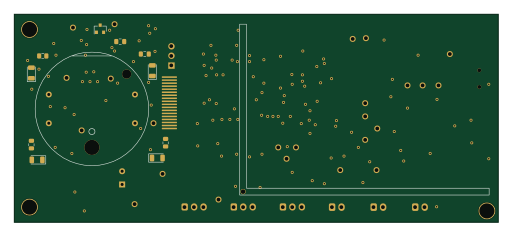 STM32
MotoHUDsch
wiciu15
128 × 55 mm97 parts2LNo license16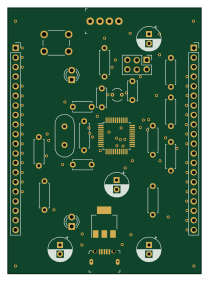 STM32
Green Pill
IsmaelLopesSilva
51.2 × 70.5 mm29 parts2LNo license14- schematic only · 99 partsSTM32
Midimagic
herculesxe5
99 partsLGPL-3.014 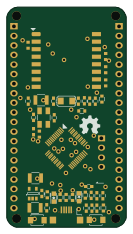 STM32
Wifi iot core hw
genuine-engineering
31.8 × 58.4 mm45 parts2LNo license12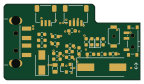 STM32
OpenSkySim
shaise
36 × 20 mm33 parts2LLGPL-2.112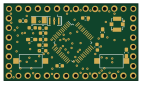 STM32
STM32 Sensor
freynder
35.6 × 20.3 mm26 parts2LNo license12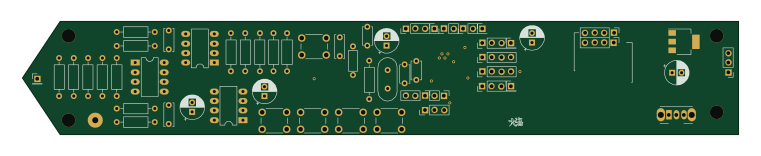 STM32
Oscilloscopen
pondahai
190 × 30 mm57 parts2LNo license8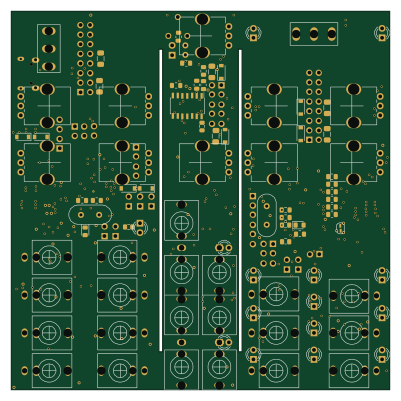 STM32
KicadJE uP DAC
promesoft
100 × 100 mm269 parts2LNo license7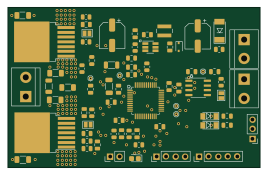 STM32
CAN motor controller
wjklimek1
66.8 × 42.4 mm69 parts2LMIT7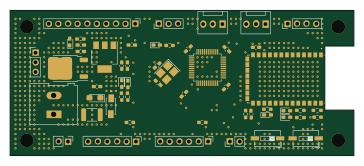 STM32
Snaaur v1
duongngochoan
90.9 × 38.4 mm54 parts2LNo license7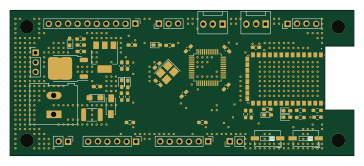 STM32
Snaaur v1
90.9 × 38.4 mm54 parts2LNo license7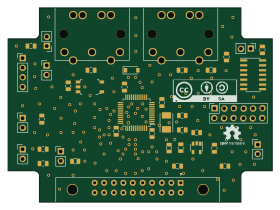 STM32
MidiKeyboardBluePill
drdpj
69.9 × 51.4 mm41 parts2LGPL-3.07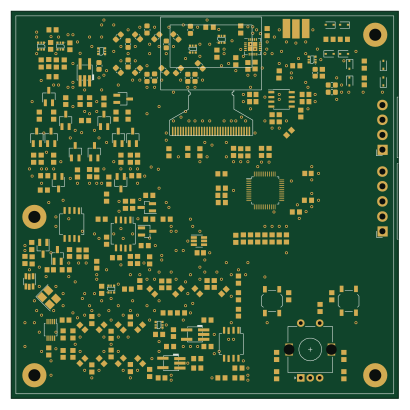 STM32
Generator 5351 rect sine
MR-DOS
102.4 × 102.4 mm280 parts2LGPL-3.06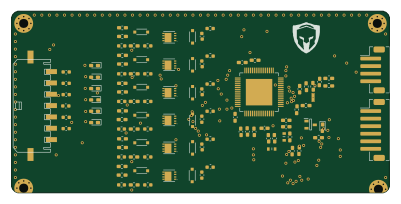 STM32
BMS
100 × 48 mm185 parts2LNo license6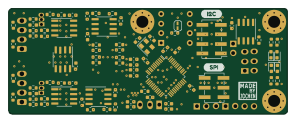 STM32
OpenFlowMeter
JochiSt
74 × 28 mm132 parts4LGPL-3.06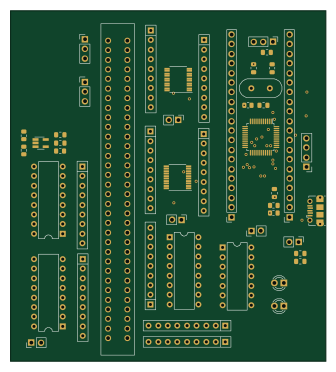 STM32
OpenDrive-Programmer
soniccd123
83.3 × 92.7 mm48 parts2LNo license6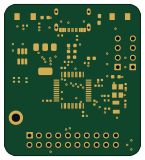 STM32
Infrared gun
souptik-samanta
36 × 40 mm38 parts2LNo license6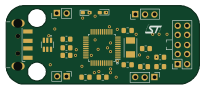 STM32
Magma-STLink
oflifurkan
51.3 × 20.8 mm44 parts2LGPL-3.04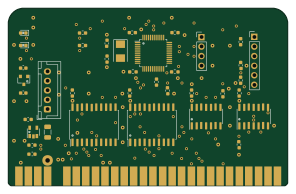 STM32
Thermal spectrum
spbnick
74 × 47 mm39 parts2LGPL-2.04- schematic only · 33 partsSTM32
Aieda greenhouse
yplam
33 partsNo license4
How designs wire the STM32F103C8Tx
Read from the KiCad layouts of 146 open source designs, one per repository: what each pin of the STM32F103C8Tx connects to, and the resistors, capacitors and other passives placed on it.
- The VDD pins have a decoupling capacitor on 121 of 145 designs, most often 100 nF (then 10 µF).
- The PD0 pin has a crystal on 108 of 144 designs, most often 8 MHz (then 16 MHz).
- The VDDA pin has a decoupling capacitor on 103 of 144 designs, most often 100 nF (then 1 µF).
- The PD1 pin has a crystal on 99 of 144 designs, most often 8 MHz (then 16 MHz).
| Pin | Connected to | Parts on the pin |
|---|---|---|
| VBATpin 1 | Connected to: 3.3V 75% · not connected 16% |
|
| PC13pin 2 | Connected to: Not connected 61% · a signal 38% | — |
| PC14pin 3 | Connected to: Not connected 66% · a signal 32% | — |
| PC15pin 4 | Connected to: Not connected 68% · a signal 31% | — |
| PD0pin 5 | Connected to: Signal 83% · not connected 16% |
|
| PD1pin 6 | Connected to: Signal 78% · not connected 21% |
|
| NRSTpin 7 | Connected to: A connector 34% |
|
| VSSApin 8 | Connected to: GND 93% | — |
| VDDApin 9 | Connected to: 3.3V 85% |
|
| VSSpin 23, 35, 47 | Connected to: GND 93% | — |
| VDDpin 24, 36, 48 | Connected to: 3.3V 92% |
|
| PA12pin 33 | Connected to: A connector 36% · not connected 25% |
|
| PA15pin 38 | Connected to: Not connected 63% · a signal 37% | — |
| BOOT0pin 44 | Connected to: Signal 81% |
|
30 more pins vary from design to design. Connections count pins, parts count designs; values in brackets are how many parts had that value. Designs read include Easyduino STM32F103 by Hanqaqa, Ethersweep by Neumi, Encoder by eddyem and Diy projector clock by shufps.
The STM32F103C8Tx in open source designs
The gallery holds 193 open source boards using the STM32F103C8Tx from 157 GitHub repositories; a typical one measures about 67.2 × 50 mm and carries around 57 components.
77% are two-layer designs, the rest use four layers or more, and 29% carry an open source license.
The most starred is Easyduino STM32F103 by Hanqaqa.
Parts used alongside the STM32F103C8Tx
Microcontrollers on boards using the STM32F103C8Tx
What boards using the STM32F103C8Tx are built for
STM32F103C8Tx: common questions
Where can I find a STM32F103C8Tx reference design?
Each of the 193 boards on this page is a real design using the STM32F103C8Tx. Open one to see how it is wired up, with the full BOM, a render of the layout and links to its KiCad files.
What decoupling capacitors do designs use on the STM32F103C8Tx VDD pin?
The VDD pins have a decoupling capacitor on 121 of 145 designs, most often 100 nF (then 10 µF). Counted from the KiCad layouts of 146 open source designs using the STM32F103C8Tx.
How is the STM32F103C8Tx PD0 pin connected?
The PD0 pin has a crystal on 108 of 144 designs, most often 8 MHz (then 16 MHz). Counted from the KiCad layouts of 146 open source designs using the STM32F103C8Tx.
What decoupling capacitors do designs use on the STM32F103C8Tx VDDA pin?
The VDDA pin has a decoupling capacitor on 103 of 144 designs, most often 100 nF (then 1 µF). Counted from the KiCad layouts of 146 open source designs using the STM32F103C8Tx.
What parts are used alongside the STM32F103C8Tx?
The AMS1117-3.3, USBLC6-2SC6, L7805, AP2112K-3.3 and AZ1117-3.3 appear in the most repositories here.
Which microcontrollers do boards using the STM32F103C8Tx use?
Most are built on STM32 (188), ESP8266 (2), ESP32 (2) and RP2040/RP2350 (1).
How big is a typical board using the STM32F103C8Tx?
The median is 67.2 × 50 mm, and 77% are two-layer designs.
What is the most popular open source board using the STM32F103C8Tx?
By GitHub stars, Easyduino STM32F103 by Hanqaqa, with 754 stars.
Can I simulate one of these boards using the STM32F103C8Tx before building it?
Yes. HardLabs turns a board's netlist and BOM into a working simulation, so you can boot and test firmware against it with no hardware on your desk.