
52 open source boards using the ATMEGA328P-A
Real designs built with the ATMEGA328P-A, from public GitHub projects: a quick way to see how others power, decouple and connect it. Each board comes with its KiCad files, full parts list and a render — and you can simulate its firmware on HardLabs.
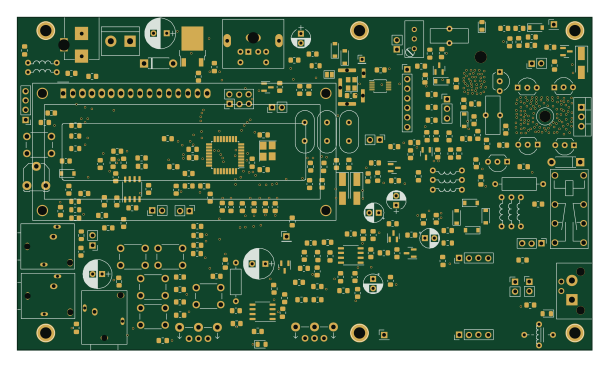 AVR/Arduino
RFBitBangSMT
profdc9
152 × 88 mm263 parts2LNo license221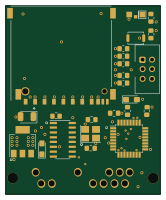 AVR/Arduino
SmartPortSD SMD
djtersteegc
41 × 50 mm24 parts2LMIT54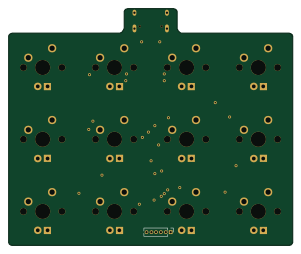 AVR/Arduino
Twelvekey
str-dst
75.2 × 62.6 mm52 parts2LCC-BY-NC-4.048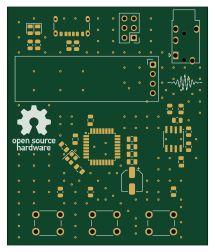 AVR/Arduino
Entropy32-Plus
captainchapster
53 × 63 mm34 parts2LMIT37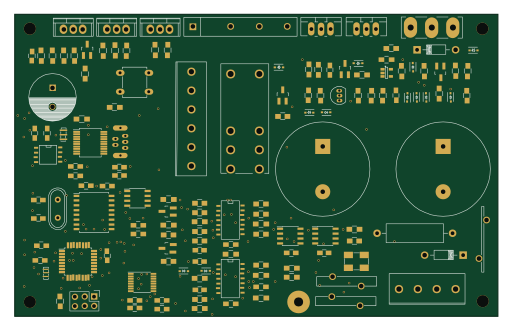 AVR/Arduino
ModularLabPSU
tom-biskupic
128 × 80 mm140 parts2LNo license33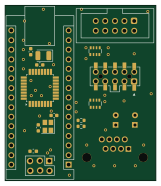 AVR/Arduino
CrealitySpacePiAutomation
Ermakov
39.9 × 46.4 mm19 parts2LNo license33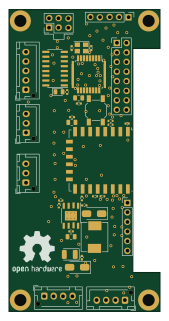 ESP8266
Split flap fae
codingcatgirl
40 × 80 mm39 parts2LApache-2.030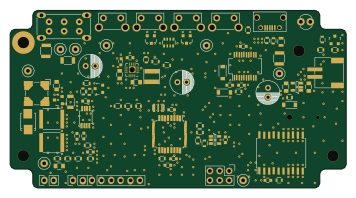 AVR/Arduino
Divergence Meter Control Board
q61org
89 × 47 mm102 parts2LNo license21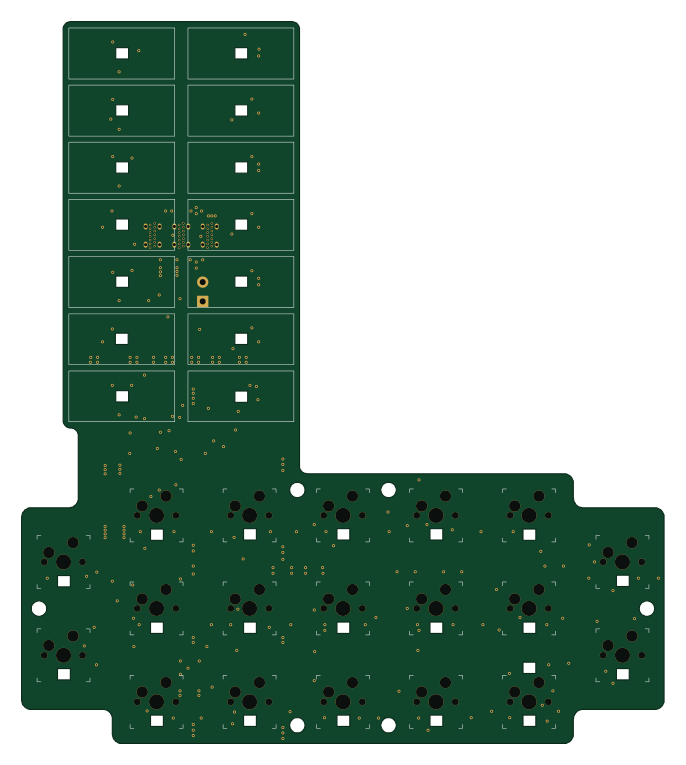 AVR/Arduino
DSKY
Apollo-Replica
169.9 × 190.9 mm116 parts2LCC-BY-NC-4.019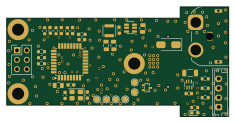 AVR/Arduino
SparkAltBatteryBoard
fahreddinaykut
58.8 × 29 mm37 parts4LMIT18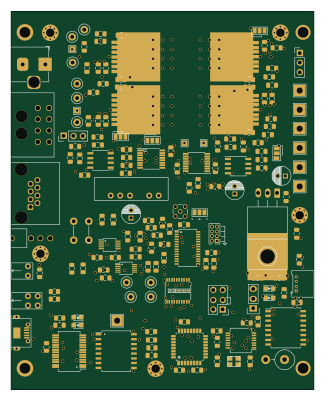 AVR/Arduino
DigitalTemperatureController
charlesbaynham
80 × 100 mm163 parts4LNo license14- schematic only · 244 partsAVR/Arduino
PhotonSaw
openspaceaarhus
244 partsApache-2.013 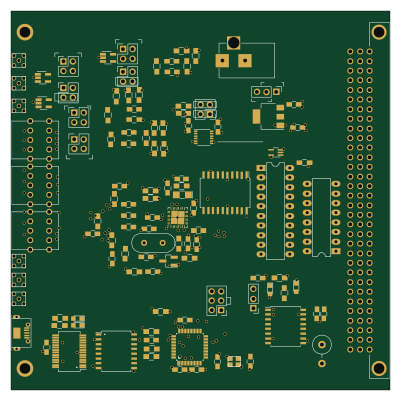 AVR/Arduino
GP22 RF Photon Correllation
100 × 100 mm116 parts4LNo license11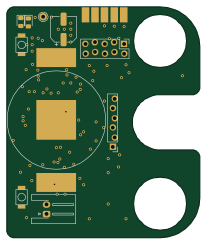 AVR/Arduino
RHS 3
pa-pa
51 × 61 mm66 parts2LNo license9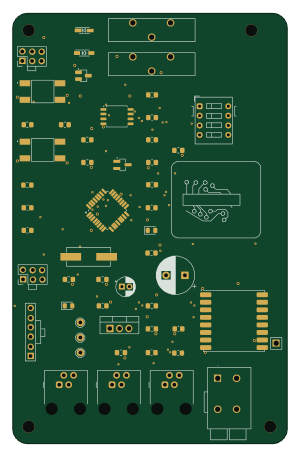 AVR/Arduino
Ws 3.0
boanjo
72.7 × 114 mm53 parts2LNo license4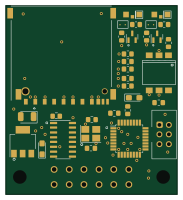 AVR/Arduino
Tapecart sd vertical
45.4 × 50 mm33 parts2LMIT4 AVR/Arduino
Bullion
coddingtonbear
38.8 × 27.3 mm21 parts2LNo license3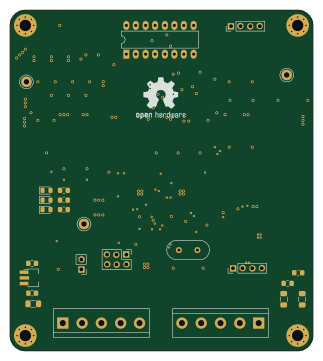 AVR/Arduino
Solari control
kmzbrnoI
80 × 90 mm106 parts2LNo license1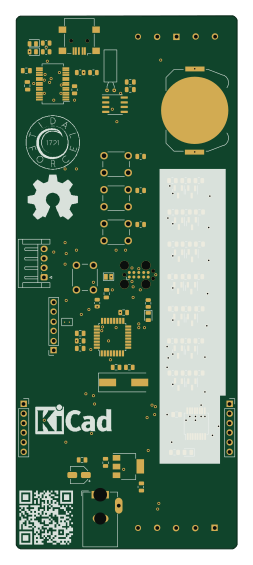 AVR/Arduino
Segment Display Board
FRC-1721
58.4 × 141 mm90 parts2LNo license1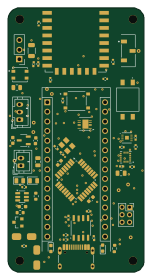 ESP8266
Endev v1.1
sophiayduan
36 × 70 mm59 parts2LMIT1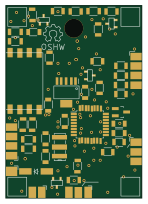 AVR/Arduino
WolkenThermometer
KarlZeilhofer
36 × 51 mm52 parts2LCustom license1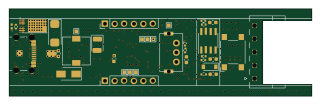 AVR/Arduino
T12 SolderingStation
Cube-Line
80 × 23 mm52 parts2LNo license1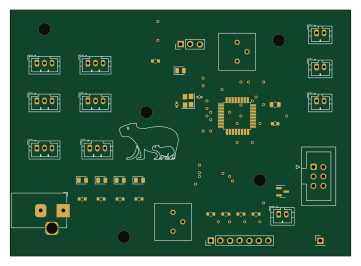 AVR/Arduino
Controller
bieber
90 × 65 mm38 parts2LGPL-3.01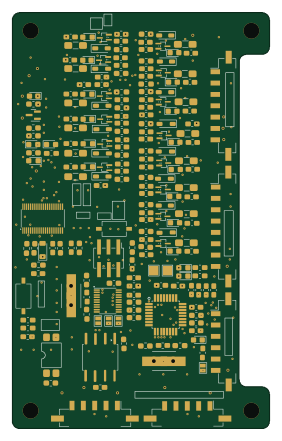 AVR/Arduino
AMS SLAVE TEST
HKUST-Red-Bird-Racing-EVRT
68 × 110 mm191 parts2LNo license0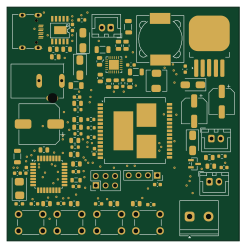 AVR/Arduino
TheraPatch
noahalam77-code
61.3 × 61.8 mm82 parts4LMIT0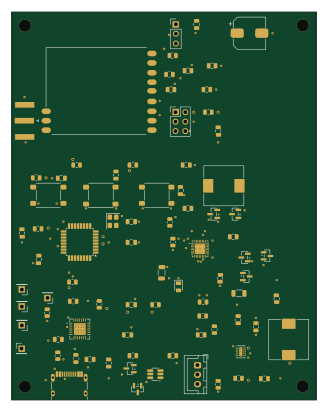 AVR/Arduino
Rx5808-video receiver
nykleban
80.7 × 102.7 mm81 parts4LNo license0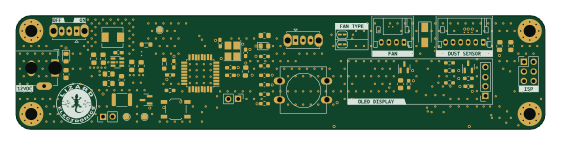 AVR/Arduino
Soldering Fume Extractor
lizard-electronics
140 × 30 mm59 parts2LNo license0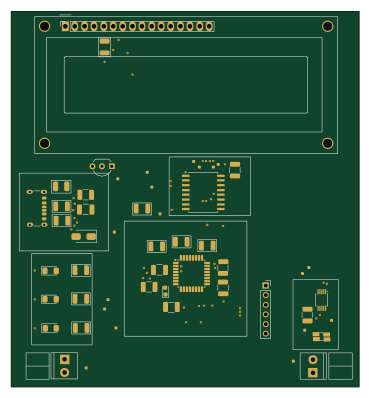 AVR/Arduino
Mini-Power-Gauge
oct-karim
92.1 × 99.4 mm54 parts2LNo license0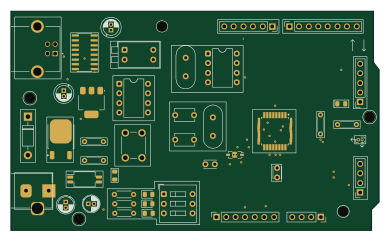 AVR/Arduino
Atmega32
George-Emad31
97.5 × 58 mm43 parts4LNo license0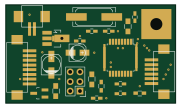 AVR/Arduino
Open wound
akornsys-rdi
45.1 × 26 mm23 parts2LGPL-3.00 AVR/Arduino
Arduino mini
anxndsgn
21 × 21 mm14 parts2LMIT0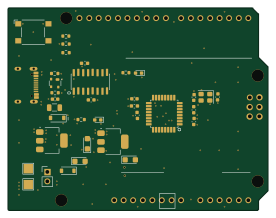 AVR/Arduino
Easyduino Atmega
Hanqaqa
68.8 × 53.6 mm35 parts4LCERN-OHL-P-2.0746 AVR/Arduino
RHS
dmcke5
26.5 × 26.5 mm31 parts2LCERN-OHL-S-2.0131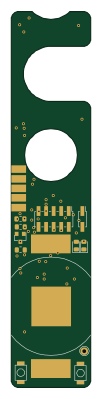 AVR/Arduino
RHS 3 Simple
21 × 99.5 mm35 parts2LNo license9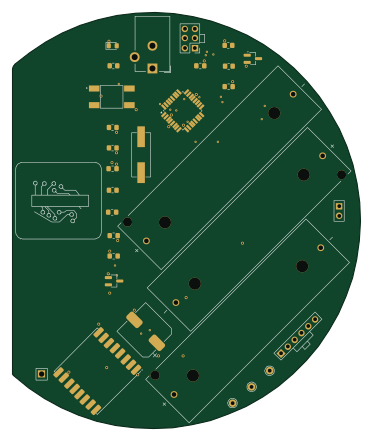 AVR/Arduino
Postman
92 × 110 mm31 parts2LNo license4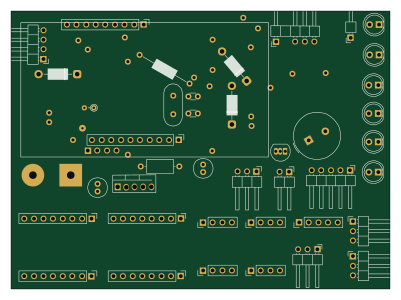 AVR/Arduino
Indicator board 3V3 & 5V
callmestiles
100 × 73.3 mm83 parts2LNo license2
The ATMEGA328P-A in open source designs
The gallery holds 52 open source boards using the ATMEGA328P-A from 40 GitHub repositories; a typical one measures about 68.4 × 64.1 mm and carries around 53 components.
82% are two-layer designs, the rest use four layers or more, and 31% carry an open source license.
The most starred is Easyduino Atmega by Hanqaqa.
Parts used alongside the ATMEGA328P-A
Microcontrollers on boards using the ATMEGA328P-A
What boards using the ATMEGA328P-A are built for
ATMEGA328P-A: common questions
Where can I find a ATMEGA328P-A reference design?
Each of the 52 boards on this page is a real design using the ATMEGA328P-A. Open one to see how it is wired up, with the full BOM, a render of the layout and links to its KiCad files.
What parts are used alongside the ATMEGA328P-A?
The CH340C, FT232RL, AMS1117-3.3, 4050 and ADuM1201AR appear in the most repositories here.
Which microcontrollers do boards using the ATMEGA328P-A use?
Most are built on AVR/Arduino (50) and ESP8266 (2).
How big is a typical board using the ATMEGA328P-A?
The median is 68.4 × 64.1 mm, and 82% are two-layer designs.
What is the most popular open source board using the ATMEGA328P-A?
By GitHub stars, Easyduino Atmega by Hanqaqa, with 746 stars.
Can I simulate one of these boards using the ATMEGA328P-A before building it?
Yes. HardLabs turns a board's netlist and BOM into a working simulation, so you can boot and test firmware against it with no hardware on your desk.