
40 open source boards using the ATMEGA328-A
Real designs built with the ATMEGA328-A, from public GitHub projects: a quick way to see how others power, decouple and connect it. Each board comes with its KiCad files, full parts list and a render — and you can simulate its firmware on HardLabs.
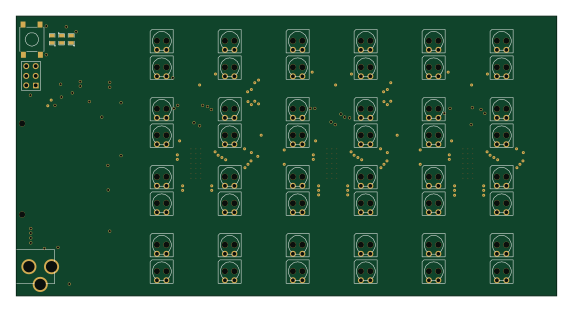 AVR/Arduino
LPA-hardware
taborlab
143 × 74 mm81 parts2LNo license11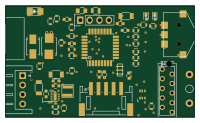 AVR/Arduino
FPV Receiver Diversity Pro Part1/2
Virtex7
50 × 29.5 mm53 parts2LNo license8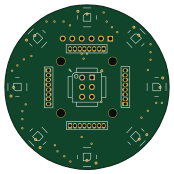 AVR/Arduino
RGB LED TOY
madworm
43.4 × 43.4 mm33 partsNo license5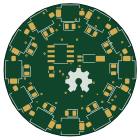 AVR/Arduino
LumiTimeV2
techn0man1ac
35 × 35 mm53 parts2LMIT4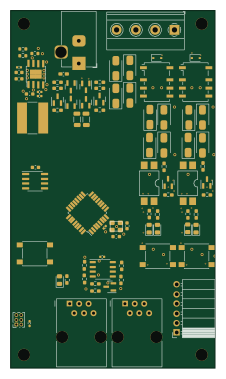 AVR/Arduino
RelayTrackerController
bask185
54 × 94.5 mm86 parts2LNo license3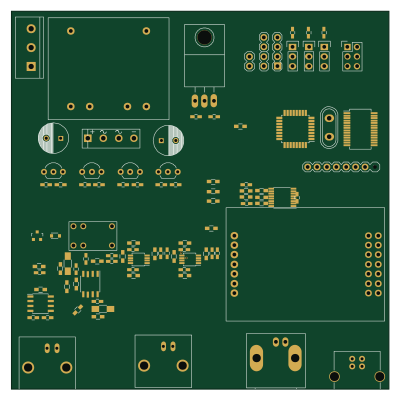 AVR/Arduino
SignalGenerator
ukmaker
99.8 × 100 mm115 parts2LNo license1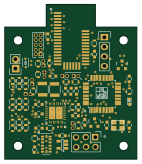 AVR/Arduino
Radio
ojousima
35 × 41 mm74 parts4LCustom license1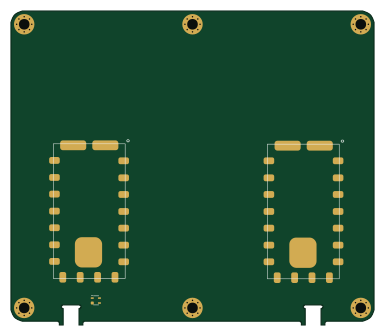 AVR/Arduino
Repeater memris V2a
ub1qbm
96 × 83 mm70 parts4LNo license1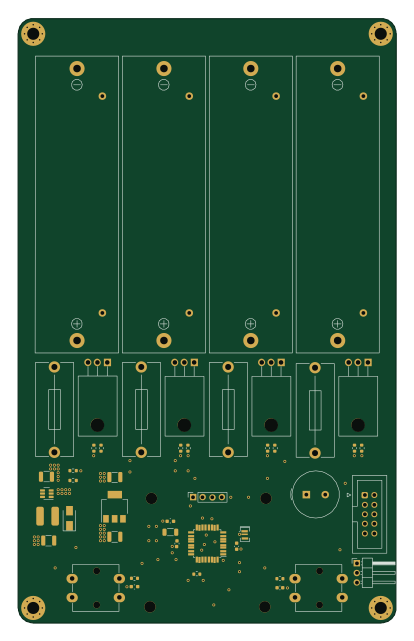 AVR/Arduino
Battery discharger
jkordek1
100 × 160 mm51 parts2LNo license1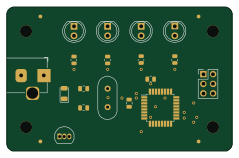 AVR/Arduino
Ex-Chapter07
Sofianopoulou
59.7 × 38.1 mm18 parts2LMIT1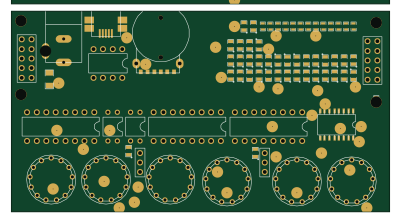 AVR/Arduino
Kicad project
rflab
100 × 53 mm108 parts2LNo license0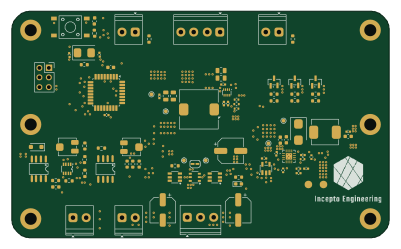 AVR/Arduino
Atmega328-enclosure tamper alarm
manhoosbilli1
100 × 60 mm83 parts2LNo license0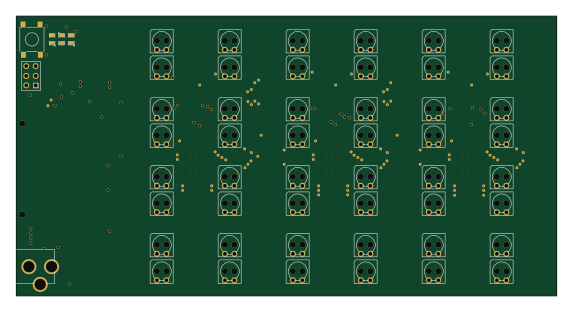 AVR/Arduino
LPA-FW
TheEngineeringOctopus
143 × 74 mm81 parts2LNo license0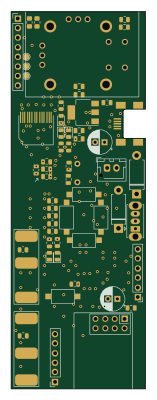 AVR/Arduino
TransmitterV2
RobbeElsermans
35.6 × 99.8 mm75 parts2LApache-2.00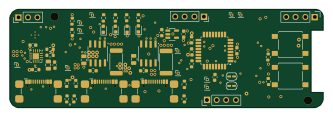 ESP8266
Smartpowerbank2026
MAIK97MAX
83 × 26 mm71 parts4LNo license0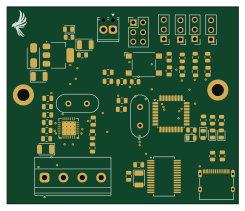 AVR/Arduino
NEMA23-Stepper-Controller
Davey09
61.2 × 52.1 mm60 parts2LNo license0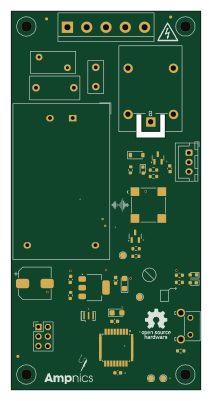 AVR/Arduino
Proxiwave-D
ampnics
50 × 100 mm44 parts2LNo license0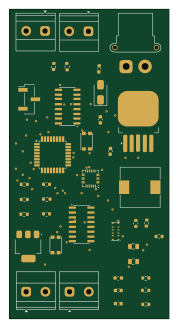 AVR/Arduino
Rover-PCB-
Sujay-1010
42.2 × 82 mm39 parts2LNo license0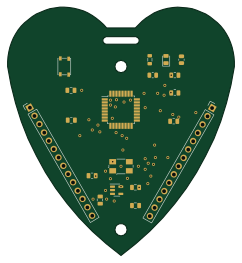 AVR/Arduino
Valentino
Sreeram-Ramesh
60.1 × 65.7 mm18 parts2LMIT0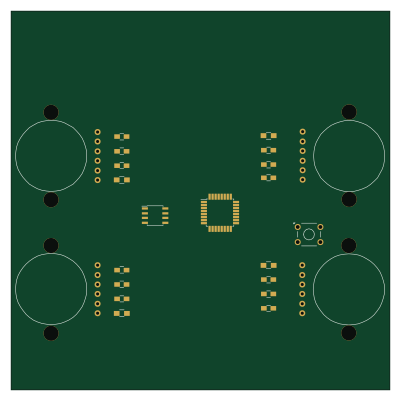 AVR/Arduino
SpeedyMAP
venderbroeck
100 × 100 mm27 parts2LGPL-2.01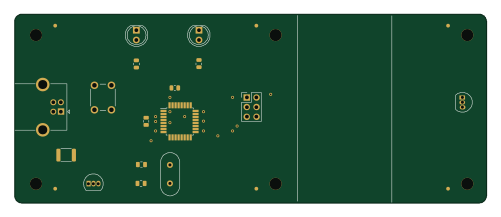 AVR/Arduino
Exams2023
125 × 50 mm16 parts2LMIT1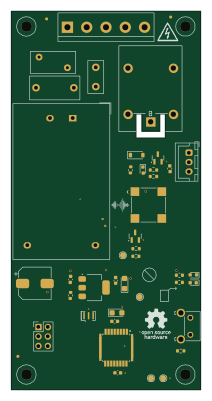 AVR/Arduino
Airtap
ajkumar-1907
50 × 100 mm44 parts2LMIT0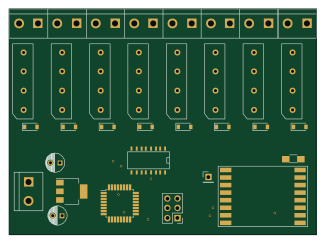 AVR/Arduino
MySensors 8RelaisReed
LudovicLemarinel
81.3 × 59.7 mm34 parts2LNo license4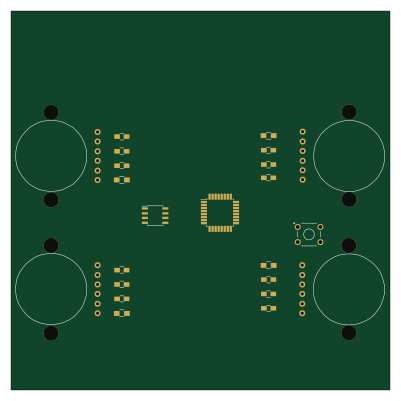 AVR/Arduino
SpeedyMAP
PyroMix62
100 × 100 mm27 parts2LNo license3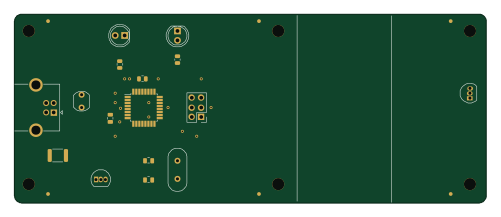 AVR/Arduino
Exams2024 iis21118
125 × 50 mm16 parts2LMIT1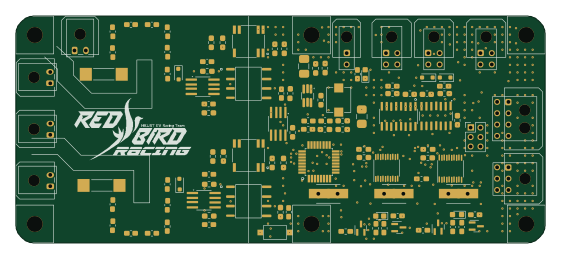 AVR/Arduino
BDUCU
HKUST-Red-Bird-Racing-EVRT
140 × 60 mm169 parts2LNo license0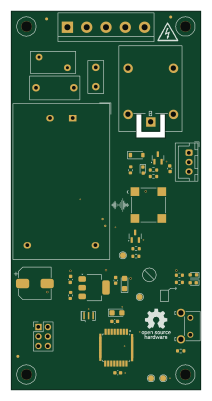 AVR/Arduino
Airtap
50 × 100 mm44 parts2LMIT0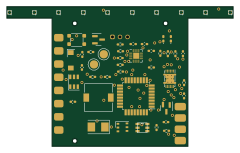 AVR/Arduino
Revopod1
tongtongwang86
60 × 37 mm53 parts4LCC-BY-NC-4.05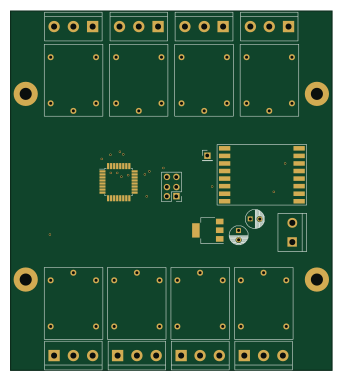 AVR/Arduino
MySensors 8Relais
85 × 95 mm25 parts2LNo license4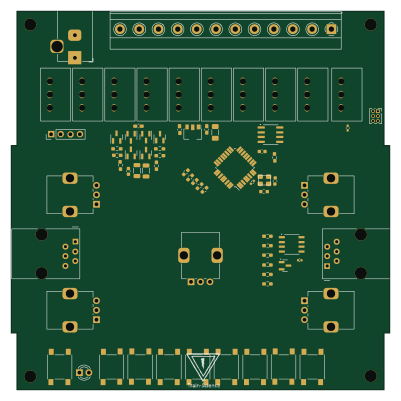 AVR/Arduino
PwmController
100 × 100 mm74 parts2LNo license3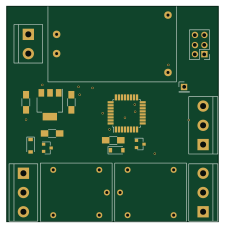 AVR/Arduino
MySensors 2Relais
56 × 57 mm17 parts2LNo license4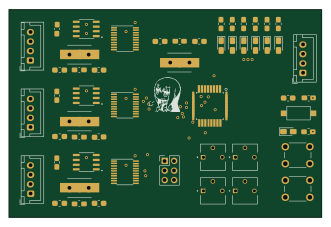 AVR/Arduino
328 3ch can devboard
82.8 × 55 mm68 parts2LNo license3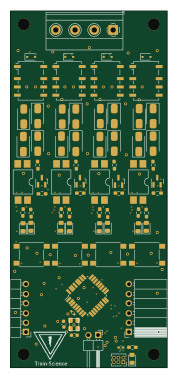 AVR/Arduino
RelayTracker
41.5 × 94.5 mm68 parts2LNo license3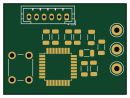 AVR/Arduino
Atmega remote
ArgonautGit
32.5 × 24 mm13 parts2LNo license0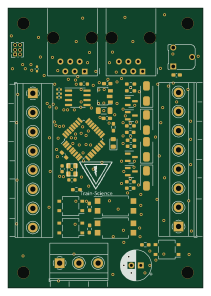 AVR/Arduino
XnetBlockUnit
51.5 × 74 mm52 parts2LNo license3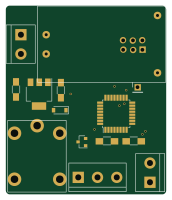 AVR/Arduino
MySensors 1Relay
42.5 × 50 mm14 parts2LNo license4
How designs wire the ATMEGA328-A
Read from the KiCad layouts of 29 open source designs, one per repository: what each pin of the ATMEGA328-A connects to, and the resistors, capacitors and other passives placed on it.
- The RESET/PC6 pin has a pull-up to 5V on 23 of 29 designs, most often 10 kΩ (then 4.7 kΩ).
- The XTAL1/PB6 pin has a crystal on 22 of 29 designs, most often 16 MHz (then 8 MHz).
- The XTAL2/PB7 pin has a crystal on 22 of 29 designs, most often 16 MHz (then 8 MHz).
- The ADC6 pin is left unconnected on 25 of 29 designs (a signal on 4).
| Pin | Connected to | Parts on the pin |
|---|---|---|
| GNDpin 3, 5, 21 | Connected to: GND 97% | — |
| VCCpin 4, 6 | Connected to: 5V 100% |
|
| XTAL1/PB6pin 7 | Connected to: Signal 83% · not connected 17% |
|
| XTAL2/PB7pin 8 | Connected to: Signal 83% · not connected 17% |
|
| AVCCpin 18 | Connected to: VCC 76% · not connected 17% |
|
| ADC6pin 19 | Connected to: Not connected 86% | — |
| AREFpin 20 | Connected to: Signal 48% · not connected 34% · 5V 17% |
|
| ADC7pin 22 | Connected to: Not connected 83% · a signal 17% | — |
| RESET/PC6pin 29 | Connected to: A connector 66% |
|
20 more pins vary from design to design. Connections count pins, parts count designs; values in brackets are how many parts had that value. Designs read include LPA-hardware by taborlab, FPV Receiver Diversity Pro Part1/2 by Virtex7, RGB LED TOY by madworm and Revopod1 by tongtongwang86.
The ATMEGA328-A in open source designs
The gallery holds 40 open source boards using the ATMEGA328-A from 29 GitHub repositories; a typical one measures about 60 × 60 mm and carries around 48 components.
90% are two-layer designs, the rest use four layers or more, and 23% carry an open source license.
The most starred is LPA-hardware by taborlab.
Parts used alongside the ATMEGA328-A
Microcontrollers on boards using the ATMEGA328-A
What boards using the ATMEGA328-A are built for
ATMEGA328-A: common questions
Where can I find a ATMEGA328-A reference design?
Each of the 40 boards on this page is a real design using the ATMEGA328-A. Open one to see how it is wired up, with the full BOM, a render of the layout and links to its KiCad files.
What pull-up resistor is used on the ATMEGA328-A RESET/PC6 pin?
The RESET/PC6 pin has a pull-up to 5V on 23 of 29 designs, most often 10 kΩ (then 4.7 kΩ). Counted from the KiCad layouts of 29 open source designs using the ATMEGA328-A.
How is the ATMEGA328-A XTAL1/PB6 pin connected?
The XTAL1/PB6 pin has a crystal on 22 of 29 designs, most often 16 MHz (then 8 MHz). Counted from the KiCad layouts of 29 open source designs using the ATMEGA328-A.
How is the ATMEGA328-A XTAL2/PB7 pin connected?
The XTAL2/PB7 pin has a crystal on 22 of 29 designs, most often 16 MHz (then 8 MHz). Counted from the KiCad layouts of 29 open source designs using the ATMEGA328-A.
What parts are used alongside the ATMEGA328-A?
The AMS1117-3.3, MT3608, VL53L0CXV0DH1, 40106 and AP1509 appear in the most repositories here.
Which microcontrollers do boards using the ATMEGA328-A use?
Most are built on AVR/Arduino (39) and ESP8266 (1).
How big is a typical board using the ATMEGA328-A?
The median is 60 × 60 mm, and 90% are two-layer designs.
What is the most popular open source board using the ATMEGA328-A?
By GitHub stars, LPA-hardware by taborlab, with 11 stars.
Can I simulate one of these boards using the ATMEGA328-A before building it?
Yes. HardLabs turns a board's netlist and BOM into a working simulation, so you can boot and test firmware against it with no hardware on your desk.