
110 open source boards using the TB6612FNG
Real designs built with the TB6612FNG, from public GitHub projects: a quick way to see how others power, decouple and connect it. Each board comes with its KiCad files, full parts list and a render — and you can simulate its firmware on HardLabs.
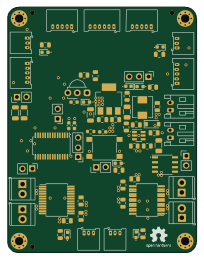 TI MSP430/CC
Nsumo hardware
artfulbytes
50 × 65 mm73 parts2LMIT33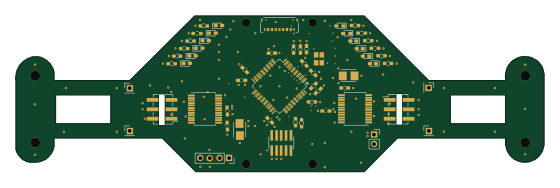 STM32
LineFollower-Kwark
konrad1s
139.7 × 41.3 mm70 parts4LMIT11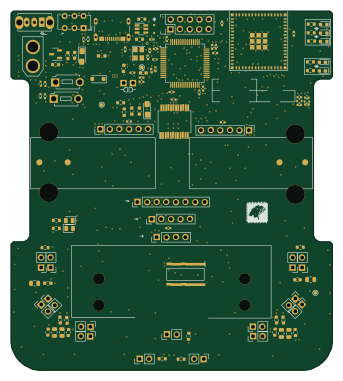 ESP32
Micromouse
aiwachow
85 × 95 mm139 parts2LNo license5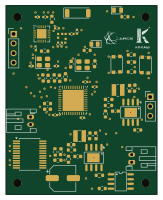 STM32
MITE-ESC
SySch415
40 × 50 mm70 parts4LMIT5- schematic only · 2 partsESP32
Architon cli
badimirzai
2 partsAGPL-3.04 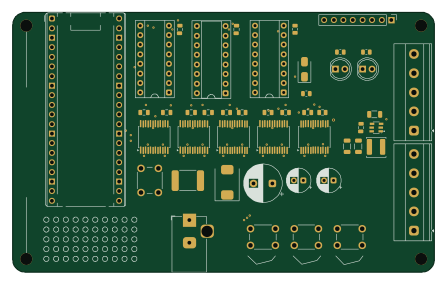 Raspberry Pi
Open-FlipDisk
shashwtd
111.6 × 68.8 mm47 parts2LNo license3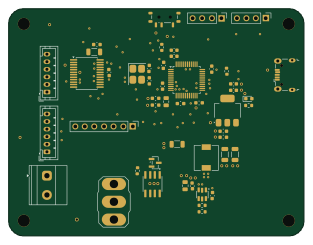 STM32
Line-Follower-Robot v2
minhle4397
78 × 60 mm42 parts2LNo license3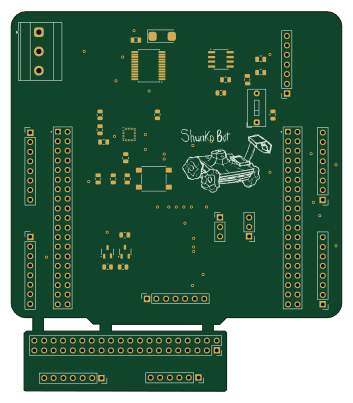
ShunkoBot Shield
Phersax
87.5 × 100.5 mm37 parts2LCC-BY-NC-4.03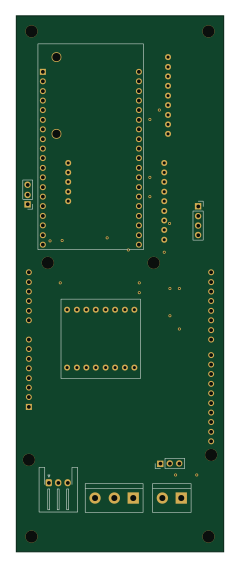 ESP32
Eja intelligent buoy a electronics
leonardoward
54.9 × 141.7 mm11 parts2LApache-2.03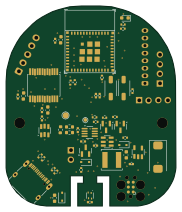 ESP32
OpenTRV-ESP
mpiraux
45 × 53 mm58 parts4LCERN-OHL-P-2.02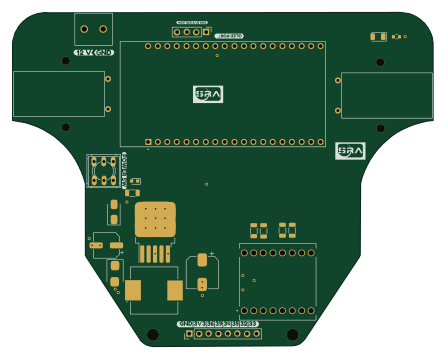 ESP32
MAZEBLAZE-V3
SurajSonawane2415
111.4 × 88.4 mm22 parts2LNo license2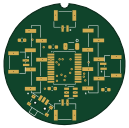
RoboTheater
offmor
32 × 32 mm14 parts2LMIT2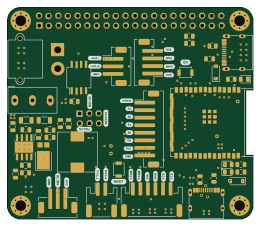 ESP32
Seebum
peedrooh
65 × 56 mm91 parts4LNo license1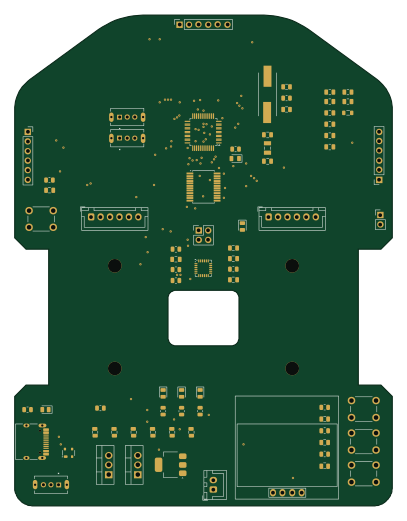 STM32
Micromouse v2
minindupasan
100 × 130 mm74 parts2LNo license1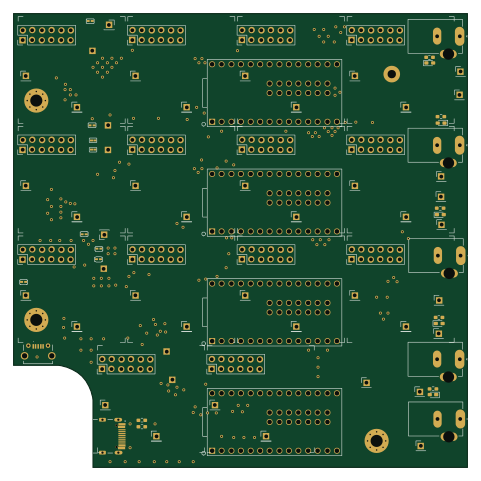 NXP
MotorHub5x5
AxLab-UofC
120 × 120 mm69 parts2LMIT1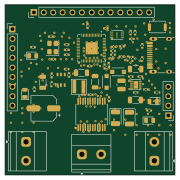 RP2040/RP2350
Rukus
Hung-Chi970104
45 × 45 mm67 parts2LNo license1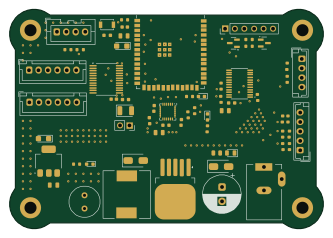 ESP32
RoboCore 2.0
AvishkaVishwa
83 × 58 mm64 parts2LNo license1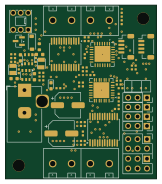
MtN1 Draft 1
Momentum-Devices
40 × 46 mm64 parts4LCERN-OHL-W-2.01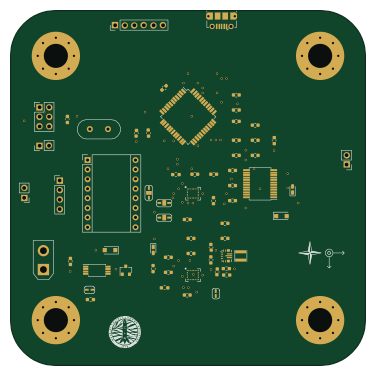 AVR/Arduino
Payload gimbal
icl-rocketry
94 × 94 mm59 parts2LMIT1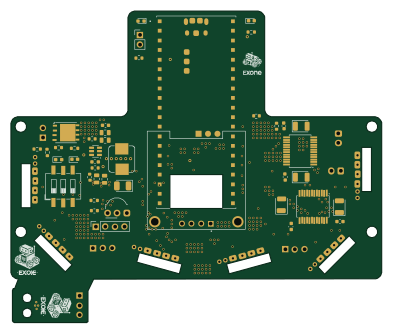
EX ONE minisumo
KamilWuu
98.2 × 82.5 mm57 parts2LNo license1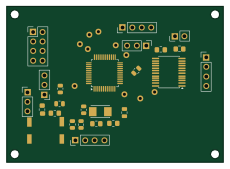 STM32
Carro preliminar
DasReyxr
57.4 × 41.3 mm45 parts2LNo license1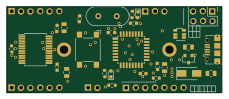 STM32
SojournerST-hardware
ckoern
57.2 × 22.9 mm33 parts4LMIT1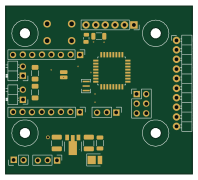 AVR/Arduino
LineFollower V2.0
Tonikiller10000
49.5 × 44.5 mm21 parts2LNo license1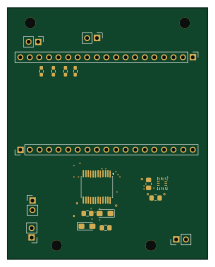
Liquorice
SohumNigam
53 × 66.6 mm19 parts2LNo license1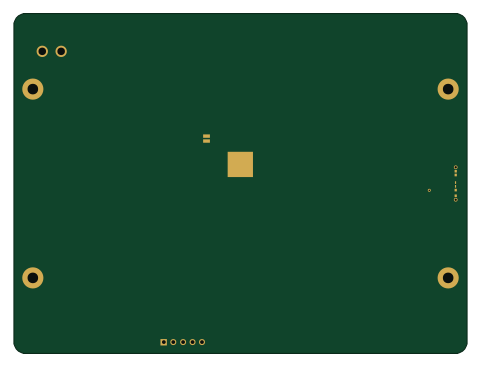 ESP32
3we robot platform
telleroutlook
120 × 90 mm4 parts4LApache-2.01- schematic only · 38 parts
Epicura spec
manasXP
38 partsNo license1 - schematic only · 28 partsAVR/Arduino
Cartesian Robot 3D Model
Mohammed-Shehsin
28 partsNo license1 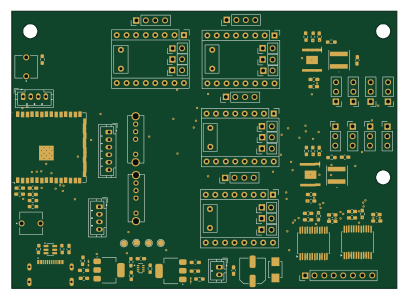 ESP32
MOTOR-BOARD
Shaurya-Ashu
102 × 73.4 mm95 parts4LMIT0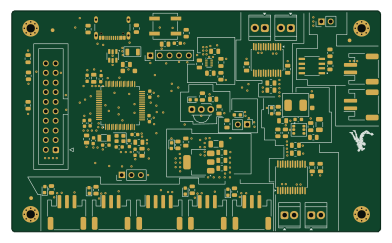 STM32
STM32-Sumo-Robot-Controller
keer-nova74
97.7 × 58.5 mm93 parts4LNo license0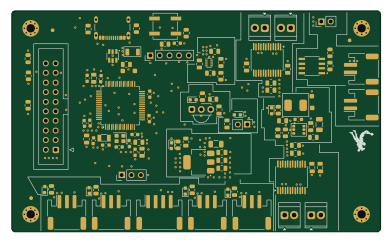 STM32
TSUMO BOT hardware
troyodia
97.7 × 58.5 mm93 parts4LNo license0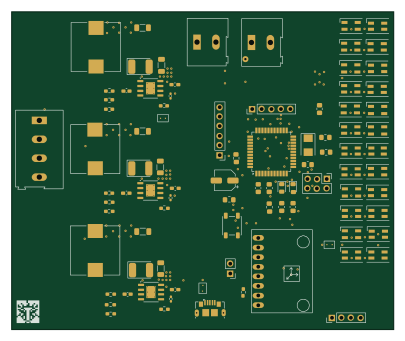 AVR/Arduino
Board
Roguillo
101 × 84 mm91 parts2LMIT0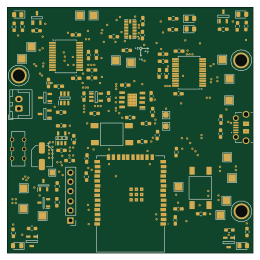 ESP32
Mini car
jegor377
65 × 65 mm85 parts4LNo license0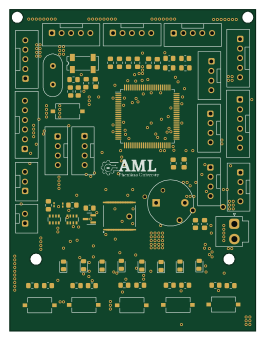 STM32
STM32F407VGT6
anmh1205
65 × 85 mm85 parts2LNo license0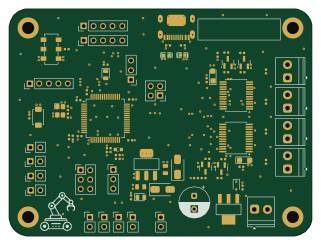 STM32
Mecanum robot board
adammat02
80 × 60 mm83 parts2LNo license0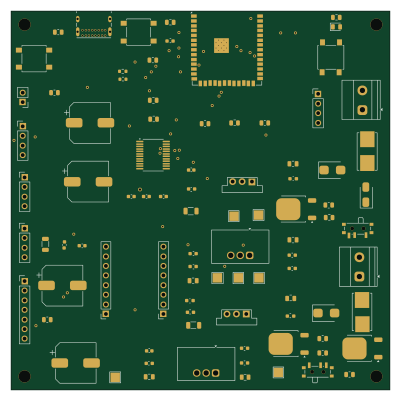 ESP32
Ece445-autonomous wifi mapping car
BenMaydan
100 × 100 mm82 parts2LNo license0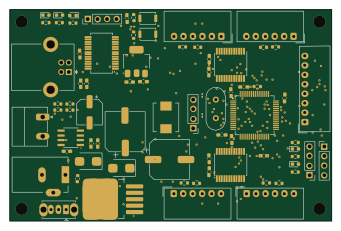 STM32
Backup
DoloresAx
85.1 × 55.9 mm78 parts2LNo license0
How designs wire the TB6612FNG
Read from the KiCad layouts of 76 open source designs, one per repository: what each pin of the TB6612FNG connects to, and the resistors, capacitors and other passives placed on it.
- The VM2 pin has a decoupling capacitor on 43 of 74 designs, most often 100 nF (then 10 µF).
- The VM3 pin has a decoupling capacitor on 43 of 74 designs, most often 100 nF (then 10 µF).
- The VCC pin has a decoupling capacitor on 37 of 67 designs, most often 100 nF (then 10 µF).
- The VM1 pin has a decoupling capacitor on 30 of 67 designs, most often 100 nF (then 10 µF).
| Pin | Connected to | Parts on the pin |
|---|---|---|
| PGND1pin 3, 4 | Connected to: GND 86% | — |
| PGND2pin 9, 10 | Connected to: GND 86% | — |
| VM2pin 13 | Connected to: BATT 58% · a signal 38% |
|
| VM3pin 14 | Connected to: BATT 58% · a signal 36% |
|
| GNDpin 18 | Connected to: GND 96% | — |
| VCCpin 20 | Connected to: 3.3V 91% |
|
| VM1pin 24 | Connected to: BATT 67% · a signal 31% |
|
11 more pins vary from design to design. Connections count pins, parts count designs; values in brackets are how many parts had that value. Designs read include Gruzik2.0 by NYDEREK, Nsumo hardware by artfulbytes, Tei by T3nk4I and PwrIO by intergalaktik.
The TB6612FNG in open source designs
The gallery holds 110 open source boards using the TB6612FNG from 89 GitHub repositories; a typical one measures about 75 × 60 mm and carries around 46 components.
77% are two-layer designs, the rest use four layers or more, and 24% carry an open source license.
The most starred is Gruzik2.0 by NYDEREK.
Parts used alongside the TB6612FNG
Microcontrollers on boards using the TB6612FNG
What boards using the TB6612FNG are built for
TB6612FNG: common questions
Where can I find a TB6612FNG reference design?
Each of the 110 boards on this page is a real design using the TB6612FNG. Open one to see how it is wired up, with the full BOM, a render of the layout and links to its KiCad files.
What decoupling capacitors do designs use on the TB6612FNG VM2 pin?
The VM2 pin has a decoupling capacitor on 43 of 74 designs, most often 100 nF (then 10 µF). Counted from the KiCad layouts of 76 open source designs using the TB6612FNG.
What decoupling capacitors do designs use on the TB6612FNG VM3 pin?
The VM3 pin has a decoupling capacitor on 43 of 74 designs, most often 100 nF (then 10 µF). Counted from the KiCad layouts of 76 open source designs using the TB6612FNG.
What decoupling capacitors do designs use on the TB6612FNG VCC pin?
The VCC pin has a decoupling capacitor on 37 of 67 designs, most often 100 nF (then 10 µF). Counted from the KiCad layouts of 76 open source designs using the TB6612FNG.
What parts are used alongside the TB6612FNG?
The AMS1117-3.3, USBLC6-2SC6, LM2596S-5, MPU-6050 and ESP32-S3-WROOM-1 appear in the most repositories here.
Which microcontrollers do boards using the TB6612FNG use?
Most are built on ESP32 (35), STM32 (28), AVR/Arduino (12) and RP2040/RP2350 (3).
How big is a typical board using the TB6612FNG?
The median is 75 × 60 mm, and 77% are two-layer designs.
What is the most popular open source board using the TB6612FNG?
By GitHub stars, Gruzik2.0 by NYDEREK, with 92 stars.
Can I simulate one of these boards using the TB6612FNG before building it?
Yes. HardLabs turns a board's netlist and BOM into a working simulation, so you can boot and test firmware against it with no hardware on your desk.